








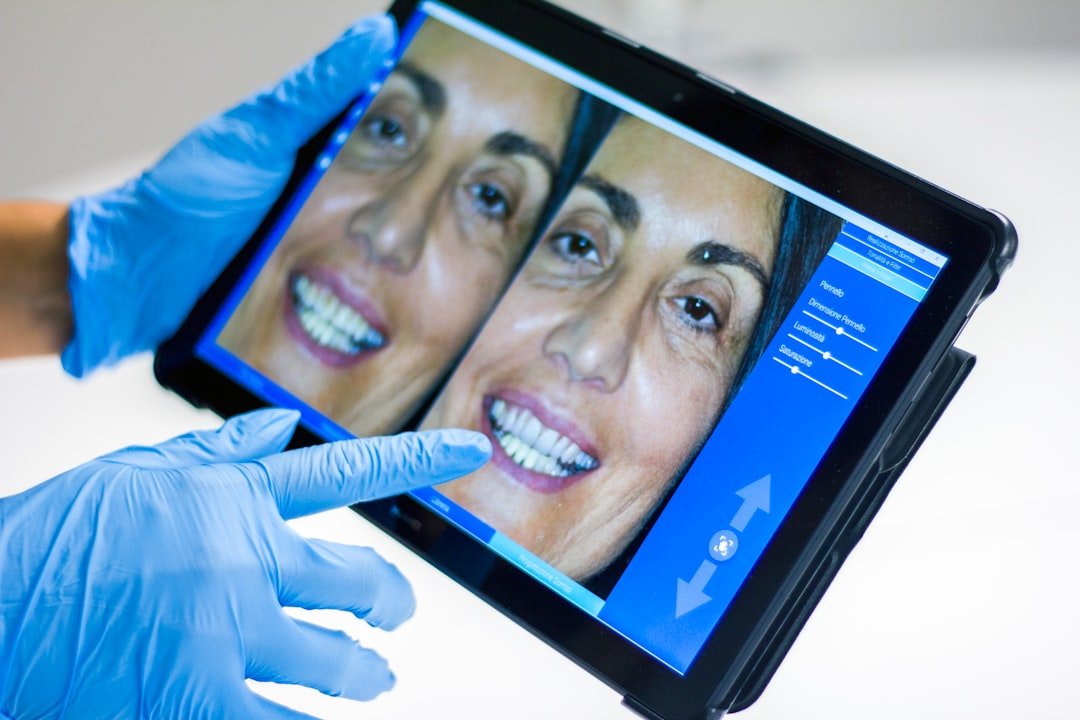
Wondering how that fancy AI stuff is making your braces or aligners work better and faster? It’s really about making orthodontic treatment more precise and predictable. AI is helping dentists and orthodontists get a clearer picture of what’s going to happen with your teeth and how your treatment is progressing, all to give you the best possible outcome.
Digitizing Your Smile
Before AI even gets involved, the first step is to capture a detailed digital model of your mouth. This usually involves 3D intraoral scanners, which are way more comfortable and accurate than traditional goopy molds. These scanners create a virtual replica of your teeth and gums, and this digital blueprint is what AI systems use as their starting point. Think of it as taking a high-definition photograph of your mouth from every angle imaginable. This detailed digital scan provides the raw data for all the sophisticated analyses that follow.
Predicting Tooth Movement
This is where AI really shines. By analyzing your incredibly detailed 3D scan, AI algorithms can simulate how your teeth will move under different treatment scenarios. They consider factors like the angle of your teeth, the shape of your jaw, and the forces that will be applied by braces or aligners. Instead of relying solely on the orthodontist’s experience, AI can crunch vast amounts of data from thousands of past cases, identifying patterns and predicting outcomes with a higher degree of accuracy. This helps in choosing the most efficient treatment path from the outset.
Customized Treatment Pathways
Every mouth is unique, and AI recognizes this. It doesn’t just offer a one-size-fits-all approach. Based on the specifics of your case, AI algorithms can help design a personalized treatment plan. This means the sequence of tooth movements, the type of appliance best suited for you, and the expected duration of treatment can all be tailored with greater precision. The goal is to optimize the movement, minimize potential issues, and achieve your ideal smile in the most efficient way possible.
AI for Precision in Appliance Design
Aligners Tailored to You
For those undergoing treatment with clear aligners, AI is a game-changer. Aligner manufacturers use AI to design each set of aligners. They take your digital scan, predict the necessary tooth movements, and then program the aligner’s shape to guide those movements. This isn’t some abstract simulation; it’s directly translated into the physical design of the aligner you’ll wear. The AI helps ensure that each aligner applies the right amount of gentle force to nudge your teeth into their correct positions incrementally.
Braces with Smarter Mechanics
Even with traditional braces, AI is finding its place. It can assist in designing custom brackets and wires. AI can predict the optimal placement of brackets on each tooth to ensure efficient force application. It can also help in selecting the right wire material and shape to achieve specific tooth movements more effectively, reducing the number of adjustments needed and potentially shortening treatment time. This level of customization means the forces are applied more intelligently, leading to more predictable results.
Complex Case Navigation
For particularly challenging orthodontic cases, AI can be an invaluable tool. It can analyze intricate dental structures and predict potential complications that might be harder to foresee with traditional methods. This allows orthodontists to proactively plan for these complexities, ensuring that the treatment is managed safely and effectively, even when dealing with severe misalignments or unusual anatomical features.
Real-Time Monitoring and Adjustments
Tracking Progress Digitally
AI doesn’t just plan; it also keeps an eye on how things are going. Throughout your treatment, regular scans or photos are taken. AI can analyze these new images against your original digital model and previous scans. It can precisely measure how much your teeth have moved and compare it to the predicted movement. This provides a quantitative way to track progress, ensuring you’re on the right track.
Identifying Deviations Early
One of the biggest advantages of AI monitoring is its ability to spot minor deviations from the treatment plan early on. If a tooth isn’t moving as expected, or if there’s an unforeseen issue, the AI can flag it. This allows the orthodontist to intervene promptly, whether it’s by prescribing a new set of aligners or adjusting the braces. Catching these issues early can prevent them from becoming bigger problems and derailing the treatment timeline.
Predicting the Next Steps
Based on the real-time monitoring data, AI can help predict what needs to happen next. For aligners, it can inform the design of future sets. For braces, it can guide the orthodontist on what adjustments to make during your next appointment. This predictive capability makes the entire treatment process more dynamic and responsive to your individual needs, ensuring continuous forward momentum.
Improving Patient Experience and Communication
Clearer Visualizations
AI can generate highly accurate and detailed visualizations of your predicted treatment outcome. This means you can see what your smile is likely to look like before you even start treatment. Seeing these realistic simulations can be incredibly motivating and provides a clear understanding of the goals. It also helps to set realistic expectations.
Enhanced Collaboration with Your Orthodontist
These AI-generated predictions and monitoring reports provide valuable data that your orthodontist can share with you. This leads to more informed discussions about your treatment. You can understand the rationale behind the treatment plan and the progress you’re making in a way that’s easy to grasp, fostering a stronger partnership in achieving your smile goals.
Streamlined Adjustments and Appointments
By minimizing the need for manual data analysis and prediction, AI can streamline the overall orthodontic workflow. This can translate to fewer in-office appointments for some patients, especially those using aligners and remote monitoring. The orthodontist can make informed decisions about when and how to adjust treatment based on the AI’s analysis, making your visits more efficient.
Challenges and the Human Touch
| Benefits of AI in Orthodontic Treatment | Metrics |
|---|---|
| Improved treatment prediction | Accuracy of predicted tooth movement |
| Enhanced monitoring | Reduction in treatment time |
| Customized treatment plans | Percentage of successful outcomes |
| Early detection of issues | Reduction in the need for corrective procedures |
Data Accuracy is Crucial
AI is only as good as the data it’s fed. The accuracy of the initial scans and subsequent monitoring captures is paramount. Any inaccuracies in the digital models can lead to flawed predictions. This is why skilled professionals are still essential for performing these scans and ensuring their quality.
The Imperative of Clinical Judgment
While AI provides powerful predictive capabilities, it’s not a replacement for an orthodontist’s expertise and clinical judgment. AI can offer insights and predictions, but the final decisions about treatment strategy, managing unexpected situations, and understanding the nuances of a patient’s overall oral health still rest with the human professional. The orthodontist integrates the AI’s output with their own experience and understanding of the individual patient.
Ethical Considerations and Privacy
As with any technology that handles personal health data, there are ethical considerations and a need for robust data privacy measures. Ensuring that patient information is secure and used responsibly is a critical aspect of implementing AI in healthcare. The systems need to be secure and comply with all relevant regulations to protect your information.
Continuous Development and Refinement
The field of AI is constantly evolving. The algorithms and their applications in orthodontics are continually being updated and improved. What’s cutting-edge today might be standard practice tomorrow. This means that orthodontists need to stay abreast of these advancements to leverage the latest AI capabilities for their patients.