





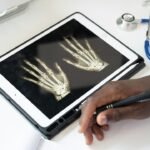



Welcome to the evolving world of orthodontics, where technology is increasingly becoming a trusted partner. If you’ve been wondering how Artificial Intelligence (AI) fits into all of this, the short answer is that AI is helping orthodontists achieve a remarkable level of precision in treating misaligned teeth and jaws, leading to more predictable outcomes and a smoother patient journey. It’s not about replacing the human touch but enhancing it, providing invaluable insights that were previously difficult, if not impossible, to obtain.
The AI Revolution in Orthodontic Diagnostics
Gone are the days when orthodontic diagnosis relied solely on a practitioner’s eye and manual measurements. AI is now stepping in to elevate the diagnostic process, offering a depth of analysis that transforms how we understand a patient’s unique oral anatomy and potential treatment pathways. This isn’t just about speed; it’s about unlocking insights that lead to better, more tailored treatment plans.
Enhanced Image Analysis
One of the most immediate impacts of AI in diagnostics is its ability to analyse a vast array of orthodontic images with incredible speed and accuracy. Think about all the different types of scans involved: X-rays, 3D cone-beam computed tomography (CBCT), and intraoral scans. Manually sifting through these detailed images, identifying subtle anomalies, and taking precise measurements is a time-consuming and often subjective process.
AI algorithms, trained on massive datasets of orthodontic images, can quickly and accurately identify key anatomical landmarks, such as tooth roots, bone levels, and specific malocclusions. This means less time spent on manual tracing and measurement, and more time for the orthodontist to focus on interpreting the data and formulating a treatment strategy. It helps flag potential issues that might be missed by the human eye, offering a crucial second layer of scrutiny. For instance, AI can be particularly adept at detecting early signs of root resorption or periodontal bone loss, conditions that need careful monitoring throughout treatment.
Predictive Analytics for Treatment Outcomes
Beyond simply analysing current images, AI is also proving incredibly useful in predicting how different treatment approaches might unfold. This is a game-changer for patient counselling and informed consent. Imagine being able to show a patient not just what their teeth look like now, but what they could look like after a specific course of treatment, with a high degree of confidence.
AI models can take a patient’s diagnostic data – their initial scans, bite patterns, and even their growth trajectory – and simulate various treatment scenarios. It can then predict the likelihood of success for each scenario, identify potential challenges, and even estimate treatment duration. This allows orthodontists to make more informed decisions about treatment modalities, whether it’s traditional braces, clear aligners, or orthognathic surgery. For example, AI can predict how jaw growth might influence a Class II malocclusion correction or how certain tooth movements could impact the overall facial profile. This predictive power allows for adjustments to the plan before treatment even begins, significantly reducing the chances of unexpected outcomes or prolonged treatment times.
Tailoring Treatment Plans with AI
Once a diagnosis is made, the next crucial step is developing a treatment plan that is as unique as the individual patient. This is another area where AI is demonstrating its immense value, moving beyond generic protocols to truly personalised approaches. The goal is to optimise every single movement, ensuring efficiency and effectiveness.
Optimising Archwire Bends and Bracket Placement
For patients undergoing traditional brace treatment, the precise placement of brackets and the careful bending of archwires are fundamental to successful tooth movement. Historically, this has been a highly skilled, manual art form. While the orthodontist’s expertise remains paramount, AI can now provide invaluable assistance in these intricate tasks.
AI algorithms can analyse the 3D models of a patient’s teeth and propose optimal bracket positions that will achieve the desired tooth movements with the greatest efficiency. It considers factors like tooth morphology, root angulation, and the mechanics of forces. This can lead to more accurate initial bracket placement, which in turn reduces the need for extensive repositioning later in treatment, saving both time and discomfort for the patient.
Similarly, in archwire design, AI can recommend specific bends and loops that will apply the most effective forces to guide teeth into their ideal positions. This goes beyond simple aesthetic alignment, considering the biological limits of tooth movement and minimising unwanted side effects. The AI acts as a sophisticated digital assistant, providing a starting point or a refined suggestion that the orthodontist can then review and approve, blending technological precision with clinical judgment.
Customised Clear Aligner Planning
The rise of clear aligner therapy has been significantly propelled by digital technologies, and AI is taking this a step further. While aligner software has long been used to plan tooth movements, AI brings a new level of sophistication to the customisation process.
AI can analyse a patient’s initial scans and the desired final outcome, then generate a highly detailed series of aligner stages. It optimises the order and magnitude of tooth movements for each aligner, considering biomechanical principles and aiming for the most efficient path. This includes determining the ideal placement of attachments (small, tooth-coloured bumps bonded to teeth to help aligners grip) and predicting the necessary over-correction or retention strategies.
Furthermore, AI can identify potential “bottlenecks” or difficult movements early in the planning process, allowing the orthodontist to adjust the plan proactively. It can even suggest alternative strategies if a particular movement proves challenging. This level of algorithmic refinement ensures that each aligner in the series is perfectly tailored to achieve its specific purpose, reducing the need for mid-course corrections or additional “refinement” aligners, ultimately leading to a more predictable and often shorter treatment journey.
Monitoring Progress and Adjusting Course
Orthodontic treatment isn’t a “set it and forget it” process; it requires ongoing monitoring and adjustments. This is where AI truly shines, offering continuous insights that empower orthodontists to keep treatment on track and address any deviations promptly. It’s about proactive management rather than reactive problem-solving.
Remote Monitoring Solutions
The integration of AI into remote monitoring platforms is a significant leap forward, particularly for clear aligner patients. Instead of requiring frequent in-person appointments just to check aligner fit or progress, patients can now use smartphone apps and intraoral scanning devices to send regular updates to their orthodontist.
AI algorithms analyse these submitted images or scans, comparing them against the planned treatment stages. It can detect if an aligner isn’t fitting correctly, if a tooth isn’t moving as expected, or if there are any emerging issues like gum inflammation or poor oral hygiene. This allows the orthodontist to intervene early, perhaps by asking the patient to wear an aligner for longer, move back to a previous aligner, or schedule an urgent in-person visit if necessary.
This not only enhances patient convenience by reducing the number of physical appointments but also provides the orthodontist with a more continuous and objective overview of the treatment progress. It’s like having an extra pair of highly intelligent eyes monitoring the patient’s teeth between visits, ensuring greater adherence to the treatment plan and improving overall outcomes.
Identifying Deviations and Recommending Adjustments
Even with the most meticulous planning, biological variability means that teeth don’t always move exactly as predicted. When deviations occur, timely identification and adjustment are crucial. This is another area where AI provides invaluable support.
AI systems can compare real-time patient data (from scans or images) with the original digital treatment plan. If a tooth is lagging behind schedule, rotating incorrectly, or not tracking properly, the AI can flag this anomaly immediately. More advanced AI models can even go a step further and suggest potential adjustments to the treatment plan. This might involve recommending specific auxiliary appliances, proposing a revised aligner sequence, or suggesting targeted “refinement” movements to get the treatment back on course.
This proactive identification and recommendation capability minimises the time spent on off-track movements. Instead of waiting for a patient’s scheduled appointment weeks down the line to spot an issue, the AI can bring it to the orthodontist’s attention much sooner. This leads to more efficient treatment, fewer complications, and ultimately, a more satisfying outcome for the patient.
Enhancing Patient Experience and Engagement
Beyond the purely clinical aspects, AI is also playing a pivotal role in improving the patient journey, making it more engaging, transparent, and convenient. This isn’t just about clinical precision; it’s about fostering a better relationship between the patient and their treatment.
Visualising Treatment Outcomes
One of the most powerful ways AI enhances patient engagement is through advanced visualisation tools. Before committing to treatment, patients often struggle to fully grasp what their final smile will look like. While orthodontists have always used models and diagrams, AI-powered software takes this to an entirely new level.
Using a patient’s initial scans, AI can generate highly realistic 3D simulations of their teeth and smile at various stages of treatment, right up to the predicted final result. This isn’t just a generic “after” picture; it’s a personalised projection that takes into account their unique facial features and dental anatomy. Patients can rotate these models, view them from different angles, and even see how specific tooth movements will impact their facial aesthetics.
This visualisation capability empowers patients to make more informed decisions, reduces anxiety, and sets clear expectations. When patients can clearly see the “destination,” they are often more motivated to adhere to their treatment plan. It transforms an abstract concept into a tangible, exciting possibility, making the treatment journey feel more collaborative and less daunting.
Personalised Communication and Education
AI can also contribute to a more personalised communication strategy, keeping patients well-informed and engaged throughout their treatment. Traditional patient education often involves generic pamphlets or verbal instructions, which can sometimes be overwhelming or easily forgotten.
AI-driven platforms can tailor educational content based on a patient’s specific treatment stage, appliance type, and individual needs. For example, if a patient is just starting clear aligner therapy, the AI can provide timely reminders about wear time, hygiene instructions, and what to expect in the first few days. If a patient is midway through fixed braces, the AI could send tips on dietary adjustments or managing discomfort.
Furthermore, AI chatbots or virtual assistants integrated into patient portals can answer common questions instantly, providing accessible support outside of clinic hours. This means patients can get reliable information whenever they need it, reducing the need for constant phone calls to the practice. This personalised, on-demand education fosters a sense of being supported and understood, improving overall patient satisfaction and adherence to treatment recommendations.
The Future Landscape: AI’s Evolving Role
What we’ve seen so far is just the beginning. AI is a rapidly advancing field, and its integration into orthodontics is only set to deepen, bringing with it even more sophisticated capabilities and transformative changes. The trajectory points towards an even more interconnected, data-driven, and personalised approach to orthodontic care.
Autonomous Treatment Planning and Adjustment
While AI currently acts as a powerful assistant, providing insights and recommendations, the future could see it playing a more autonomous role in certain aspects of treatment planning. Imagine AI systems that, given a patient’s full diagnostic dataset and desired outcomes, can generate an initial, highly detailed treatment plan with minimal human input. This plan would encompass everything from bracket placement and archwire design to aligner sequences and even retention strategies.
Of course, the orthodontist would always remain the ultimate decision-maker, reviewing, refining, and approving any AI-generated plan. However, this level of automation could significantly reduce the time spent on initial planning, freeing up orthodontists to focus on the more complex cases, patient interaction, and clinical nuances that require human judgment. Furthermore, in the realm of monitoring, AI could potentially initiate minor adjustments to an aligner sequence based on continuous remote data, pre-empting the need for a full re-evaluation by the orthodontist for small deviations, again, always under human oversight and approval.
Integration with Robotics and 3D Printing
The synergy between AI, robotics, and 3D printing is poised to revolutionise the physical application of orthodontic treatment. We’re already seeing 3D printing used for aligners and some custom brackets, but AI can take this further by optimising the design and manufacturing process with unparalleled precision.
For example, AI could design highly individualised brackets or aligners that are not only perfectly suited to a patient’s tooth morphology but also engineered for optimal force application and comfort. This design data could then be directly fed into advanced 3D printers, enabling the creation of custom appliances with incredible accuracy and speed.
Looking further ahead, robotic systems, guided by AI, could potentially assist in the precise placement of brackets on teeth or even perform certain delicate adjustments to archwires. This isn’t about replacing the skilled orthodontist but augmenting their capabilities, offering a level of precision and consistency that is difficult to achieve manually. Such integration promises to streamline workflows, reduce manufacturing costs, and ultimately deliver a higher standard of customised care. The future of orthodontics will likely be a fascinating blend of human expertise and advanced intelligent technologies working hand-in-hand.