









Artificial intelligence (AI) holds considerable promise for mental health, offering new ways to understand, treat, and prevent conditions. In short, it can provide tools for earlier detection, more personalised interventions, and wider access to support, particularly in areas where human professionals are scarce. However, it’s not a straightforward solution, and we need to carefully consider […]

AI in Nursing: Tools and Support
Artificial intelligence (AI) is already making its mark in nursing, not by replacing the essential human element, but by offering a suite of powerful tools and support systems. Essentially, AI helps nurses work smarter, freeing them up to focus on the complex, compassionate care that only a human can provide. Think of it as a […]

How AI Is Revolutionising Healthcare Delivery
Healthcare delivery, as we know it, is undergoing a profound transformation thanks to artificial intelligence (AI). Essentially, AI is helping us make healthcare more efficient, more personalised, and ultimately, more effective. It’s not about replacing human doctors, but rather augmenting their capabilities, offering tools that can analyse vast amounts of data, predict outcomes, and streamline […]

AI for Personalised Medicine
AI is revolutionising how we approach healthcare, moving away from a one-size-fits-all model towards treatments tailored specifically for you. This shift, known as personalised medicine, uses your unique biological makeup, lifestyle, and environment to predict, prevent, and treat diseases more effectively. At its core, AI’s ability to sift through vast amounts of complex data makes […]
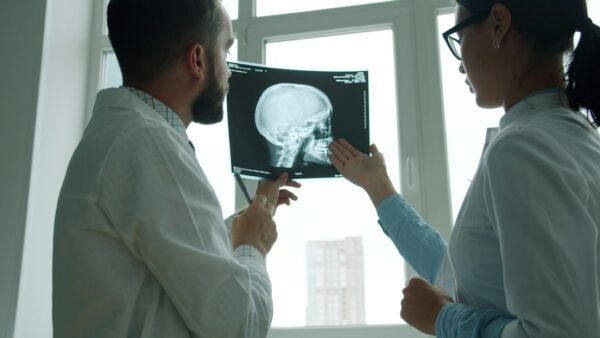
AI in Radiology: Trends and Applications
AI in radiology is rapidly changing how we diagnose and treat patients, mainly by making things quicker, more accurate, and generally more efficient. It’s not about replacing radiologists, but rather giving them powerful tools to enhance their capabilities and improve patient care. The AI Landscape in Radiology: A Quick Overview Artificial Intelligence (AI) isn’t a […]

AI Diagnostics: The Future of Early Detection
AI diagnostics are poised to revolutionise how we detect diseases, offering a significant leap forward in identifying health issues much earlier than current methods. Think of it as having an incredibly keen-eyed assistant who can spot subtle patterns invisible to the human eye, helping doctors catch problems when they’re most treatable. This isn’t about replacing […]

How AI Is Transforming Patient Care
Right, let’s talk about how AI is shaking things up in patient care. The short answer is, it’s making healthcare more precise, efficient, and ultimately, more personalised. We’re not talking about robots taking over doctor’s surgeries, but rather clever algorithms and systems helping clinicians make better decisions, faster, and often with less guesswork. It’s about […]

AI in Healthcare: The Complete Guide for Modern Clinicians
AI in Healthcare: The Complete Guide for Modern Clinicians So, you’re probably wondering how all this “AI stuff” is actually going to affect your day-to-day as a clinician. The short answer? Quite a lot, and in practical ways you might not expect. Forget the sci-fi fantasies; AI in healthcare is about making your job easier, […]
Designing responsible mental wellness copilots for schools and universities
In today’s fast-paced educational landscape, mental wellness is more critical than ever. The rise of AI-powered “copilots” offers a promising new avenue for supporting students and staff, but it’s crucial we design them responsibly. The main question here is: how can we build these tools to genuinely help, rather than accidentally harm, within the unique […]
Evaluating empathy in generative AI: what current benchmarks miss
Right, let’s dive into how we’re currently trying to measure empathy in generative AI and, more importantly, where we’re probably getting it wrong. When we talk about ‘evaluating empathy’ in AI, what we’re usually trying to do is see if these systems can understand and respond appropriately to human emotions, needs, and contexts. The problem […]