








So, what actually happens when every student gets their own AI tutor? In short, it’s a seismic shift in education, moving away from a one-size-fits-all model to intensely personalised learning. Imagine a world where no student is left behind because they didn’t ‘get it’ in class, and no student is held back because they’re ready for more. AI tutors promise a future where learning is tailored to each individual’s pace, style, and specific needs, offering instant feedback, endless practice, and support that’s always available. It’s not about replacing teachers, but empowering them, and fundamentally changing how students engage with knowledge.
The Dawn of Personalised Learning Journeys
When every student has an AI tutor, the most immediate and profound impact will be on the level of personalisation in their learning experience. Gone are the days of a teacher delivering a lesson to 30 students, hoping it lands effectively for the majority. Instead, each student will have an intelligent assistant, ready to adapt to their unique requirements.
Tailored Pace and Style
Think about how children learn: some grasp concepts quickly, others need more time and repetition. Some learn best visually, others through auditory explanations or hands-on practice. An AI tutor can observe and adapt to these individual preferences. If a student is struggling with a particular mathematical concept, the AI won’t just repeat the same explanation; it will try a different analogy, present a visual diagram, or break the problem down into smaller, more manageable steps. For a student who excels, the AI can immediately offer more challenging problems or introduce advanced topics, preventing boredom and fostering continuous engagement. This adaptive pacing means no one is left behind, and no one is held back.
Instant Feedback and Remediation
One of the biggest limitations of traditional classroom settings is the lag in feedback. A student might complete an assignment, hand it in, and wait days for it to be marked, by which time the opportunity to correct misunderstandings has often passed. An AI tutor provides instant feedback. Made a mistake in a grammar exercise? The AI can highlight it immediately, explain why it’s wrong, and offer similar practice questions. Struggling with a history essay? The AI can point out areas where arguments are weak or evidence is lacking, suggesting resources for further reading. This immediate loop of feedback and remediation is incredibly powerful, allowing students to learn from their errors in real-time and solidify their understanding before misconceptions take root.
Endless Practice and Resource Access
Learning often requires repetition and varied exposure. An AI tutor offers an inexhaustible supply of practice problems, quizzes, and scenarios, all tailored to the student’s current learning objective and difficulty level. Need to practice irregular verbs? The AI can generate hundreds of exercises. Want to improve your problem-solving skills in physics? The AI can create new, unique problems on demand. Beyond practice, AI tutors can act as gateways to vast digital libraries, academic articles, educational videos, and interactive simulations, guiding students to the most relevant resources based on their specific queries and learning goals. This not only democratises access to knowledge but also teaches students how to navigate and utilise information effectively.
Redefining the Teacher’s Role
The introduction of AI tutors doesn’t make teachers obsolete; rather, it fundamentally transforms their role, shifting the focus from instruction delivery to higher-level pedagogical functions. Teachers will become facilitators, mentors, and strategists.
From Instructor to Facilitator
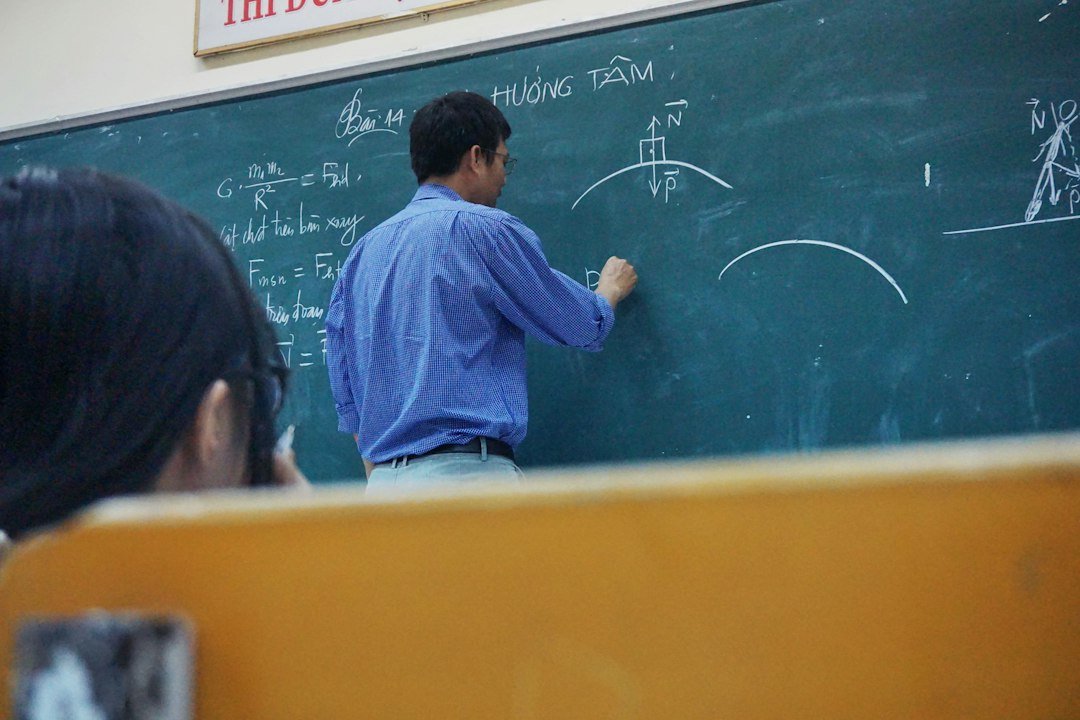
With AI handling much of the direct instruction, explanation, and drill-and-practice, teachers are freed from the more routine, often repetitive tasks. They will no longer need to spend hours explaining the same concept to different groups or marking endless sets of homework. Instead, their time can be dedicated to facilitating deeper learning, guiding discussions, and fostering critical thinking. They can focus on project-based learning, collaborative activities, and creative problem-solving, areas where human interaction and nuanced understanding are paramount. The classroom becomes less about lecturing and more about dynamic engagement.
Mentorship and Socio-Emotional Support
Teachers are far more than just knowledge dispensers; they are crucial figures in students’ socio-emotional development. AI tutors, while excellent at academic tasks, cannot replicate the empathy, motivational capabilities, or understanding of complex social dynamics that human teachers possess. When AI takes on the bulk of academic tutoring, teachers can dedicate more time to mentorship, understanding individual student challenges (both academic and personal), and providing tailored emotional support. They can help students develop soft skills like collaboration, communication, resilience, and emotional intelligence – skills that are increasingly vital in the modern world. This shift allows teachers to become true mentors, focusing on the holistic development of each child.
Data Analysis and Intervention Strategist
One of the most powerful tools AI tutors will provide teachers is unparalleled data. Imagine a dashboard showing every student’s progress, identifying exactly where they’re excelling and where they’re struggling. Teachers will have access to real-time analytics on concept mastery, common errors, time spent on tasks, and even emotional engagement (if ethical considerations are met). This data allows teachers to become highly effective intervention strategists. They can quickly identify patterns across the class, spot individual students who need extra human attention, and design targeted small-group interventions or one-on-one sessions based on concrete evidence. Instead of guessing, teachers can make data-driven decisions that genuinely impact student outcomes.
Challenges and Ethical Considerations
While the promise of AI tutors is immense, their widespread adoption will not be without significant challenges and crucial ethical dilemmas that need careful navigation.
Digital Divide and Equity
One of the most pressing concerns is the potential to exacerbate the digital divide. If AI tutors are primarily accessed through personal devices and reliable internet connections, students from lower socio-economic backgrounds, who may lack these resources, could be left behind. Ensuring equitable access will require massive investment in infrastructure, devices, and digital literacy programmes for all students, regardless of their background. Without careful planning, AI tutors could widen the achievement gap rather than narrow it. This isn’t just about providing a tablet; it’s about reliable connectivity and a supportive home environment for digital learning.
Data Privacy and Security
AI tutors will collect vast amounts of highly sensitive data about students: their learning patterns, strengths, weaknesses, engagement levels, and potentially even their emotional responses. Protecting this data from misuse, breaches, and exploitation is paramount. Robust data privacy regulations, transparent policies, and state-of-the-art security measures will be absolutely essential. Parents and students must have clear understanding and control over how their data is collected, stored, and used. The risk of this information falling into the wrong hands or being used for purposes beyond education cannot be underestimated.
Over-Reliance and Critical Thinking Erosion
There’s a risk that students could become overly reliant on AI tutors, potentially hindering the development of independent problem-solving skills and critical thinking. If an AI always provides the answer or the next step, do students learn to struggle productively, research independently, or grapple with complex ideas without immediate assistance? Educators will need to design curricula and AI interactions that encourage intellectual curiosity, foster resilience in the face of challenges, and teach students how to think, not just what to think. The goal should be to augment human intelligence, not replace it.
Algorithmic Bias
AI models are trained on data, and if that data reflects existing societal biases, the AI tutor could inadvertently perpetuate or even amplify them. For instance, if an AI is primarily trained on data from a specific cultural or linguistic group, it might perform poorly or provide less relevant support to students from different backgrounds. Biases in assessment or feedback could also emerge, subtly influencing a student’s educational trajectory. Developing fair, inclusive, and culturally sensitive AI requires diverse training data, rigorous testing, and ongoing auditing to identify and mitigate biases.
Teacher Training and Adaptation
The shift in the teacher’s role will require significant investment in professional development. Teachers will need training not only on how to use AI tools effectively but also on how to leverage the data they provide, how to facilitate project-based learning, and how to focus on higher-order skills. This represents a substantial change in pedagogy and requires a proactive approach to continuous learning for educators. Without adequate support and training, teachers might feel overwhelmed or threatened by the new technology.
Impact on Curriculum and Assessment
The presence of ubiquitous AI tutors will undoubtedly force a re-evaluation of what we teach and how we measure learning outcomes. The emphasis will likely shift towards skills that AI cannot easily replicate.
Curriculum Evolution
If AI can deliver bespoke lessons on core subjects, what then becomes the primary focus of human-led education? The curriculum will likely evolve to place greater emphasis on creativity, critical thinking, complex problem-solving, collaboration, and ethical reasoning. These ’21st-century skills’ are often harder to teach and assess but are increasingly vital for future success. Content delivery will still exist, but the application of that content in novel situations, and the ability to think innovatively, will gain prominence. Learning might become less about memorising facts (which AI can instantly retrieve) and more about understanding concepts, making connections, and creating new ideas.
Authentic Assessment
Traditional standardised tests, which often focus on rote memorisation and recall, may become less relevant. With AI tutors capable of tracking a student’s mastery in real-time, continuous assessment could become the norm. Furthermore, there will be a move towards more authentic assessments that measure higher-order skills. This could involve project-based assessments, portfolios of work, presentations, debates, and real-world problem-solving challenges. AI could even assist in the grading of these complex tasks, providing teachers with analytical feedback on student performance in areas like logical coherence, argumentative strength, or creative output. The focus shifts from measuring what students know to measuring what they can do with what they know.
Interdisciplinary Learning
AI tutors can easily bridge subjects, drawing connections between history, science, literature, and mathematics. This capability naturally lends itself to more interdisciplinary learning approaches, breaking down the traditional silos between subjects. Students could explore complex topics from multiple perspectives, guided by an AI that can pull relevant information and exercises from various domains. This fosters a more holistic understanding of the world and prepares students for real-world problems that rarely fit neatly into a single academic discipline.
The Future of the Classroom Environment
The physical and social dynamics of the classroom will also undergo significant transformation with AI tutors as ubiquitous learning companions.
Flexible Learning Spaces
The traditional classroom setup with rows of desks facing a whiteboard might become a relic of the past. With students often engaging individually with their AI tutors, learning spaces could become far more flexible and dynamic. Imagine areas designed for quiet, focused individual work, alongside collaborative zones for group projects, discussion nooks, and presentation spaces. Teachers might move fluidly between these zones, offering targeted support or facilitating group activities. The physical environment will adapt to support a variety of learning modalities, fostering both independent and collaborative work.
Enhanced Collaboration
While AI tutors can personalise individual learning, they can also facilitate enhanced collaboration. AI can identify students who might benefit from working together on a particular challenge, pairing them based on complementary strengths or areas where they can learn from each other. AI could even act as a ‘third party’ in group projects, offering suggestions, helping to keep discussions on track, or providing resources relevant to the group’s task. This moves beyond simple group work to intelligent, AI-augmented collaboration, preparing students for team-based environments common in the professional world.
Global Learning Communities
AI tutors, especially those connected to global platforms, can connect students beyond their immediate classroom or even country. A student in London could collaborate on a science project with a student in Mumbai, with AI translating languages and contextualising cultural differences. This opens up unparalleled opportunities for cross-cultural understanding, global citizenship, and exposure to diverse perspectives. The classroom effectively expands to encompass a global network of learners and resources, fostering a truly interconnected educational experience.
Student Well-being and Mental Health
A less obvious but potentially profound impact is on student well-being. For students who struggle academically or feel anxious about asking questions in front of peers, an AI tutor offers a safe, judgment-free space for learning. They can ask ‘silly’ questions, make repeated mistakes, and get help without embarrassment. This could significantly reduce academic stress and boost confidence. Furthermore, by freeing up teachers from routine tasks, they will have more capacity to observe and address students’ mental health needs, fostering a more supportive and empathetic school environment.
In conclusion, the widespread adoption of AI tutors marks a pivotal moment in education. It promises a future where learning is deeply personalised, where teachers are empowered as mentors and strategists, and where the curriculum evolves to prioritise truly human skills. While the journey will present significant challenges in terms of equity, privacy, and pedagogical adaptation, navigating these carefully will unlock a learning environment that is more engaging, effective, and equitable for every student. It’s not just about technology; it’s about reimagining the very essence of what it means to learn and teach.