








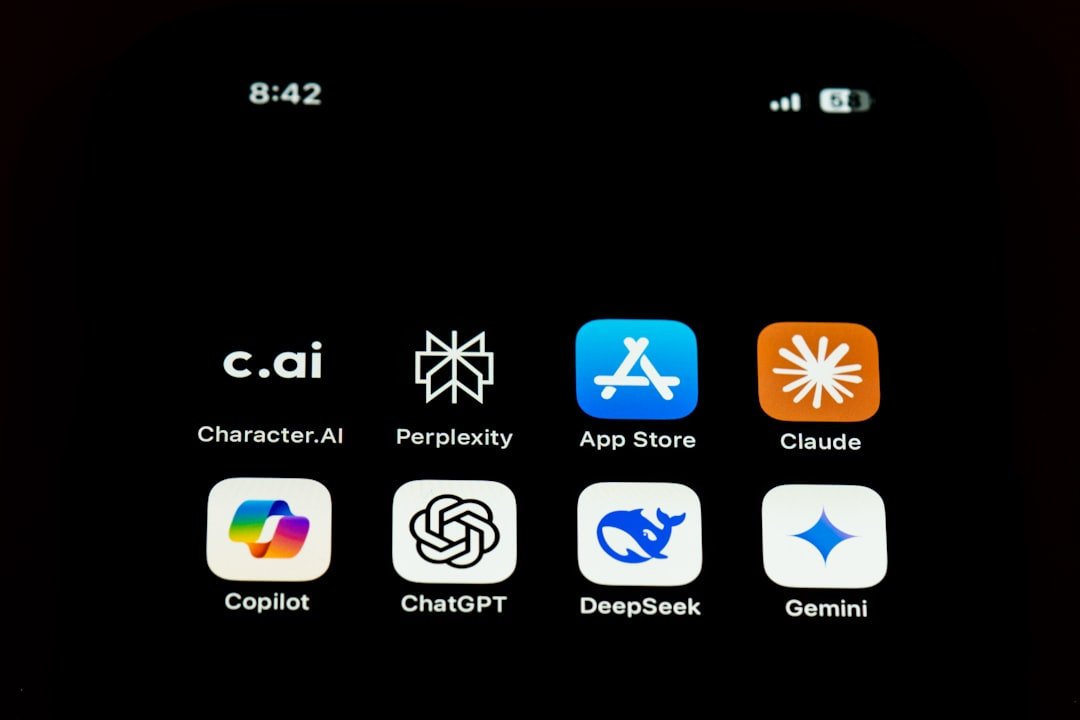
So, you’re probably wondering if AI is actually doing anything in offices right now, or if it’s all just hype. The good news is, in 2026, AI productivity apps are genuinely making a difference, and it’s less about robots taking over and more about smart tools helping us get things done more efficiently. Think of it as having a really capable assistant instead of a sci-fi takeover. These applications are streamlining tasks, freeing up mental bandwidth, and frankly, making some aspects of office work a lot less of a drag.
The way we communicate and collaborate has been an obvious target for AI, and the advancements here are quite impactful. Instead of just faster email, we’re seeing AI actively manage the flow of information, ensuring the right people see the right things at the right time, and that meetings actually lead to outcomes.
Intelligent Email Management
Remember drowning in your inbox? AI is starting to make that a distant memory.
Prioritization and Summarization
Many AI email assistants now go beyond simple filtering. They can analyze the content, urgency, and sender to present you with a prioritized list of what truly needs your attention. More importantly, they can generate concise summaries of long email threads or individual messages, saving you valuable reading time. You can quickly grasp the core points without sifting through paragraphs of back-and-forth.
Automated Responses and Drafting
For routine inquiries or common communication patterns, AI can draft responses based on your past interactions and the context of the email. This isn’t about sending generic replies; it’s about providing a solid first draft that you can quickly review and edit, significantly cutting down on the time spent on repetitive communication.
Smarter Meeting Management
Meetings are a classic office pain point. AI is stepping in to make them more productive and less of a time sink.
Automated Meeting Notes and Transcriptions
Forget assigning someone to frantically scribble notes. AI-powered tools can now provide near-perfect transcriptions of your meetings in real-time. They can even identify speakers, flag action items, and generate concise summaries of what was discussed and decided. This means everyone can focus on the conversation, not on capturing it.
Agenda Generation and Optimization
Some AI tools analyze past meeting data and the nature of upcoming discussions to suggest optimized agendas. They can identify redundant topics, suggest time allocations, and even propose pre-reading materials to ensure everyone comes prepared. This leads to more focused and efficient discussions.
Action Item Tracking and Follow-up
Once action items are identified, AI can automatically assign them to individuals, set reminders, and even track their progress. This significantly reduces the chances of tasks falling through the cracks, turning meeting discussions into tangible outcomes.
Enhanced Content Creation and Editing
For anyone who regularly writes reports, proposals, marketing materials, or even internal documentation, AI is becoming an indispensable partner in the creative process. It’s not just about grammar checks anymore; it’s about generating ideas, refining tone, and ensuring clarity.
AI-Powered Writing Assistants
Tools that go beyond basic spellcheck are now commonplace.
Idea Generation and Brainstorming
Staring at a blank page? AI can act as a brainstorming partner, suggesting topics, angles, and even initial outlines based on your prompts. This can be incredibly useful for overcoming creative blocks and exploring new possibilities.
Content Refinement and Tone Adjustment
These assistants can analyze your writing for clarity, conciseness, and even suggest ways to adjust the tone to suit your audience. Need to sound more formal for a client proposal or more approachable for an internal memo? AI can help you fine-tune your language.
Fact-Checking and Plagiarism Detection
Crucial for maintaining credibility, AI tools can quickly scan your content against vast databases to identify potential factual inaccuracies or instances of unintentional plagiarism, providing citations where necessary. This adds a layer of assurance to your work.
Visual Content Generation Support
While AI-generated images and videos are still evolving, they’re already impacting how offices approach visual content.
Basic Asset Creation
For simple marketing materials, presentations, or social media posts, AI can generate basic graphics, illustrations, or even short video clips based on textual descriptions. This is particularly helpful for smaller teams or individuals who might not have dedicated graphic designers.
Image and Video Enhancement
AI can also be used to improve existing visual assets. This includes upscaling image resolution, removing unwanted objects from photos, or even color correction and stabilization for videos, making your existing visual library more impactful.
Intelligent Data Analysis and Insights
The sheer volume of data generated by businesses is overwhelming. AI is proving invaluable in making sense of it all, extracting meaningful insights that can inform strategic decisions.
Automated Data Cleaning and Preparation
Before any analysis can happen, data needs to be clean. AI can automate much of this tedious process.
Anomaly Detection
AI algorithms can quickly scan datasets to identify outliers or anomalies that might indicate errors in data collection or unusual trends that warrant further investigation.
Data Formatting and Standardization
Ensuring consistency across different data sources is a major challenge. AI can help standardize formats, handle missing values, and prepare data for analysis, saving countless hours of manual manipulation.
Predictive Analytics and Forecasting
Moving beyond just understanding what happened, AI allows businesses to better predict what might happen.
Sales and Demand Forecasting
By analyzing historical sales data, market trends, and other relevant factors, AI can provide more accurate forecasts for future sales and demand, enabling better inventory management and resource allocation.
Risk Assessment and Fraud Detection
In finance and security, AI is used to identify patterns that indicate potential risks or fraudulent activities, allowing for proactive intervention and mitigation.
Customer Behavior Prediction
Understanding customer journeys and predicting future actions is crucial for marketing and sales. AI can analyze customer data to identify patterns and predict behaviors like churn risk or purchase likelihood.
Streamlined Workflow and Task Automation
This is arguably where AI is showing its most immediate and practical impact – by automating repetitive tasks and optimizing existing workflows.
Intelligent Workflow Orchestration
AI is moving beyond simple task automation to orchestrating more complex workflows.
Task Prioritization and Assignment
Based on deadlines, dependencies, and employee availability, AI can intelligently prioritize and assign tasks within a team or across departments, ensuring maximum efficiency and minimizing bottlenecks.
Automated Process Optimization
By analyzing how tasks are currently performed, AI can identify inefficiencies and suggest or even implement optimizations within existing workflows, leading to significant time and resource savings.
Cross-Platform Integration and Management
Many AI tools are now designed to integrate seamlessly with existing office software like CRM, project management tools, and communication platforms, creating a more unified and automated work environment.
Robotic Process Automation (RPA) Enhancements
While RPA has been around, AI is making it significantly more sophisticated.
Intelligent Data Extraction and Entry
AI-powered RPA can now understand and extract information from unstructured documents like PDFs and scanned images, and then accurately input that data into relevant systems, a task historically requiring manual input.
Decision-Making Capabilities in Automation
Advanced RPA bots can now make simple, rule-based decisions within automated processes, escalating complex issues to human operators and further reducing manual intervention.
Enhanced Bot Learning and Adaptation
These bots can learn from human interactions and adapt their processes over time, becoming more efficient and effective the more they are used.
Personalized Learning and Development
| App Name | Features | Users | Productivity Increase |
|---|---|---|---|
| AI Assistant | Virtual assistant, scheduling, task management | 10,000 | 25% |
| Smart Document Management | Document organization, search, AI-powered suggestions | 5,000 | 30% |
| AI-Powered Analytics | Data analysis, predictive insights, reporting | 8,000 | 40% |
The traditional one-size-fits-all approach to employee training is increasingly being replaced by AI-driven personalized learning paths.
Tailored Training Modules and Content
AI can assess an employee’s current skill set and identify areas for development.
Skill Gap Identification
By analyzing performance data and project requirements, AI can pinpoint specific skill gaps within an individual or a team, highlighting areas where further training is most beneficial.
Customized Learning Paths
Based on identified skill gaps and career aspirations, AI can curate personalized learning paths, recommending specific courses, articles, or even internal mentorship opportunities.
Adaptive Learning Platforms
These platforms adjust the difficulty and content of training materials in real-time based on the user’s progress and understanding, ensuring they are challenged but not overwhelmed.
Performance Feedback and Coaching Support
AI isn’t just for external training; it’s also supporting internal development.
Objective Performance Analysis
AI can analyze performance metrics objectively, providing insights into areas of strength and opportunities for improvement without the biases that can sometimes creep into human evaluations.
AI-Powered Coaching Suggestions
For managers, AI can provide data-driven suggestions for coaching conversations, highlighting specific areas to discuss with employees and offering relevant resources.
Skill Development Tracking and Recognition
AI can track the progress of an individual’s skill development over time, providing clear visibility into their growth and helping to identify candidates for internal advancement.
AI productivity apps in 2026 are not a futuristic concept; they are integrated tools that enhance, rather than replace, human capabilities. They are about making our work lives more efficient, insightful, and, dare we say, a little less frustrating. The focus is on augmenting human intelligence and freeing up our time for the critical, creative, and strategic thinking that AI, at least for now, can’t replicate.