








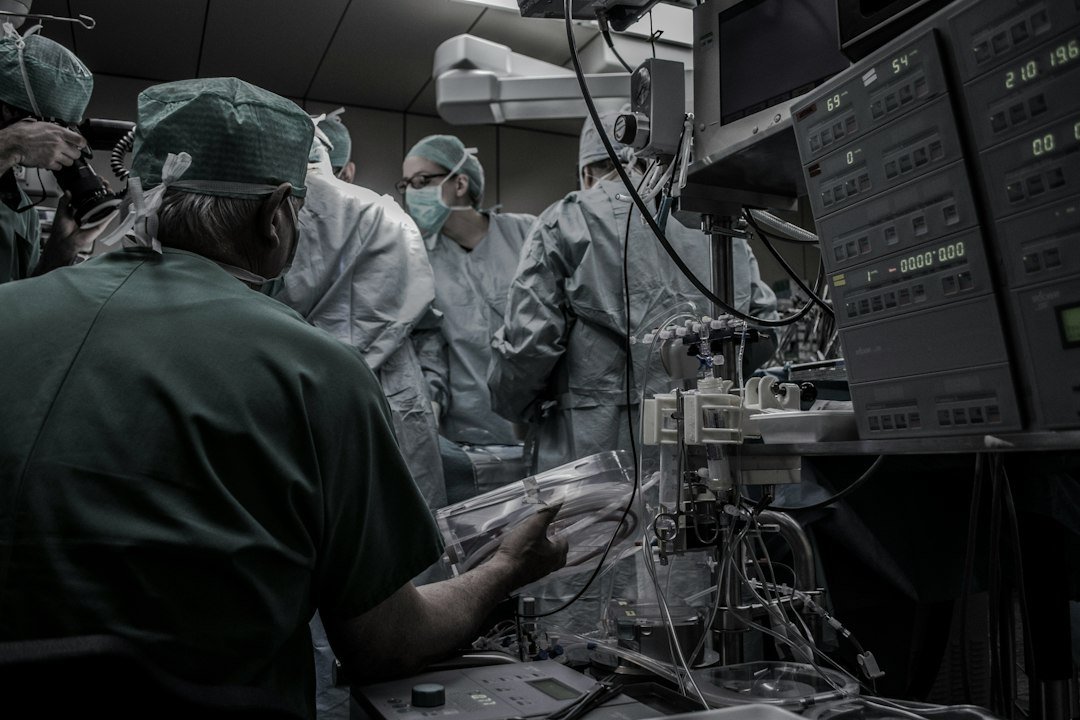
AI in surgery, particularly through robotics and enhanced precision, is already making a significant impact on how operations are performed, leading to more accurate, less invasive procedures and better outcomes for patients. It’s not a futuristic concept; it’s happening now, and the technology is continually evolving.
The Foundation of Surgical AI
Artificial intelligence in the operating theatre isn’t about replacing human surgeons; it’s about augmenting their capabilities. Think of it as giving a surgeon a highly sophisticated co-pilot or an incredibly precise tool that can process vast amounts of data in real-time. The core idea is to leverage AI’s ability to learn from data, recognise patterns, and make informed suggestions or perform intricate tasks with superhuman consistency.
Early Beginnings and Robotic Assistance
Robotic surgery isn’t entirely new. Systems like the da Vinci Surgical System have been around for over two decades, allowing surgeons to perform complex procedures with enhanced dexterity, magnified 3D vision, and greater precision than manual laparoscopy. While these early robots were teleoperated – meaning the surgeon was still in direct control, just through a sophisticated interface – they laid the groundwork for integrating more advanced AI. The learning curve for these systems can be steep, but the benefits in terms of smaller incisions, reduced blood loss, and faster recovery times have been well-documented.
Beyond Teleoperation: Smarter Systems
The real shift with AI comes when these systems move beyond simply translating a surgeon’s movements. Modern AI in surgery is about predictive analytics, image recognition, and real-time guidance. Imagine an AI that can analyse a patient’s medical history, scans, and even genetic data to suggest the optimal surgical approach before the first incision is made. During the operation, AI can then provide overlays on live video feeds, highlighting critical structures, identifying potential risks, or even predicting complications. This moves us from simple robotic assistance to intelligent surgical platforms.
Enhancing Surgical Precision and Outcomes
One of the most compelling aspects of AI in surgery is its ability to elevate precision to unprecedented levels. Human hands, no matter how skilled, have natural tremors and fatigue. Robotic systems, guided by AI, can perform movements with microscopic accuracy and unwavering steadiness, which is crucial in delicate procedures.
Micron-Level Accuracy
Consider neurosurgery or ophthalmic surgery, where even a tiny deviation can have profound consequences. AI-driven robotic arms can be programmed to operate within tolerances far beyond human capability. This isn’t just about steady hands; it’s about executing pre-planned trajectories with absolute fidelity. The robot can hold a position indefinitely without fatigue, and it can perform repetitive tasks, like drilling or cutting, with consistent force and depth. This level of control minimises tissue damage, reduces recovery times, and improves the likelihood of a successful outcome.
Real-time Image Guidance
AI’s prowess in image recognition is a game-changer in the operating theatre. Surgeons already rely heavily on imaging – X-rays, MRI, CT scans – to plan their operations. However, during surgery, the anatomy can shift, and things don’t always look exactly as they did on a pre-operative scan. AI can process live video feeds from endoscopes or other cameras, overlaying pre-operative imaging data onto the real-time view. This creates an “augmented reality” for the surgeon, highlighting tumours, blood vessels, or nerves that might otherwise be difficult to distinguish, especially in complex or highly vascularised areas.
Predictive Analytics and Risk Mitigation
Before a surgeon even picks up a scalpel, AI can play a crucial role in patient assessment and surgical planning. By analysing vast datasets of previous patient outcomes, an AI model can predict potential complications for an individual patient based on their unique characteristics, comorbidities, and the planned procedure. This allows the surgical team to proactively mitigate risks, adjust the surgical plan, or even recommend alternative treatments. During surgery, AI can monitor physiological parameters and flag subtle changes that might indicate an impending problem, giving the team precious extra time to react.
Applications Across Surgical Disciplines
AI and robotics are not confined to a single specialty; their utility spans a broad spectrum of surgical fields, each benefiting from enhanced precision and intelligence.
General Surgery
In general surgery, AI-powered robots are increasingly used for procedures like cholecystectomies (gallbladder removal), hernia repairs, and colorectal resections. The benefits here include smaller incisions, which lead to less pain and faster recovery, and the ability to perform complex dissections with greater accuracy, reducing the risk of accidental injury to surrounding organs. AI can also assist in tissue identification, differentiating between healthy and cancerous tissue in real-time, potentially reducing the need for repeat surgeries.
Orthopaedic Surgery
Orthopaedic procedures, particularly joint replacements (hip and knee), are prime candidates for AI and robotics. Robotic systems, guided by pre-operative CT scans and AI algorithms, can precisely mill bone to ensure perfect alignment and fit of prosthetic components. This bespoke approach can significantly improve the longevity of implants and reduce the likelihood of complications like dislocation or premature wear. AI can also assist in spinal surgery, guiding instruments with extreme precision to avoid nerve damage during delicate procedures.
Neurosurgery
The brain and spinal cord demand the utmost precision. AI-driven robots are already assisting in biopsies, tumour resections, and deep brain stimulation (DBS) procedures. The robot can maintain a steady trajectory for biopsy needles or electrodes, ensuring they reach their target with pinpoint accuracy, avoiding critical structures. AI can also analyse intraoperative imaging to help surgeons navigate complex brain anatomy, making procedures safer and more effective.
Cardiovascular Surgery
In cardiovascular surgery, AI is finding applications in robotic-assisted bypass procedures and valve repairs. The ability of robots to operate through tiny incisions reduces the invasiveness of these major operations, lessening patient trauma and speeding up recovery. AI can also help in navigating the intricate network of blood vessels and performing delicate suturing with enhanced stability and precision.
Urology
Robotic prostatectomy is perhaps one of the most established robotic surgical procedures. AI further refines this by offering enhanced visualisation and the ability to distinguish between cancerous and healthy tissue with greater accuracy. This can lead to better oncological outcomes and a reduction in side effects like incontinence and impotence. Other urological procedures, such as partial nephrectomy (kidney tumour removal), also benefit from AI and robotic precision, preserving more healthy kidney tissue.
Challenges and Ethical Considerations
While the promise of AI in surgery is immense, it’s crucial to acknowledge the challenges and ethical considerations that accompany its integration. It’s not a silver bullet, and careful thought is needed as the technology evolves.
Cost and Accessibility
One of the most significant barriers to widespread adoption is the cost. Robotic surgical systems are expensive to purchase, maintain, and upgrade. This can create a disparity in access, with wealthier institutions and countries being able to afford the technology, potentially widening the gap in healthcare quality. Ensuring equitable access will require innovative funding models and a focus on cost-effectiveness as the technology matures.
Training and Skill Set
Surgeons need extensive training to effectively use robotic systems, let alone AI-powered ones. This involves not only learning how to operate the machines but also understanding the underlying AI algorithms and knowing when to trust or override the system’s recommendations. There’s a need to integrate AI and robotics training into surgical curricula, ensuring that future generations of surgeons are equipped with these new skills.
Data Privacy and Security
AI systems rely heavily on data – patient medical records, surgical videos, physiological readings. Protecting this sensitive information is paramount. Robust cybersecurity measures are essential to prevent data breaches, and strict protocols must be in place to ensure patient anonymity and compliance with regulations like GDPR. The ethical use of patient data for training AI models is also a complex area that requires careful governance.
Accountability and Liability
If an AI system makes an error that leads to patient harm, who is accountable? Is it the surgeon, the hospital, the software developer, or the hardware manufacturer? This is a legal and ethical minefield that needs clear frameworks as AI becomes more autonomous in the operating room. Establishing clear lines of responsibility is vital for patient safety and maintaining trust in these technologies.
Over-reliance and Loss of Human Intuition
There’s a concern that over-reliance on AI could lead to a decline in surgeons’ fundamental manual skills and clinical intuition. While AI can augment decision-making, it shouldn’t replace a surgeon’s critical thinking and ability to adapt to unexpected situations. The goal is a synergistic relationship where AI enhances human expertise, not supplants it. Striking this balance is crucial to ensure that surgeons remain the ultimate decision-makers in the operating theatre.
The Future Landscape of Surgical AI
The trajectory for AI in surgery is one of continuous advancement, with exciting developments on the horizon that promise to further revolutionise patient care.
Autonomous Surgical Tasks
While fully autonomous surgery is still some way off and raises significant ethical questions, we are likely to see AI taking on more autonomous tasks within a procedure. Imagine an AI robot performing a routine suturing pattern with perfect consistency, or autonomously closing incisions while the surgeon focuses on more complex aspects. This doesn’t mean removing the surgeon but rather freeing them up from repetitive, lower-level tasks to concentrate on high-level decision-making and problem-solving.
Personalised Surgical Plans
AI’s ability to process vast amounts of data will lead to increasingly personalised surgical plans. By integrating a patient’s genetic profile, lifestyle factors, and specific disease characteristics, AI could suggest not just the best surgical approach but also the optimal pre- and post-operative care, tailored to maximise individual patient recovery and outcome. This moves beyond ‘one size fits all’ to truly individualised medicine.
Miniaturisation and Nanorobotics
The trend towards miniaturisation in robotics is set to continue. We can anticipate even smaller, more agile robots capable of operating in incredibly confined spaces, further reducing invasiveness. Looking further ahead, nanorobots could potentially perform interventions at a cellular level, delivering drugs precisely to cancerous cells or repairing damaged tissues from within, though this is still largely in the realm of research.
Haptic Feedback and Enhanced Sensory Input
Current robotic systems often lack the nuanced sense of touch that a human surgeon possesses. Future developments will focus on advanced haptic feedback, allowing surgeons to “feel” tissues and forces through their control interfaces, even while operating remotely. Coupled with enhanced sensory input – such as multispectral imaging to identify tissue types or chemical sensors – AI could provide surgeons with a much richer, more comprehensive understanding of the surgical field.
Global Collaboration and Data Sharing
The rapid advancement of AI in surgery will be accelerated by global collaboration and the ethical sharing of de-identified surgical data. This will allow AI models to be trained on incredibly diverse and comprehensive datasets, making them more robust, accurate, and less prone to bias. International partnerships between hospitals, research institutions, and technology companies will be key to unlocking the full potential of these transformative technologies for the benefit of patients worldwide.
In essence, AI in surgery isn’t just about faster or more precise cuts; it’s about fundamentally changing the decision-making process, the execution of complex tasks, and ultimately, the standard of care for patients. While the challenges are real, the trajectory is clear: AI is set to become an indispensable partner in the operating theatre, working alongside human surgeons to achieve outcomes previously thought impossible.