

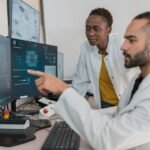






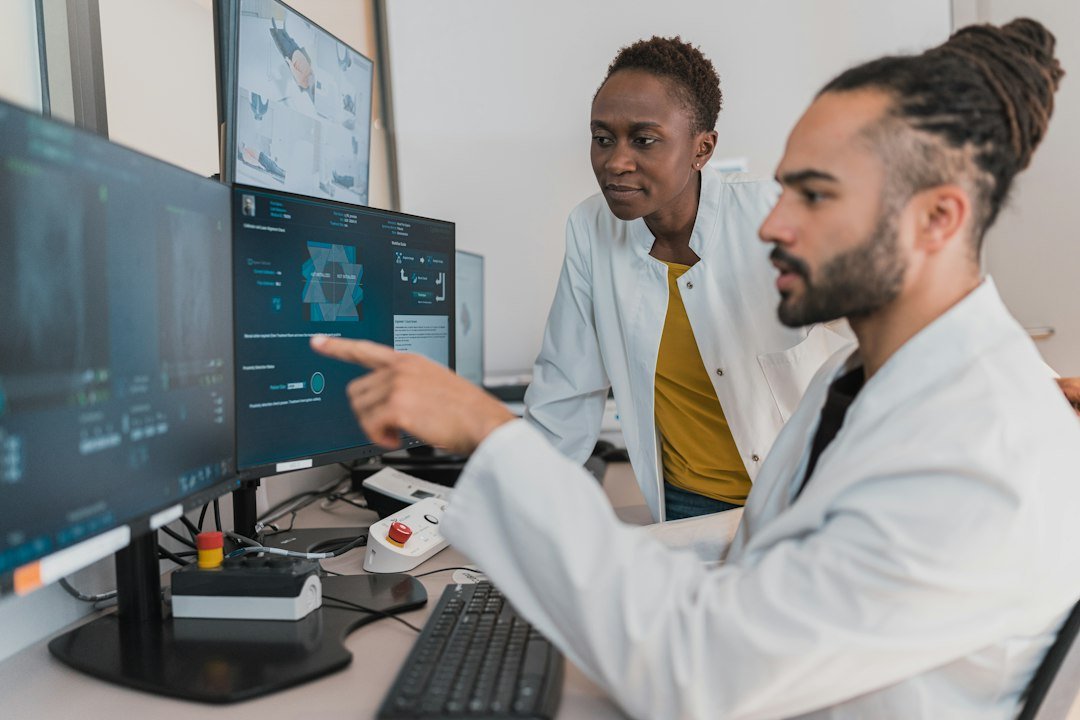
Artificial intelligence isn’t here to replace your doctor, but it is rapidly becoming an incredibly powerful tool in their diagnostic toolkit. Think of it as a super-smart co-pilot, working alongside your physician to sift through vast amounts of data, spot subtle patterns, and ultimately help them make more accurate and timely diagnoses. This collaboration between human expertise and AI’s analytical prowess is set to revolutionise how we approach healthcare, making diagnostics more precise and personalised for everyone.
The AI Diagnostic Revolution: More Than Just Algorithms
The idea of AI assisting in medical diagnosis might sound a bit futuristic, but it’s already happening in various forms. It’s not about a machine replacing the nuanced understanding and empathetic touch of a human doctor; instead, it’s about augmenting their capabilities. Imagine a system that can review millions of patient records, scientific papers, and imaging results in mere seconds, far exceeding what any human could achieve. This computational power isn’t about making decisions independently but about highlighting critical information and potential insights that might otherwise be missed.
Understanding AI’s Core Diagnostic Strengths
AI’s strength in diagnostics lies primarily in its ability to process and analyse enormous datasets. This includes medical images like X-rays, MRIs, and CT scans, where AI algorithms can be trained to identify anomalies such as tumours or lesions with remarkable accuracy, often even before a human eye might detect them. Beyond imaging, AI can analyse patient data from electronic health records, including symptoms, lab results, genetic information, and even lifestyle factors. By correlating these diverse data points, AI can identify patterns indicative of specific diseases, predict disease progression, or even flag patients at higher risk for certain conditions. It’s a powerful tool for pattern recognition and anomaly detection, which are fundamental to accurate diagnosis.
Beyond Simple Pattern Matching: Deep Learning in Action
The advanced AI techniques driving these diagnostic capabilities often fall under the umbrella of ‘deep learning,’ a subset of machine learning inspired by the structure and function of the human brain. Deep learning models, particularly ‘convolutional neural networks’ (CNNs), are exceptionally good at image recognition. For instance, in dermatology, a CNN can be trained on thousands of images of skin lesions, both benign and malignant, to differentiate between them. Similarly, in pathology, AI can analyse biopsy slides to identify cancerous cells or classify different types of tumours more rapidly and consistently than a human can. This isn’t just simple pattern matching; it’s about learning complex hierarchical features from raw data, enabling it to ‘understand’ and interpret intricate medical information.
Practical Applications: Where AI is Making a Difference Today
It’s easy to talk about the theoretical benefits, but where exactly is AI already being used to assist doctors in diagnosing illnesses? The applications are diverse and growing, demonstrating real-world impact across various medical specialties. These are not distant future scenarios but technologies actively being developed and, in some cases, deployed in clinical settings.
Radiology: The Frontier of AI-Assisted Imaging
Radiology is arguably one of the most prominent areas where AI is making significant inroads. Radiologists are constantly scrutinising complex images for subtle abnormalities. AI algorithms can act as a crucial second pair of eyes, sometimes even the first. For example, AI can rapidly screen chest X-rays for signs of pneumonia, tuberculosis, or lung nodules, flagging suspicious areas for the radiologist to review. This can drastically reduce the workload for human radiologists, allowing them to focus their attention on the most critical cases. In mammography, AI is being used to improve the detection of breast cancer, helping to reduce false positives and false negatives. Tools are also emerging for identifying intracranial haemorrhages on CT scans or assessing bone age from hand X-rays, tasks that can be time-consuming for humans but are quickly processed by AI. The key here is efficiency and consistency; AI doesn’t get tired or distracted, maintaining a high level of performance over countless images.
Pathology: Unlocking Insights from Tissue Samples
Pathology, the study of disease through the examination of tissues, organs, and bodily fluids, is another fertile ground for AI. Pathologists often spend hours examining microscopic slides, looking for specific cellular characteristics that indicate disease. AI-powered systems can digitise these slides and then analyse them, automatically identifying cancerous cells, grading tumours, or even predicting a tumour’s aggressiveness. For instance, in prostate cancer diagnosis, AI can analyse biopsy images to grade the tumour according to the Gleason score, which guides treatment decisions. This not only speeds up the diagnostic process but can also improve the consistency of diagnoses between different pathologists, reducing inter-observer variability. Furthermore, AI can highlight very small, often overlooked, areas of interest on a slide, ensuring no crucial information is missed.
Ophthalmology: Detecting Eye Conditions Early
The human eye is a remarkably complex organ, and many diseases manifest with subtle changes in the retina or other structures. AI is proving invaluable in ophthalmology for detecting conditions like diabetic retinopathy, glaucoma, and age-related macular degeneration (AMD). By analysing images of the retina, AI algorithms can identify early signs of these diseases, often before symptoms become apparent to the patient. This early detection is crucial for preventing vision loss. For example, AI systems can automatically assess fundus photographs for microaneurysms, haemorrhages, and exudates indicative of diabetic retinopathy, providing a rapid screening tool that can be deployed in primary care settings or even remotely.
Cardiology: Aiding in Heart Disease Diagnosis
From interpreting electrocardiograms (ECGs) to analysing cardiac imaging, AI is starting to play a role in cardiology. AI algorithms can identify subtle abnormalities in ECG readings that might indicate conditions like atrial fibrillation or other arrhythmias, helping cardiologists make quicker and more accurate diagnoses. In cardiac MRI, AI can automate the measurement of heart chambers and blood flow, reducing the time spent on manual analysis and improving consistency. This allows for more precise assessment of heart function and the detection of structural abnormalities.
The Human-AI Partnership: Synergies and Strengths
It’s vital to reiterate that the vision isn’t about AI replacing doctors. Instead, it’s about forming a powerful partnership. The AI handles the heavy lifting of data analysis and pattern recognition, while the human physician brings critical thinking, empathy, ethical judgment, and the ability to handle complex, ambiguous situations that AI isn’t equipped for. This synergy aims to elevate the quality of care, not diminish the role of medical professionals.
The Doctor’s Enduring Role: Beyond Data Processing
While AI excels at processing vast amounts of objective data, a doctor’s role extends far beyond that. They interpret the AI’s findings within the broader context of a patient’s life, considering their unique history, social circumstances, emotional state, and personal preferences. Diagnosing isn’t just about identifying a disease; it’s about understanding the patient experiencing that disease. A doctor asks clarifying questions, observes non-verbal cues, provides reassurance, and builds trust – all intrinsically human qualities that AI cannot replicate. Moreover, doctors are responsible for explaining complex medical information in an understandable way, discussing treatment options, and navigating ethical dilemmas, none of which AI can truly do. The physician provides the critical human interface, ensuring the AI’s insights are applied wisely and compassionately.
Improving Diagnostic Accuracy and Reducing Errors
One of the most compelling arguments for AI integration is its potential to improve diagnostic accuracy and reduce medical errors. Even highly experienced doctors can sometimes miss subtle clues or misinterpret complex data, especially when under pressure. AI acts as a sophisticated safety net, highlighting potential diagnoses or areas of concern that might have been overlooked. For instance, if a radiologist misses a small nodule on an X-ray, an AI system trained to detect such anomalies could flag it for a second look. This ‘double-checking’ mechanism can significantly enhance the reliability of diagnoses, leading to earlier intervention and better patient outcomes. It’s about leveraging the strengths of both – the AI’s tireless computational precision and the doctor’s overarching clinical wisdom.
Enhancing Efficiency and Reducing Physician Burnout
The sheer volume of information doctors must process daily is staggering, contributing significantly to physician burnout. AI can alleviate this burden by automating routine, time-consuming tasks. Imagine an AI system pre-screening all incoming medical images and flagging only the truly anomalous ones for a radiologist to review, or rapidly sifting through thousands of patient notes to identify relevant symptoms for a diagnosis. This frees up doctors’ valuable time, allowing them to focus on direct patient care, complex cases, and strategic decision-making. By making the diagnostic workflow more efficient, AI can help reduce the administrative load on healthcare professionals, potentially improving job satisfaction and reducing burnout rates.
Challenges and Considerations: Navigating the AI Landscape
While the potential benefits of AI in diagnostics are immense, it’s not without its challenges. Implementing AI effectively and ethically requires careful consideration of various factors, from data quality and bias to regulatory hurdles and the need for continuous medical education.
Data Quality and Bias: The Foundation of AI Performance
The old adage “garbage in, garbage out” is particularly relevant to AI. The performance of any AI diagnostic tool is entirely dependent on the quality and representativeness of the data it was trained on. If the training data is biased – for example, primarily representing a specific demographic group or geographic region – the AI may perform poorly or even make incorrect diagnoses when applied to patients outside that demographic. This could exacerbate existing health inequalities. Ensuring diverse, high-quality, and comprehensive datasets is paramount for developing robust and equitable AI systems. Additionally, privacy and security of patient data are critical concerns, requiring stringent safeguards and adherence to regulations like GDPR.
Explainability and Transparency: Understanding AI Decisions
One significant challenge with complex AI models, particularly deep learning networks, is their ‘black box’ nature. It can be difficult to understand why an AI arrived at a particular diagnostic suggestion. For doctors to trust and effectively use AI tools, there needs to be a degree of explainability or transparency. If an AI flags a lesion as suspicious, a doctor needs to know what features the AI identified to reach that conclusion. Developing ‘explainable AI’ (XAI) is an active area of research, aiming to provide insights into the AI’s reasoning, rather than just providing an output. This is crucial for clinical acceptance and for accountability in diagnostic decision-making.
Regulatory and Ethical Frameworks: Ensuring Safe Deployment
The rapid pace of AI development often outstrips the establishment of appropriate regulatory and ethical frameworks. Clear guidelines are needed for the validation, approval, and ongoing monitoring of AI diagnostic tools. Who is ultimately responsible if an AI makes a diagnostic error? How do we ensure these tools are used ethically, without over-reliance or the erosion of clinical judgment? Regulators like the MHRA (Medicines and Healthcare products Regulatory Agency) in the UK are working to establish standards, but it’s a complex and evolving landscape. Furthermore, ethical considerations around patient consent for data usage, the potential for deskilling doctors, and the equitable access to advanced AI diagnostics must be carefully addressed.
Integration into Clinical Workflow and Training
Even the most advanced AI tool is useless if it doesn’t seamlessly integrate into existing clinical workflows. This means designing user-friendly interfaces that provide actionable insights without adding to a doctor’s cognitive load. Furthermore, training healthcare professionals to effectively use, interpret, and critically evaluate AI outputs is essential. Medical curricula will need to adapt to include AI literacy, ensuring future doctors are not just users of these tools but informed partners. Overcoming resistance to change and demonstrating the tangible benefits of AI will be key to successful adoption.
The Future of Diagnosis: A Collaborative Journey
The journey towards the AI-augmented physician is well underway, and it’s a collaborative one. It involves not just AI developers and doctors but also patients, policymakers, and ethicists, all working together to shape a future where technology enhances human capabilities in healthcare.
Personalised Medicine: Tailoring Diagnoses to the Individual
One of the most exciting prospects of AI in diagnostics is its potential to drive truly personalised medicine. By integrating a patient’s genetic profile, lifestyle data, medical history, and real-time physiological measurements (from wearables, for example), AI can construct a highly individualised picture of their health. This could lead to diagnoses that are not only more accurate but also more specific to the individual, predicting their unique response to treatments or identifying predispositions to diseases long before they manifest. Imagine an AI that analyses your personal data to suggest a bespoke screening schedule or a preventive intervention tailored precisely to your risk factors.
Continuous Learning and Evolution
AI models are not static; they can continuously learn and improve over time as they are exposed to more data and real-world clinical outcomes. This creates a powerful feedback loop: as AI assists in more diagnoses, it gathers more data on those diagnoses and their outcomes, which can then be used to refine and enhance the AI’s performance. This iterative improvement means that AI diagnostic tools will become increasingly sophisticated and accurate, offering ever-greater support to medical professionals. The collaborative nature of this evolution, with clinicians providing feedback on AI performance, will be crucial.
Accessibility and Global Health Impact
Finally, AI has the potential to dramatically improve access to high-quality diagnostics, particularly in underserved areas globally. Imagine an AI-powered diagnostic tool that can be deployed on a smartphone or a low-cost imaging device, providing expert-level analysis in remote clinics or regions with a shortage of specialists. This could revolutionise primary care and early disease detection on a global scale, democratising access to advanced diagnostic capabilities. The AI-augmented physician, therefore, isn’t just a vision for high-tech hospitals but a beacon of hope for improving health outcomes worldwide. The ultimate goal is to empower doctors with the best possible tools, so they can, in turn, provide the best possible care.