
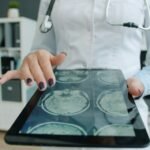




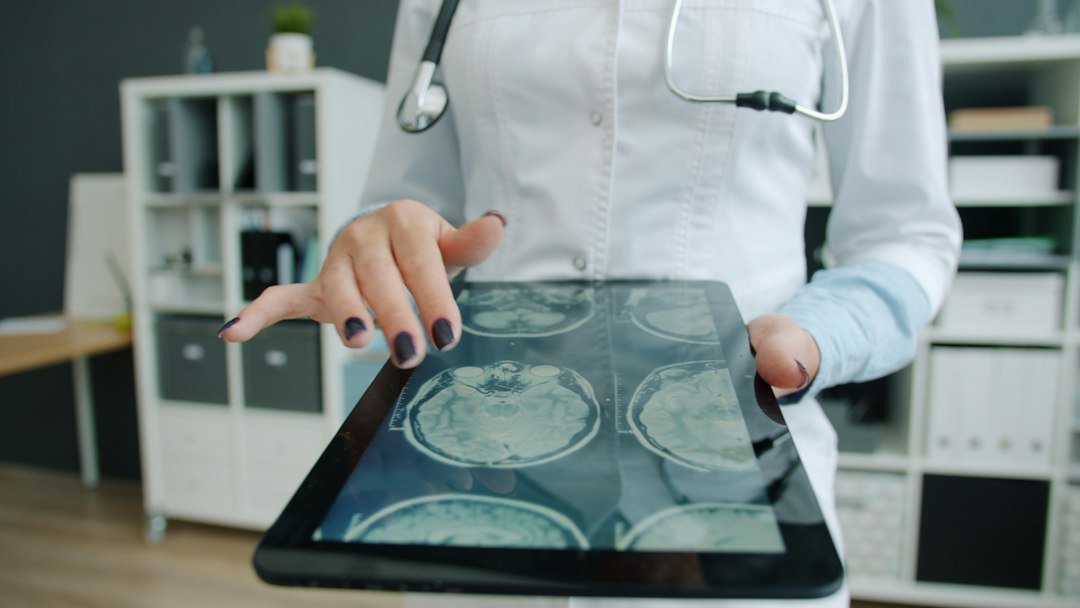
The integration of Artificial Intelligence (AI) is set to profoundly reshape medical education, moving beyond the traditional classroom and clinical settings to offer personalised, adaptive, and highly efficient learning experiences. Rather than replacing educators, AI tools will augment their capabilities, providing students with richer resources, real-time feedback, and exposure to a wider array of clinical scenarios than ever before. This isn’t about futuristic sci-fi; it’s about practical tools that are already starting to make waves, promising to revolutionise how future doctors are trained and prepared for the complexities of modern healthcare.
AI’s Current Footprint in Medical Learning
While the grand vision of AI in medical education is still evolving, there are already tangible applications making a difference. These tools are often more subtle than you might imagine, working behind the scenes to enhance learning rather than overtly replacing human interaction.
Personalised Learning Paths
One of AI’s most immediate benefits is its ability to tailor educational content to individual student needs. Traditional medical education often follows a one-size-fits-all curriculum, which can leave some students struggling and others unchallenged. AI can change this.
Adaptive Learning Platforms
These platforms use algorithms to assess a student’s current knowledge, identify their learning style, and pinpoint areas of weakness. Based on this analysis, the system then delivers customised content, practice questions, and simulations. For instance, if a student consistently struggles with cardiovascular physiology, the AI might provide additional interactive modules, case studies focused on heart conditions, or even recommend specific external resources. This ensures that each student progresses at an optimal pace, building a solid foundation before moving on. Think of it like a highly intelligent tutor who knows exactly what you need to learn next and how you learn best.
Intelligent Tutoring Systems
Beyond simply adapting content, intelligent tutoring systems can engage with students in a more dynamic way. These systems use natural language processing (NLP) to understand student queries and provide targeted explanations or steer them towards the correct understanding. Imagine a student asking “Why does acute pancreatitis cause hypocalcaemia?” The AI tutor wouldn’t just give a pre-programmed answer; it could engage in a brief Socratic dialogue, asking follow-up questions to help the student reason through the pathophysiology themselves, mirroring the kind of interaction they might have with a human mentor. This promotes deeper understanding rather than rote memorisation.
Enhanced Simulation and Virtual Reality Training
Medical education heavily relies on practical experience, which is often limited by resources and patient availability. AI, particularly when combined with virtual reality (VR) and augmented reality (AR), offers powerful solutions.
AI-Powered Medical Simulators
Traditional mannequins and simulators are useful but often lack the dynamic responsiveness of real patients. AI can imbue these simulators with a far greater degree of realism. For example, an AI-powered simulator can present a dynamic patient scenario where vital signs change in real-time based on student interventions, or where a patient’s condition deteriorates realistically if treatment is delayed or incorrect. This allows students to practice critical procedures – from intubation to surgical techniques – in a safe, repeatable environment, receiving immediate, objective feedback from the AI on their performance. This feedback can be incredibly detailed, pinpointing exactly where a manoeuvre went wrong or how it could be improved.
Virtual and Augmented Reality for Clinical Exposure
VR can immerse students in fully simulated clinical environments, from a busy emergency department to a sterile operating theatre. AI can populate these environments with virtual patients exhibiting a range of conditions, allowing students to practice history-taking, physical examinations, and diagnostic reasoning. AR, on the other hand, can overlay digital information onto the real world. Imagine a student examining a traditional anatomical model, with AR displaying real-time physiological data or highlighting relevant anatomical structures directly onto the model via a tablet or smart glasses. This blend of virtual and physical provides a rich, interactive learning experience that is difficult to replicate otherwise.
Data-Driven Assessment and Feedback
One of the most labour-intensive aspects of medical education is assessment and providing timely, constructive feedback. AI can significantly streamline and enhance these processes.
Automated Performance Analysis
AI can analyse a student’s performance in simulations, virtual patient encounters, or even written assignments with remarkable efficiency. In a simulation, AI can track every decision made, every action taken, and its corresponding outcome. This granular data can then be used to generate a detailed performance report, highlighting strengths and weaknesses far beyond what a human observer could practically document. For example, it could identify a recurring pattern of misinterpreting a specific type of ECG, or consistently missing a crucial step in a surgical checklist.
Intelligent Feedback Systems
Beyond just analysis, AI can provide immediate, targeted feedback. After a simulated patient encounter, the AI could instantly offer pointers on communication skills, diagnostic accuracy, or treatment protocols. This isn’t just about marking right or wrong; it’s about explaining why a particular decision was suboptimal and suggesting alternative approaches. This immediate feedback loop is crucial for effective learning, allowing students to correct misconceptions and refine their skills before they become ingrained errors. For written assignments, AI tools can identify plagiarism, analyse the quality of reasoning, and even suggest improvements in clarity and conciseness, freeing up educators to focus on more complex aspects of student development.
AI’s Role in Content Creation and Curation
The sheer volume of medical knowledge is constantly expanding, making it challenging to keep educational content up-to-date and relevant. AI can play a pivotal role here, acting as a powerful assistant for educators.
Dynamic Curriculum Development
Medical curricula are often rigid and slow to adapt to new discoveries and evolving best practices. AI can introduce a degree of dynamism.
Real-time Knowledge Integration
AI systems can continuously monitor vast databases of medical literature, clinical guidelines, and research papers. When new evidence emerges or clinical recommendations change, AI can flag these updates and suggest modifications to the curriculum or specific learning modules. This means that students are always learning the most current and evidence-based medicine, without relying solely on educators manually scanning journals. Imagine an AI notifying a curriculum committee that a new drug has become first-line treatment for a particular condition, prompting an update to relevant pharmacology or clinical management modules.
Content Personalisation for Educators
Beyond updating content for students, AI can help educators tailor their teaching materials. An AI could analyse a cohort’s collective performance data and suggest areas where the class as a whole might benefit from additional focus or different teaching approaches. It could also help educators identify relevant, cutting-edge research to incorporate into lectures or case discussions, enriching the learning experience for everyone.
Automated Content Generation
While fully autonomous curriculum design is still a distant prospect, AI can assist in generating specific educational materials, reducing the workload on human educators.
Creating Practice Questions and Scenarios
AI can be trained on existing medical textbooks, clinical cases, and assessment banks to generate new, high-quality practice questions, multiple-choice questions (MCQs), and even short clinical vignettes. This can significantly reduce the time educators spend on developing assessment materials, allowing them to focus on higher-level teaching and mentorship. The AI can also ensure that questions cover a balanced range of topics and cognitive levels, from recall to complex clinical reasoning.
Summarisation and Simplification Tools
Medical texts can be dense and complex. AI-powered tools can summarise lengthy research papers, clinical guidelines, or textbook chapters into more digestible formats. They can also simplify complex medical concepts, presenting them in plain language or breaking them down into simpler components for students at different stages of their learning journey. This can be particularly useful for foundational science courses or for students who struggle with reading comprehension.
Ethical Considerations and Challenges
The introduction of AI into medical education is not without its complexities and requires careful consideration of ethical implications and practical challenges. Ignoring these aspects would be irresponsible.
Bias in AI Algorithms
AI systems are only as good as the data they are trained on. If the training data reflects existing biases – for example, a predominance of male patients in diagnostic imaging datasets, or a lack of diversity in clinical case studies – then the AI can perpetuate or even amplify these biases.
Addressing Algorithmic Fairness
It’s crucial to actively work on creating diverse and representative datasets to train AI models used in medical education. Educators and developers must audit AI algorithms for fairness and equity, ensuring they do not disadvantage certain student demographics or inadvertently promote biased clinical decision-making. For instance, if an AI-powered diagnostic tutor is primarily trained on data from a particular ethnic group, it might struggle to accurately assess conditions in patients from other groups, creating a knowledge gap in students using the system. Transparency about the data used and regular bias audits will be essential.
Transparency and Explainability
Students and educators need to understand how an AI reaches its conclusions or makes its recommendations. Black box AI models, where the decision-making process is opaque, can erode trust and hinder learning. Explainable AI (XAI) is vital here, providing insights into the logic and evidence an AI used, much like a human tutor would explain their reasoning. This helps students learn not just the answer, but the process of critical thinking the AI employs.
Data Privacy and Security
Medical education involves sensitive personal data, both about students and potentially about anonymised patient cases used for learning.
Protecting Student Data
Learning platforms powered by AI will collect vast amounts of data on student performance, learning styles, and progress. Robust security measures and strict data privacy protocols are paramount to protect this information from breaches or misuse. Students need to be informed about what data is being collected, how it’s being used, and who has access to it. Adherence to regulations like GDPR is non-negotiable.
Anonymisation and Consent for Clinical Data
When AI tools utilise real-world clinical data for simulations or case studies, careful anonymisation procedures are crucial to protect patient privacy. Where possible, consent for the use of such data in educational AI should be sought, or clear ethical guidelines for its use must be established. The balance between realistic learning experiences and patient confidentiality is delicate and requires vigilant oversight.
The Role of Human Educators
While AI will transform medical education, it will not replace the fundamental role of human educators. Their role will evolve, shifting towards areas where human interaction is irreplaceable.
Shifting Educator Focus
AI can take over many of the more repetitive or data-intensive tasks, such as basic knowledge dissemination, initial assessment marking, and performance tracking. This frees up educators to focus on higher-order teaching: fostering critical thinking, ethical reasoning, professional identity formation, communication skills, and providing personalised mentorship. These are areas where human empathy, experience, and nuanced judgment are indispensable. Educators will become facilitators, mentors, and guides, leveraging AI tools to enhance their teaching rather than being replaced by them.
Developing AI Literacy
Educators themselves will need to become ‘AI literate’. They’ll need to understand how AI tools work, their strengths and limitations, and how to effectively integrate them into their teaching practices. This will require ongoing professional development and support from institutions. It’s not enough for students to use AI; educators must be proficient in its application and critically evaluate its outputs.
The Future Landscape of Medical Training
Looking ahead, the integration of AI promises a learning environment that is more dynamic, accessible, and responsive to the evolving needs of healthcare. This isn’t just about incremental improvements; it’s about a paradigm shift.
Longitudinal and Lifelong Learning
Medical knowledge is not static, and doctors must be lifelong learners. AI can facilitate this continuous professional development far beyond initial training.
AI-Powered Continuous Professional Development (CPD)
After graduation, AI can continue to support doctors by curating relevant research, flagging new guidelines, and offering personalised learning modules based on their clinical practice and identified knowledge gaps. An AI could analyse a doctor’s patient caseload and suggest specific CME activities relevant to the conditions they frequently manage or areas where they might need to update their knowledge. This ensures that healthcare professionals remain at the forefront of medical advancements throughout their careers.
Just-in-Time Learning
Imagine a doctor needing to quickly refresh their knowledge on a rare condition in a clinical setting. An AI assistant could provide concise, evidence-based summaries or protocols instantly. This ‘just-in-time’ learning capability, accessible via mobile devices or integrated into electronic health records, could significantly improve decision-making at the point of care, bridging the gap between theoretical knowledge and practical application.
Globalisation and Accessibility of Medical Education
AI has the potential to democratise access to high-quality medical education, breaking down geographical and socio-economic barriers.
Remote Learning and Global Collaboration
AI-powered platforms can deliver world-class medical education to students in remote areas or developing countries, where access to traditional medical schools and experienced faculty might be limited. Virtual patient simulations, intelligent tutors, and AI-curated content can provide a rich learning experience regardless of physical location. AI can also facilitate global collaboration, connecting students and educators across continents for shared learning experiences, case discussions, and research projects, fostering a more global medical community.
Language Translation and Cultural Adaptation
AI-driven language translation tools can break down language barriers in medical education, making resources available to a wider international audience. Furthermore, AI could help adapt educational content to different cultural contexts and healthcare systems, ensuring its relevance and applicability across diverse global settings, moving beyond a Western-centric view of medicine.
Preparing for the AI-Augmented Medical Professional
The future medical professional will be working in an AI-augmented healthcare system. Medical education must prepare them not just to use AI, but to understand its implications, capabilities, and limitations.
Developing AI Competencies
Future doctors won’t just need clinical skills; they’ll need ‘AI literacy’ and critical thinking skills in the context of AI-driven tools.
Critical Evaluation of AI Outputs
Students need to be taught how to critically evaluate the information and recommendations provided by AI. They must understand that AI is a tool, not an infallible oracle. This includes understanding potential biases, limitations of the underlying data, and the circumstances under which an AI might fail or provide incorrect advice. They will need to be able to apply their human judgment and clinical acumen to confirm or challenge AI-generated insights.
Human-AI Collaboration Skills
Doctors will increasingly work alongside AI tools for diagnosis, treatment planning, and patient management. Medical education must equip them with the skills to effectively collaborate with AI – knowing when to trust AI, when to override it, and how to integrate its outputs into their overall clinical decision-making process. This means teaching about interpreting AI interfaces, understanding explainable AI outputs, and communicating effectively with AI-powered systems.
Fostering Adaptability and Lifelong Learning
Given the rapid pace of technological change, adaptability will be a core competency for future medical professionals.
Curriculum Flexibility
Medical schools will need to build more flexible curricula that can quickly incorporate new AI technologies and methodologies as they emerge. This requires a shift away from static, rigid structures towards dynamic, iterative curriculum design that can respond to the evolving landscape of healthcare and AI.
Emphasis on Core Human Skills
Amidst all the technological advancements, the ‘human’ aspects of medicine will become even more vital. Empathy, communication, ethical reasoning, and critical thinking – skills that AI cannot replicate – will be at the heart of medical education. AI will free up time for students to develop these crucial interpersonal and reflective capacities, ensuring that future doctors are not just technically proficient, but also compassionate and holistically competent. The challenge for medical education will be to strike the right balance, leveraging the power of AI while nurturing the uniquely human attributes essential for patient care.