








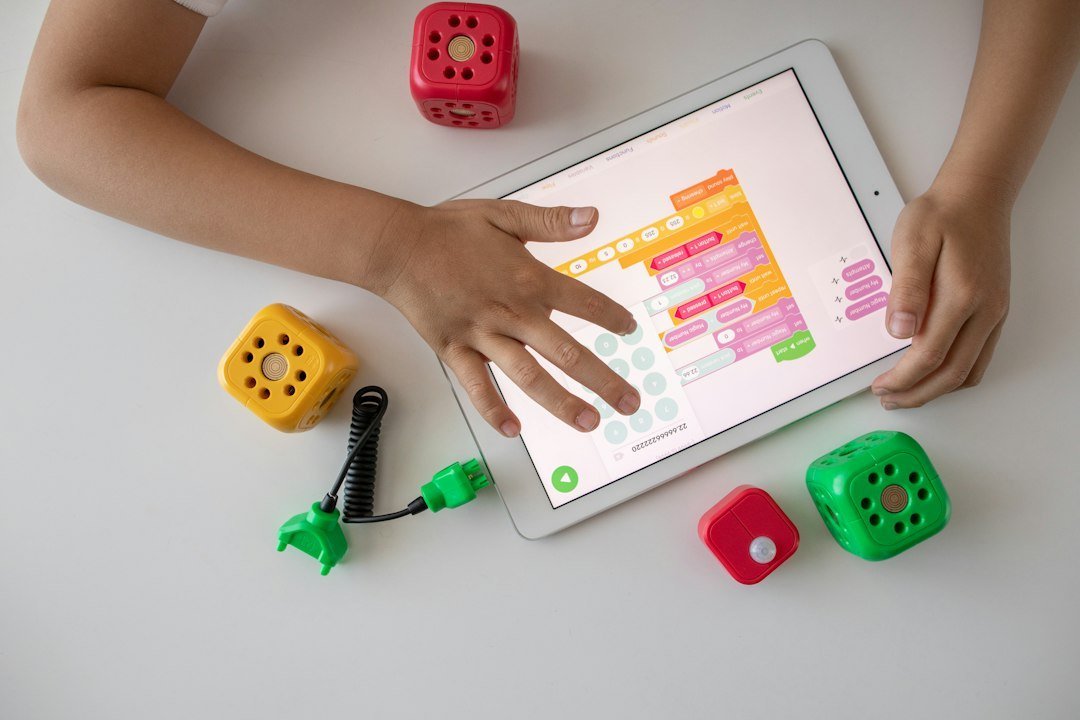
Right then, let’s get stuck into how AI is shaping up for collaborative learning. Basically, it’s about using smart tech to make working together on learning tasks more effective, personalised, and a bit smoother for everyone involved. Think of it as a helpful assistant that can do everything from sorting out who needs what support to making sure group projects actually stay on track and deliver something useful. It’s not about replacing teachers or students, but rather augmenting their capabilities to make the whole learning journey richer and more productive.
Understanding the Landscape of AI in Collaborative Learning
Before we dive into the specific tools and techniques, it’s worth getting a feel for why AI is even relevant here. Collaborative learning, at its core, is brilliant for developing critical thinking, communication, and problem-solving skills. However, it can also be a bit messy. Uneven contributions, communication breakdowns, and difficulties in providing targeted feedback are common hurdles. This is where AI steps in, offering ways to mitigate these challenges and amplify the benefits. It’s about bringing a level of intelligent orchestration to group work that would be incredibly difficult, if not impossible, for a human to manage consistently across numerous groups.
Defining Collaborative Learning
Just to be crystal clear, collaborative learning isn’t just a fancy term for group work. It implies a deliberate design where learners actively work together towards a common goal, sharing knowledge, skills, and perspectives. The emphasis is on interdependence and mutual accountability. The learning isn’t just about the final output, but the process of interaction, negotiation, and shared discovery. AI tools are being developed to support this process at various stages, from initial group formation to the final evaluation of individual and collective learning.
AI’s Role in Enhancing Collaboration
AI doesn’t just sit there; it actively participates, observes, and adapts. Its role can range from automating mundane tasks, freeing up human educators, to providing sophisticated analytical insights that would otherwise be inaccessible. For instance, imagine an AI that can analyse a group’s chat logs to identify patterns of engagement or disengagement, flagging potential issues before they escalate. Or an AI that can suggest relevant resources to a group struggling with a particular concept, based on their real-time discussions. This isn’t science fiction anymore; these capabilities are increasingly becoming part of educational technology. The aim isn’t to make collaboration artificial, but to make the human collaboration more productive and equitable.
Key Benefits of Integrating AI
The tangible benefits of bringing AI into collaborative learning are quite compelling. Firstly, it offers unprecedented opportunities for personalisation within group settings. An AI can, for example, identify an individual’s knowledge gaps even within a collaborative task and subtly nudge them towards relevant material without disrupting the group flow. Secondly, it drastically improves feedback mechanisms. AI can offer instant, specific feedback on aspects of group work that might otherwise be overlooked, like the fairness of contributions or the depth of critical engagement in discussions. Thirdly, it can enhance group dynamics by facilitating better communication and resource allocation. Imagine an AI that acts as a neutral moderator, ensuring everyone gets a chance to speak or contributes equally. Lastly, it provides valuable insights for educators. By analysing vast amounts of interaction data, AI can help teachers understand what’s working and what isn’t, allowing them to refine their pedagogical approaches.
Tools and Platforms Powering AI-Driven Collaboration
So, what sorts of tools are we actually talking about here? It’s a rapidly evolving field, but there are already some practical applications making a difference. These tools often integrate into existing learning management systems (LMS) or act as standalone applications designed to support specific collaborative tasks. They range from simple AI-powered nudges to more complex analytical platforms.
Intelligent Tutoring Systems (ITS) for Group Support
While traditionally focused on individual learning, ITS are evolving to support collaborative scenarios. These systems can observe group interactions, analyse individual contributions within a group context, and provide tailored support. For example, an ITS might monitor a group working on a problem, identify a student who is struggling, and then subtly suggest a hint or a piece of information that might help them contribute more effectively to the group solution, without giving away the answer directly.
- Adaptive Feedback Loops: Some ITS can provide real-time feedback on collaborative projects, not just on the final output, but on the process itself. This might include feedback on how well group members are communicating, if they’re relying too heavily on one individual, or if they’re exploring diverse perspectives.
- Prompting and Scaffolding: An ITS can be programmed to prompt groups to reflect on their progress, ask critical questions, or re-evaluate their assumptions. This scaffolding helps groups develop better collaborative practices and deeper understanding.
AI-Powered Discussion Forums and Chat Tools
Online discussion forums and chat applications are staples of collaborative learning, especially in blended or remote settings. AI can significantly enhance these platforms by making interactions more productive and manageable.
- Sentiment Analysis and Engagement Tracking: AI can analyse the tone and sentiment of messages within a forum or chat. It can flag discussions that are becoming unproductive, identify individuals who are disengaging, or highlight particularly insightful contributions. This allows educators to intervene where necessary or celebrate good practice.
- Automated Summarisation and Thread Management: Imagine an AI that can automatically summarise lengthy discussion threads, pulling out key arguments, questions, and conclusions. This saves immense time for both students and instructors, making it easier to follow complex conversations. It can also help to identify redundant questions or suggest merging related discussion points.
- Resource Recommendations: Based on the content of a discussion, AI can suggest relevant articles, videos, or other learning materials that could deepen the group’s understanding or help them overcome a specific obstacle they’re discussing.
Collaborative Writing and Project Management Tools
Group assignments often involve shared document creation and project management. AI is starting to make these processes much smoother and more equitable.
- Contribution Analysis: Tools can track individual contributions to shared documents, identifying who wrote what, how much they contributed, and even the quality of their input (e.g., originality, grammatical correctness). This can help address the common issue of unequal workload in group projects.
- Automated Peer Review Facilitation: AI can help structure and facilitate peer review processes within collaborative writing. It can match students with appropriate reviewers, provide prompts for constructive feedback, and even analyse the feedback itself for helpfulness and objectivity.
- Task Management and Deadline Reminders: While not purely AI, smart project management tools can use predictive analytics to identify potential bottlenecks in a project, suggest task reassignments, or send intelligent reminders based on group progress and individual workload.
Virtual Learning Environments (VLEs) with Integrated AI
Many VLEs are now incorporating AI functionalities directly into their platforms, providing a more seamless experience for collaborative learning. These integrations can range from intelligent content recommendations to sophisticated analytical dashboards.
- Group Formation Algorithms: AI can analyse student profiles (e.g., prior knowledge, learning styles, personality traits) to form balanced and effective collaborative groups. This moves beyond simple random assignment to create groups more likely to succeed.
- Learning Analytics Dashboards: VLEs can present educators with AI-powered dashboards that offer a holistic view of group progress, individual engagement, and potential challenges. This allows for proactive intervention and more targeted support.
- AI-Driven Feedback Agents: Within the VLE, AI agents can provide instant feedback on aspects of collaborative work, such as initial drafts of group projects, or even on the effectiveness of group communication strategies observed within the platform’s tools.
Techniques for Implementing AI in Collaborative Settings
Having explored the tools, let’s consider the practical techniques for actually putting AI to good use in collaborative learning. It’s not just about throwing technology at the problem; it requires thoughtful integration and pedagogical design.
Designing AI-Enhanced Collaborative Tasks
The way tasks are designed profoundly impacts the effectiveness of AI integration. It’s about creating scenarios where AI can genuinely augment the learning process, not just automate it.
- Problem-Based Learning with AI Support: AI can provide adaptive scaffolding as groups tackle complex problems, offering hints or resources when they get stuck, or suggesting alternative approaches. This allows students to take more ownership of their problem-solving journey while still having intelligent support available.
- Role-Play and Simulations with AI Feedback: In scenarios like negotiation or crisis management simulations, AI can act as an impartial observer, providing feedback on communication effectiveness, decision-making, and teamwork dynamics. This moves beyond simple scoring to provide rich qualitative insights.
- Collaborative Content Creation with AI Curation: When groups are tasked with creating presentations, reports, or multimedia projects, AI can assist by curating relevant information, suggesting appropriate structures, or even checking for plagiarism and factual accuracy in real-time.
Facilitating Group Dynamics with AI Insights
One of the trickiest aspects of collaborative learning is managing group dynamics. AI can offer valuable insights and interventions to ensure a more equitable and productive experience for everyone.
- Identifying and Addressing Free-Riding: AI can monitor contributions and flag instances where some group members are consistently doing less work than others. This allows educators to address the issue directly, either through private conversations or by adjusting the group’s structure.
- Promoting Equitable Participation: Through analysis of communication patterns, AI can identify dominant voices or quiet individuals. It can then prompt the group to ensure everyone has a chance to contribute, or suggest strategies for including quieter members.
- Conflict Resolution Support: In cases where group discussions become heated or unproductive, AI can flag these instances and suggest mediation strategies or even act as a neutral party to summarise differing viewpoints and encourage constructive dialogue.
Providing Adaptive and Timely Feedback
Feedback is crucial for learning, and AI can revolutionise its delivery in collaborative contexts. It moves beyond delayed, general feedback to instant, specific, and actionable insights.
- Process-Oriented Feedback: Instead of just evaluating the final product, AI can provide feedback on the collaborative process itself. This might include comments on how effectively the group communicated, how well they delegated tasks, or how thoroughly they explored different ideas.
- Personalised Feedback within a Group Context: Even within a group project, AI can identify individual learning needs and provide tailored feedback. For example, a student struggling with a particular concept might receive specific resources, even as their group progresses on the overall task.
- Just-in-Time Interventions: AI can detect when a group is going off-track or struggling with a concept and offer immediate, targeted interventions, whether it’s a hint, a question, or a link to a relevant resource. This prevents groups from getting stuck for too long.
Assessing Collaborative Outcomes
Evaluating collaborative learning can be complex. AI can bring a level of objectivity and granularity to the assessment process that is difficult for human educators to achieve consistently.
- Automated Contribution Scoring: AI can analyse log data, document edits, and discussion posts to assign scores or qualitative assessments to individual contributions within a group project, making grading more transparent and fair.
- Assessment of Collaborative Skills: Beyond just content knowledge, AI can help assess the development of collaborative skills such as communication, critical thinking in group settings, and conflict resolution, often by analysing interaction patterns and language use.
- Group Performance Analytics: AI can provide a detailed breakdown of a group’s performance, highlighting strengths and weaknesses, identifying areas for improvement, and comparing their progress against other groups or predefined benchmarks.
Challenges and Ethical Considerations
It’s not all plain sailing, though. As with any powerful technology, there are significant challenges and ethical considerations that need careful attention when deploying AI in collaborative learning. Ignoring these would be a mistake.
Data Privacy and Security
The nature of AI in collaborative learning often involves collecting significant amounts of data about student interactions, contributions, and learning patterns. This raises serious privacy concerns.
- Informed Consent: It’s paramount that students and educators are fully informed about what data is being collected, how it will be used, and who will have access to it. Clear, understandable privacy policies are essential.
- Data Anonymisation and Pseudonymisation: Where possible, data should be anonymised or pseudonymised to protect individual identities, especially if it’s being used for research or system improvement.
- Secure Data Storage: Educational institutions must ensure that all collected data is stored securely, protected from breaches and unauthorised access, adhering to regulations like GDPR.
Algorithmic Bias
AI systems are only as good as the data they’re trained on. If that data contains biases, the AI will inevitably perpetuate and amplify them, leading to potentially unfair or discriminatory outcomes.
- Bias in Group Formation: If AI algorithms for group formation are trained on biased historical data, they might inadvertently create groups that disadvantage certain students or reinforce stereotypes.
- Bias in Feedback and Assessment: AI-powered feedback or assessment tools could unintentionally penalise certain communication styles, language patterns, or cultural approaches to collaboration if their training data doesn’t adequately represent diverse learners.
- Transparency and Auditability: It’s crucial to understand how AI algorithms make decisions. Systems should be designed with transparency in mind, allowing educators and developers to audit their outputs for potential biases and rectify them.
Over-Reliance and Loss of Human Touch
While AI can be incredibly helpful, there’s a risk of over-reliance, potentially diminishing the role of human educators or the organic development of human collaborative skills.
- Maintaining Human Moderation: AI should supplement, not replace, human moderation and intervention. Educators still play a crucial role in interpreting AI insights, building rapport with students, and addressing complex social dynamics that AI might miss.
- Developing Human Skills: There’s a balance to strike. While AI can support skill development, students still need opportunities to practise and refine their collaborative skills in purely human-mediated contexts.
- Emotional and Social Nuances: AI, at its current stage, struggles with understanding complex emotional and social nuances that are inherent in human collaboration. Over-reliance on AI for emotional support or conflict resolution could lead to superficial interactions.
The Black Box Problem
Many advanced AI models, particularly deep learning networks, are often referred to as “black boxes” because it’s difficult to understand precisely how they arrive at their conclusions.
- Explainable AI (XAI): There’s a growing push for Explainable AI, which aims to make AI models more transparent and interpretable. In educational settings, it’s important for educators and students to understand the rationale behind AI suggestions or assessments.
- Trust and Acceptance: If users don’t understand how an AI system works or why it’s providing certain feedback, trust can erode. This can lead to a lack of acceptance and ultimately, underutilisation of the technology.
Best Practices and Future Outlook
So, how do we navigate these complexities and make the most of AI for collaborative learning? It boils down to thoughtful implementation, continuous evaluation, and a forward-thinking approach.
Iterative Design and Piloting
Implementing AI in collaborative learning shouldn’t be a big bang approach. It’s much better to start small, pilot new tools and techniques, gather feedback, and iterate based on what works and what doesn’t.
- Small-Scale Experiments: Begin with a specific course or a small group of students to test out new AI tools. This allows for focused observation and rapid adjustment.
- User Feedback Integration: Actively solicit feedback from both students and educators. Their experiences are invaluable for refining the AI’s effectiveness and usability.
- Phased Rollouts: Once a tool proves effective in a pilot, consider a phased rollout to a wider audience, gradually scaling up its application.
Professional Development for Educators
Educators need to be equipped with the knowledge and skills to effectively utilise AI tools in their teaching. This goes beyond just knowing how to click buttons; it involves understanding the pedagogical implications.
- AI Literacy Training: Provide training on what AI is, how it works, its capabilities, and its limitations, specifically in the context of collaborative learning.
- Pedagogical Integration Strategies: Help educators develop strategies for integrating AI tools into their lesson plans and curriculum, ensuring they align with learning objectives.
- Ethical Guidelines and Best Practices: Educate teachers on the ethical considerations of AI, including data privacy, bias, and responsible use, empowering them to make informed decisions.
Emphasising Hybrid Approaches
The most effective approach often involves a blend of AI and human intervention, leveraging the strengths of both. It’s about ‘human-in-the-loop’ AI.
- AI as an Assistant: Position AI as a helpful assistant that automates routine tasks, provides data-driven insights, and offers initial feedback, freeing up educators to focus on higher-level mentoring and complex problem-solving.
- Human Oversight: Maintain human oversight of AI-generated insights and recommendations. Educators should have the final say and the ability to override AI suggestions when their human judgment dictates.
- Promoting Human Connection: Ensure that AI integration doesn’t diminish opportunities for genuine human connection and interaction among students and between students and teachers.
Research and Development
The field of AI in education is still relatively young, and continuous research and development are vital to address current limitations and unlock new possibilities.
- Addressing Algorithmic Bias: Ongoing research is needed to develop more robust methods for identifying and mitigating bias in AI algorithms used in education.
- Developing More Sophisticated AI: Future AI systems will likely become even more adept at understanding nuanced human communication, emotional intelligence, and complex collaborative dynamics.
- Personalised Learning Pathways: Research will continue to explore how AI can create truly personalised collaborative learning pathways that adapt in real-time to individual and group needs.
In conclusion, AI for collaborative learning isn’t just a fleeting trend; it represents a significant shift in how we can design, facilitate, and assess group work. While there are genuine hurdles to overcome, particularly around ethics and practical implementation, the potential for enhancing learning outcomes, personalising experiences, and empowering educators is substantial. By approaching it thoughtfully, with a focus on human values and continuous improvement, we can truly harness AI to make collaborative learning a more effective and enriching experience for everyone involved.