




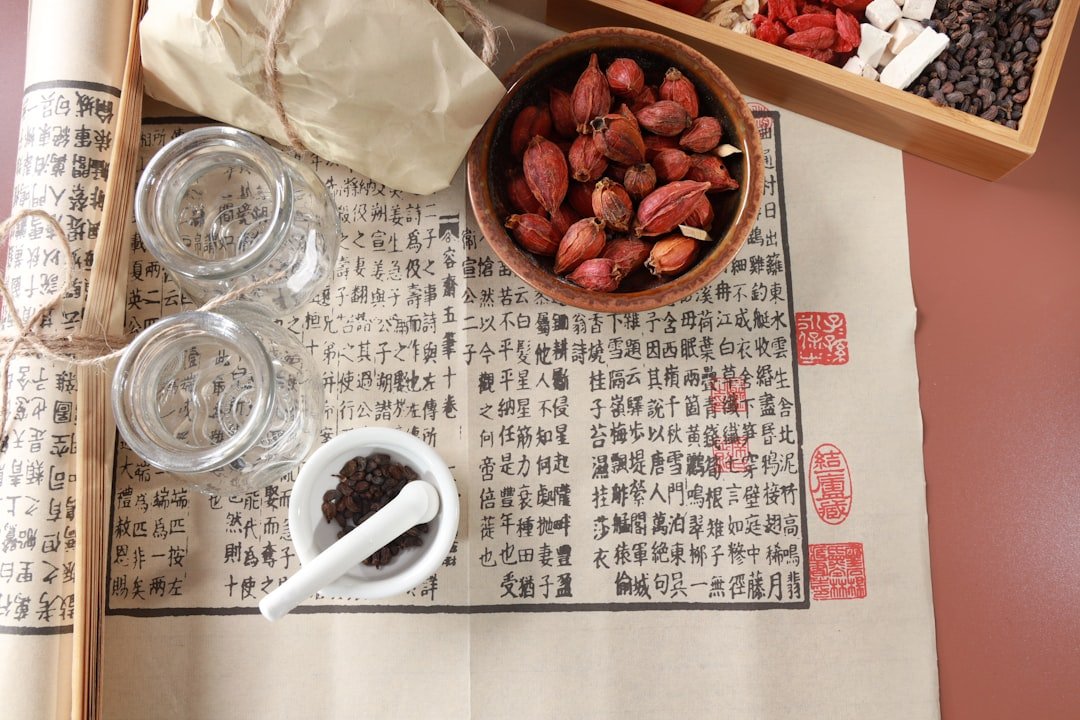
Alright, let’s dive into some interesting findings about Large Language Models (LLMs) and their role in Traditional Chinese Medicine (TCM). If you’re wondering what the latest research tells us, the short answer is this: LLMs are showing some real promise in areas like information retrieval and education within TCM, but there’s a good bit of work to do before they’re truly integrated, especially in high-stakes clinical decision-making. Recent reviews highlight their potential to revolutionise how we access and understand complex TCM knowledge, but also flag up significant hurdles like ensuring accuracy, cultural nuance, and tackling data biases.
The Emerging Role of LLMs in TCM: A Landscape Overview
It’s no secret that LLMs are making waves across various fields, and medicine is certainly one of them. For something as ancient and nuanced as Traditional Chinese Medicine, the idea of AI assistance might seem a bit futuristic or even contradictory. However, the sheer volume of textual data in TCM – historical texts, clinical records, research papers – makes it a prime candidate for machine learning applications.
What’s the Driving Force?
The core appeal of LLMs in TCM comes down to a few key factors:
- Information Overload: TCM boasts thousands of years of accumulated knowledge, often recorded in classical Chinese texts that are challenging to interpret. LLMs can potentially help distil this vast information more efficiently.
- Knowledge Dissemination: There’s a global interest in TCM, but access to reliable, understandable information can be a barrier. LLMs could serve as powerful tools for education and broader understanding.
- Research Acceleration: Sifting through countless studies to find relevant insights is time-consuming. LLMs have the potential to speed up systematic reviews and meta-analyses.
The latest reviews consistently point to these areas as the low-hanging fruit where LLMs could make an immediate impact. It’s less about replacing human practitioners and more about augmenting their capabilities and making TCM knowledge more accessible.
Initial Applications and Promising Areas
Early studies and reviews highlight a few key areas where LLMs are already being explored or show significant potential:
- Literature Review and Knowledge Extraction: Imagine an LLM that can quickly summarise hundreds of ancient TCM texts or modern research papers on a specific herb or syndrome. This is a significant time-saver for researchers and practitioners alike.
- Educational Tools: Building interactive educational platforms that can explain complex TCM concepts, diagnose patterns based on user input for learning purposes, or even practice differential diagnosis.
- Information Retrieval for Diagnosis and Treatment Planning Support (Non-Clinical): While not for making definitive clinical decisions, LLMs could be used to retrieve relevant information about herbal formulas, acupuncture points, or dietary recommendations based on a given set of symptoms. This acts as a reference tool, similar to quickly looking something up in a textbook, but potentially much faster and more comprehensive.
It’s important to draw a clear line here. These are support functions, designed to assist, not to autonomously treat patients. The human expert remains firmly in control.
Promises and Potential: Where LLMs Could Shine
Looking at the findings, there are genuinely exciting prospects for how LLMs could transform certain aspects of TCM. It’s not just hype; there’s a solid basis for these predictions.
Enhancing Information Access and Understanding
One of the biggest hurdles in TCM is the sheer volume and complexity of its literature. Many foundational texts are in classical Chinese, often requiring significant linguistic and cultural expertise to interpret accurately.
- Bridging Language Barriers: LLMs can process and translate complex classical Chinese texts into modern English or other languages, making this ancient wisdom more accessible to a global audience. This goes beyond simple word-for-word translation; it involves understanding contextual and cultural nuances.
- Summarisation and Synthesis: For practitioners or researchers looking for specific information – say, all known uses of a particular herb, or different diagnostic patterns associated with a specific pulse quality – an LLM could quickly summarise and synthesize relevant information from vast datasets. This moves beyond basic keyword searching to understanding relationships and concepts.
- Personalised Learning Pathways: For students learning TCM, LLMs could create adaptive learning experiences, tailoring explanations and examples based on the student’s current understanding and pace.
Supporting Research and Development
Scientific research in TCM often involves extensive literature reviews, data analysis, and identifying patterns across diverse studies. LLMs are particularly well-suited for these tasks.
- Systematic Review Assistance: Conducting a systematic review in TCM is incredibly labour-intensive. LLMs could help identify relevant studies, extract key data points, and even synthesise findings, significantly speeding up the process and improving consistency.
- Identifying Gaps in Knowledge: By analysing existing literature, LLMs could help pinpoint areas where research is sparse or contradictory, guiding future study designs.
- Discovering New Relationships (Hypothesis Generation): While still speculative, LLMs might be able to identify novel correlations between complex TCM patterns, herbal compounds, and clinical outcomes, leading to new hypotheses for scientific investigation. This isn’t about definitive answers, but about suggesting avenues for human-led research.
Augmenting Clinical Decision Support (with caveats)
Perhaps the most talked-about, yet also most cautious, application is in clinical decision support. The reviews consistently highlight potential but with a strong emphasis on expert oversight.
- Differential Diagnosis Support: Given a patient’s symptoms, an LLM could suggest a list of potential TCM patterns and associated conditions, along with the reasoning behind each suggestion, drawing from its knowledge base. This acts as a ‘second opinion’ or a comprehensive checklist for the human practitioner.
- Treatment Plan Brainstorming: Based on an identified pattern, an LLM could propose various herbal formulas, acupuncture points, or lifestyle recommendations, citing relevant classical texts or research. Again, this is about generating options for the practitioner to consider, not dictate.
- Patient Education Tools: Once a diagnosis and treatment plan are established by a human practitioner, LLMs could generate clear, understandable explanations for patients about their condition and proposed treatments, helping improve patient adherence and understanding.
The key takeaway is “support” – LLMs as intelligent assistants that expand the practitioner’s toolkit, not replace their core expertise or intuitive understanding of a patient.
Pitfalls and Practical Challenges: The Reality Check
While the potential is exciting, the latest reviews are frank about the substantial hurdles that need to be cleared before LLMs can be widely adopted in TCM, particularly in clinical settings. Ignoring these would be naive and potentially harmful.
Data Quality and Cultural Nuance
One of the biggest issues is the data itself. LLMs are only as good as the information they are trained on, and in TCM, this presents unique challenges.
- Bias in Training Data: Historical TCM texts reflect the knowledge and biases of their time. If LLMs are predominantly trained on these, they might inadvertently perpetuate outdated or culturally insensitive information. Modern publications also have their own biases.
- Variability in Terminology: TCM terminology can be highly nuanced and, at times, inconsistently applied across different schools of thought or historical periods. An LLM might struggle to reconcile these variations without explicit instruction or sophisticated contextual understanding.
- Lack of Standardisation: Unlike Western medicine, where diagnostic codes and treatment protocols are highly standardised, TCM often involves a more personalised approach, making it difficult for an LLM to learn from ‘standard’ cases.
- Cultural Sensitivity: TCM is deeply embedded in Chinese culture and philosophy. An LLM trained on purely linguistic patterns might miss critical cultural implications or ethical considerations inherent in TCM practice. For example, certain conditions or treatments might have different social stigmas or interpretations depending on the cultural context, which an LLM would likely overlook.
Accuracy, Reliability, and Hallucinations
This is a critical point, especially when dealing with health information. LLMs, despite their sophistication, are known to “hallucinate” – generate plausible-sounding but entirely false information.
- Potential for Misinformation: In TCM, where specific herbal dosages, precise acupuncture point locations, and traditional contraindications are vital, an LLM generating inaccurate information could have serious consequences. A ‘plausible’ but incorrect herbal interaction could be genuinely dangerous.
- Lack of Explainability: Often, it’s hard to understand why an LLM arrived at a particular conclusion. In a clinical context, “because the AI said so” is simply not an acceptable explanation. Practitioners need to understand the reasoning to critically evaluate the suggestions.
- Difficulty with Complex Cases: Real-world TCM cases are rarely textbook perfect. Patients often present with complex, mixed patterns, and existing comorbidities. LLMs might struggle with these highly individualised presentations without extensive, richly annotated real-world data, which is scarce.
Ethical Considerations and Regulatory Frameworks
As with any AI in healthcare, particularly in a domain as culturally rich as TCM, ethical questions abound.
- Accountability: If an LLM-assisted diagnosis or treatment recommendation goes wrong, who is accountable? The developer? The practitioner? The patient? Clear legal and ethical frameworks are sorely needed.
- Patient Confidentiality: Using patient data to train or operate LLMs raises significant privacy concerns. Robust data anonymisation and security protocols are essential.
- Trust and Acceptance: Will patients and practitioners trust an AI-powered system in TCM? Building this trust requires demonstrating not just accuracy but also an understanding of the holistic and often spiritual aspects of TCM that are difficult for an algorithm to grasp.
- Regulatory Lag: Regulatory bodies often move slower than technological innovation. There’s a clear need for specific guidelines for the development and deployment of LLMs in TCM to ensure safety and efficacy.
Overcoming the Hurdles: A Path Forward
Given the challenges, what’s next? The reviews suggest a multi-pronged approach, focusing on collaboration and responsible development.
Emphasising Human Expertise
The consensus is clear: LLMs in TCM should augment, not replace, human expertise.
- “Human-in-the-loop” Design: Any LLM system for clinical support must incorporate a design where a qualified TCM practitioner is always in the loop, critically evaluating and approving any AI-generated insight.
- Explainable AI (XAI): Future LLMs need to be designed to explain their reasoning process in a clear, understandable way, drawing connections to classical TCM theory or clinical evidence. This allows practitioners to verify the information.
- Training for Practitioners: TCM practitioners will need training on how to effectively use and critically assess LLM outputs, understanding their strengths and limitations.
Improving Data Infrastructure and Quality
Addressing the training data issues is paramount for creating reliable LLMs.
- Curated Datasets: There’s a call for the creation of high-quality, expertly annotated, and culturally sensitive datasets specific to TCM. This includes modern clinical records, detailed case studies, and validated knowledge bases.
- Standardisation Efforts: Developing more consistent terminologies and diagnostic criteria within TCM could greatly improve the ability of LLMs to learn and make accurate predictions. This is a massive undertaking but crucial for the field’s advancement.
- Multimodal Data Integration: TCM often relies on visual cues (tongue diagnosis), auditory cues (voice characteristics), and tactile cues (pulse diagnosis). Future LLMs might integrate these different data modalities (e.g., images, audio) to provide a more comprehensive picture.
Collaborative Development and Ethical Guidelines
The path forward requires a shared effort across different disciplines.
- Interdisciplinary Teams: Developing effective LLMs for TCM requires collaboration between AI engineers, TCM practitioners, linguists, ethicists, and regulatory experts.
- Pilot Studies and Validation: Rigorous pilot studies and clinical trials are needed to test the safety, efficacy, and real-world utility of LLM applications in TCM under controlled conditions.
- Clear Ethical and Regulatory Frameworks: Proactive development of ethical guidelines and regulatory standards specific to AI in TCM is essential to foster public trust and ensure responsible innovation. This involves engaging with professional bodies and government regulators.
The Future Landscape: Cautious Optimism
So, where does this leave us? The latest reviews paint a picture of cautious optimism. LLMs are not a magic bullet that will instantly solve all challenges in TCM. They are powerful tools with immense potential, particularly in handling large volumes of complex information, but they come with significant responsibilities and practical limitations that must be addressed head-on.
Gradual Integration and Specialisation
Expect to see LLMs integrated gradually, starting with less critical applications.
- Focus on ‘Information’ First: Initial successful applications will likely be in knowledge management, educational tools, and research assistance – areas where the consequences of AI error are lower and can be more easily corrected by human oversight.
- Specialised Models: Instead of a single ‘TCM LLM’, we might see highly specialised models for specific areas, such as herbal formula analysis, acupuncture point selection for specific conditions, or classic text interpretation. These focused models might be more accurate and reliable.
Human-AI Collaboration as the Norm
The future of LLMs in TCM is not one of replacement, but one of partnership.
- Augmented Practitioners: TCM practitioners will increasingly use LLMs as intelligent assistants to enhance their diagnostic process, treatment planning, and patient education.
- Continuous Learning: As more quality data becomes available and models become more sophisticated, the capabilities of these AI tools will grow, continuously refining their utility to the TCM community.
Ultimately, the goal isn’t to make TCM more “westernised” or solely driven by algorithms. It’s about leveraging cutting-edge technology to preserve, disseminate, and advance a profound system of medicine, making its wisdom more accessible and its practice more robust in the modern world, while always respecting its rich heritage and the irreplaceable role of human intuition and clinical wisdom. It’s a journey, not a sprint, and one that requires careful navigation.