








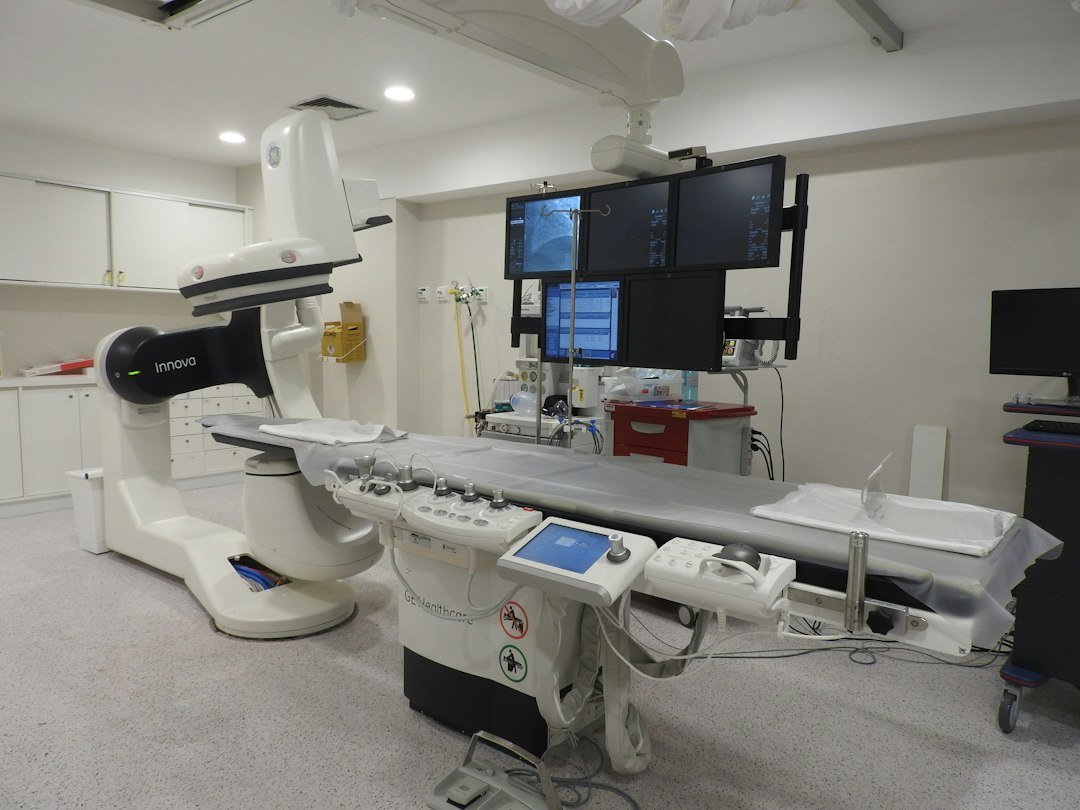
The idea of an ‘intelligent hospital’ isn’t some far-off sci-fi fantasy anymore; it’s steadily becoming our reality. At its core, an intelligent hospital leverages artificial intelligence (AI) to transform clinical systems, making healthcare delivery safer, more efficient, and ultimately, more personalised for patients. We’re talking about everything from predictive analytics for patient deterioration to AI-assisted diagnostics, all built on a foundation of robust, AI-ready infrastructure.
What Does ‘AI-Ready’ Really Mean for Clinical Systems?
When we talk about clinical systems being “AI-ready,” it’s more than just having a few fancy algorithms running in the background. It means building a comprehensive ecosystem where data is collected, standardised, and made accessible in a way that AI models can actually learn from and interact with effectively. It’s about designing processes and technologies that don’t just tolerate AI, but actively enable it to improve patient care and operational efficiency.
More Than Just Tech: A Cultural Shift
Being AI-ready also involves a significant cultural shift within healthcare organisations. It requires clinicians, administrators, and IT professionals to collaborate closely, understand the potential and limitations of AI, and be willing to adapt workflows. Training staff to interact with AI tools, interpret their outputs, and provide feedback is crucial. Without this human element, even the most sophisticated AI systems will struggle to integrate effectively into the complex environment of a hospital. It’s about fostering an environment where innovation is encouraged, and where a healthy degree of scepticism is balanced with an openness to new ways of working.
Data at the Core: The Lifeblood of AI
No AI can function without good data, and in a clinical setting, this is paramount. AI-ready systems demand high-quality, comprehensive, and well-structured data from Electronic Health Records (EHRs), imaging systems, lab results, and even wearable devices. This isn’t just about quantity; it’s about cleanliness, consistency, and contextual richness. Poor data will lead to poor AI outcomes, potentially risking patient safety, so meticulous data governance and quality control are foundational. Think of it like building a house – a wonky foundation means a wonky house, no matter how nice the decor.
The Foundations: Data Infrastructure and Interoperability
Building an intelligent hospital hinges critically on its data infrastructure. Without a solid, well-connected foundation for data, AI simply can’t do its job effectively. This is where interoperability really comes into its own.
Creating a Unified Data Landscape
Hospitals often have a patchwork of legacy systems – radiology systems, laboratory information systems, pharmacy systems, and various departmental EHR modules, all speaking slightly different languages or storing data in incompatible formats. To be AI-ready, these disparate systems need to communicate seamlessly. This doesn’t necessarily mean ripping everything out and starting again, which is often impractical and prohibitively expensive. Instead, it involves intelligent integration layers, standardisation efforts, and often, the creation of a centralised data lake or warehouse that can ingest and harmonise data from all sources.
Using standards like FHIR (Fast Healthcare Interoperability Resources) is becoming increasingly important here. FHIR provides a flexible, internet-friendly way to exchange healthcare information, allowing different systems to ‘talk’ to each other more easily. When data is standardised and unified, AI models can access a much richer, more complete picture of a patient’s health, leading to more accurate predictions and insights. Imagine trying to solve a puzzle with half the pieces missing or pieces from different puzzles – that’s what AI faces without good data integration.
Ensuring Data Quality and Governance
It’s not enough to just collect data; it needs to be good data. Data quality is an ongoing challenge in healthcare, with issues ranging from typographical errors and incomplete records to inconsistent coding practices across different departments or even different hospitals within the same trust. For AI to be reliable, it needs clean, accurate, and consistent input.
Data governance frameworks become essential here. This involves establishing clear policies and procedures for data collection, storage, access, and usage. Who is responsible for data quality? How are discrepancies resolved? What are the protocols for data privacy and security? These are all critical questions that need robust answers. Robust governance ensures that the data AI uses is trustworthy, and equally importantly, that its use complies with strict regulations like GDPR. It’s about building trust in the data, which in turn builds trust in the AI’s outputs.
Implementing AI in Clinical Workflows
Once the data infrastructure is in place, the real work of integrating AI into day-to-day clinical workflows begins. This isn’t just about dropping a new piece of software onto a doctor’s desk; it’s about carefully designing solutions that augment human capabilities, not replace them, and ensuring they are genuinely useful and easy to adopt.
AI for Predictive Analytics and Early Intervention
One of the most impactful applications of AI in an intelligent hospital is predictive analytics. AI models can analyse vast amounts of patient data – vital signs, lab results, medication history, notes – to identify patterns that might indicate a patient is at risk of deterioration, sepsis, cardiac arrest, or even hospital readmission.
For example, an AI system might flag a subtle but concerning trend in a patient’s blood pressure and heart rate hours before a human clinician might spot it amidst a busy ward round. This early warning allows clinicians to intervene sooner, potentially preventing serious adverse events or reducing the severity of an illness. This isn’t about the AI making a diagnosis, but rather highlighting patients who need closer attention, thereby optimising resource allocation and improving patient outcomes. The AI becomes a tireless, vigilant assistant, constantly scanning for warning signs.
AI-Assisted Diagnostics and Image Analysis
Radiology and pathology are areas where AI is already making significant inroads. AI algorithms can be trained on millions of medical images (X-rays, MRIs, CT scans, pathology slides) to detect anomalies that might be subtle or easily missed by the human eye, especially during long shifts or when faced with a huge caseload.
For instance, an AI tool might assist radiologists in detecting early signs of lung cancer on CT scans or identify minute cancerous cells on biopsy slides. It can help prioritise urgent cases, bringing suspicious scans to the top of a radiologist’s queue. Again, the goal isn’t to replace the expert radiologist or pathologist, but to provide a powerful second pair of eyes, increasing accuracy and efficiency. This ‘AI augmentation’ helps reduce diagnostic errors and speeds up the time to diagnosis, which can be critical for patient prognosis.
Streamlining Administrative Tasks and Operational Efficiency
While clinical applications often grab the headlines, AI can also significantly improve the operational efficiency of a hospital. This includes automating repetitive administrative tasks, optimising resource allocation, and managing patient flow.
For example, AI can help predict patient no-shows for appointments, allowing clinics to overbook slightly or offer slots to patients on a waiting list, reducing wasted appointment times. It can also optimise surgical theatre scheduling, taking into account factors like surgeon availability, equipment, and patient readiness, to maximise utilisation and minimise delays. In the pharmacy, AI can predict drug demand, helping to manage inventory and reduce waste. These operational efficiencies might not directly touch the patient, but they free up valuable human resources and funds that can be reinvested into direct patient care.
Addressing Ethical Considerations and Bias
As AI becomes more deeply embedded in clinical systems, it’s absolutely crucial to address the significant ethical considerations and potential for bias. Ignoring these aspects risks eroding trust and, more importantly, could lead to adverse outcomes for patients.
Fair and Equitable AI
One of the biggest concerns is algorithmic bias. If AI models are trained on historical data that reflects existing societal or healthcare biases – for example, data that underrepresents certain ethnic groups or socioeconomic classes – then the AI’s predictions and recommendations might perpetuate or even amplify those biases. This could lead to inequities in care, with certain patient populations receiving suboptimal treatment or having their conditions misdiagnosed more frequently.
It’s vital to ensure that training datasets are diverse and representative of the entire patient population the AI will serve. Beyond that, continuous monitoring and auditing of AI models in real-world settings are necessary to detect and mitigate emergent biases. This might involve ‘stress testing’ AI models with diverse patient profiles to see how they perform across different groups. The goal is to build AI that is fair and equitable for everyone, ensuring that it doesn’t exacerbate existing health disparities.
Transparency and Explainability
For clinicians to trust and effectively use AI tools, they need to understand how the AI arrives at its conclusions. This is the concept of ‘explainable AI’ (XAI). Unlike a human clinician who can articulate their reasoning, many AI models, particularly deep learning networks, can be black boxes – providing an answer without showing their internal workings.
In a clinical context, a black box AI is unacceptable. If an AI recommends a particular course of treatment or flags a patient as high-risk, clinicians need to know why. Was it a particular combination of lab results? A trend in vital signs? An AI that can provide a rationale, even if simplified, allows clinicians to critically evaluate its output, identify potential errors, and maintain ultimate responsibility for patient care. It fosters a collaborative rather than blind trust relationship between human and machine.
Accountability and Responsibility
When an AI system is involved in clinical decision-making, questions of accountability and responsibility become complex. If an AI makes a recommendation that leads to an adverse patient outcome, who is responsible? Is it the developer of the AI? The hospital that deployed it? The clinician who followed the recommendation?
Clear frameworks for accountability need to be established. While AI can assist, the ultimate responsibility for patient care always rests with the human clinician. They are the ones who integrate AI insights with their own expertise, patient context, and ethical judgment. However, hospitals need to ensure that AI systems are rigorously validated, regularly updated, and that staff are adequately trained to use them. Legal and ethical guidelines are rapidly evolving in this area, and hospitals must stay abreast of these developments to ensure responsible AI deployment.
The Human Element: Training and Adoption
Even with the most advanced AI and robust data infrastructure, an intelligent hospital won’t succeed without its people. The ‘human element’ – staff training, user acceptance, and a shift in mindset – is absolutely critical for successful AI adoption.
Empowering Clinicians, Not Replacing Them
It’s crucial to frame AI as a tool that empowers clinicians, rather than one that threatens their jobs or replaces their expertise. AI should be seen as an assistant, taking on repetitive, data-heavy tasks or providing intelligent insights, thereby freeing up clinicians to focus on what they do best: complex problem-solving, empathetic patient interaction, and clinical judgment.
Training programmes need to go beyond simply showing how to click buttons. They should educate clinicians on the principles behind the AI, its strengths, and its limitations. Understanding the underlying algorithms and data sources helps build confidence and allows clinicians to interpret AI outputs more critically. It’s about developing a new form of digital literacy within healthcare staff.
Iterative Design and Feedback Loops
Implementing AI in clinical systems should be an iterative process, not a one-off deployment. This means involving end-users – doctors, nurses, pharmacists – in the design and development stages. Their input is invaluable in ensuring that AI tools are practical, intuitive, and genuinely fit into existing workflows without creating undue burden.
Once deployed, continuous feedback loops are essential. How are clinicians actually using the AI? Is it saving them time? Is it leading to better patient outcomes? Are there any unexpected challenges or side effects? This feedback allows developers and IT teams to refine the AI models, adjust user interfaces, and adapt implementation strategies. It’s a collaborative journey where continuous improvement is key. Without this user-centric approach, even well-intentioned AI initiatives risk being underutilised or even abandoned.
Managing Change and Building Trust
Introducing AI into healthcare is a significant organisational change. It requires careful change management strategies to address potential anxieties, foster a positive attitude towards innovation, and build trust in the new technologies. Transparent communication about the goals of AI, how it will benefit both staff and patients, and how potential risks are being mitigated, is paramount.
Hospital leadership plays a critical role in championing AI initiatives, demonstrating commitment, and allocating necessary resources for training and support. When staff see that leadership is invested and supportive, it creates a more conducive environment for adoption. Ultimately, the success of an intelligent hospital isn’t just about the technology; it’s about the people who develop, implement, and use it, all working together towards a shared vision of better healthcare.