




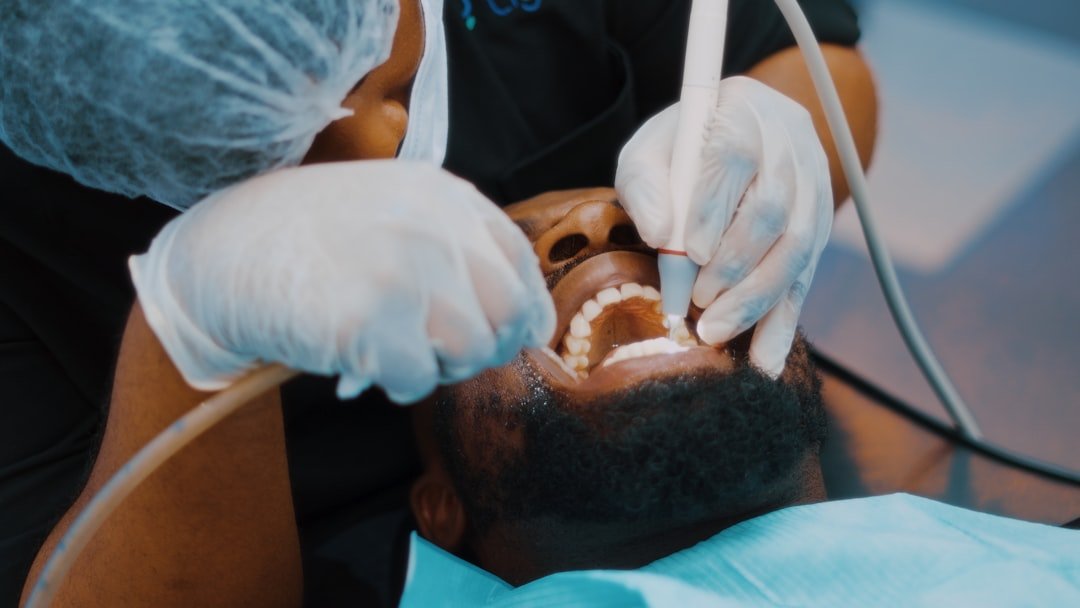
Alright, let’s talk about how GenAI – that’s Generative Artificial Intelligence – is genuinely shaking things up in dental education, particularly when it comes to case-based learning. The short answer? It’s providing unprecedented opportunities for personalised, realistic, and accessible learning experiences for future dentists, moving beyond traditional methods in some pretty significant ways.
The Dawn of a New Era in Dental Pedagogy
For a long time, dental education, while incredibly practical, has relied on established methods: lectures, textbooks, simulation labs, and eventually, hands-on patient care. Case-based learning (CBL) has always been a cornerstone, immersing students in realistic patient scenarios to develop diagnostic and treatment planning skills. But even the best CBL has limitations – the number of cases, their complexity, accessibility, and the uniformity of student experience. GenAI is stepping in to address these gaps, offering dynamic, scalable, and highly adaptable tools that are fundamentally changing how dental students learn and solve problems. It’s not about replacing experienced educators, but augmenting their capabilities and enriching the student journey.
Generating Realistic Patient Cases
One of the most exciting applications of GenAI is its ability to create incredibly detailed and varied patient cases.
Beyond Textual Descriptions
Historically, case studies were often presented as static blocks of text, perhaps with a few accompanying images. While valuable, they lacked the dynamism of a real patient presentation.
Dynamic Patient Histories
GenAI can generate comprehensive patient histories that are not just lists of symptoms but narratives that evolve. Imagine a student asking follow-up questions, and the AI chatbot, acting as the patient, provides detailed answers, revealing nuances that might not be immediately obvious. It can generate information about medical comorbidities, medication lists, social habits, and even psychological factors, all contributing to a richer and more challenging diagnostic puzzle.
Virtual Clinical Images and Radiographs
This is where it gets really interesting. GenAI can produce high-fidelity virtual clinical photographs – intraoral, extraoral – that visually represent the generated conditions. Even more impressively, it can create realistic radiographic images, including periapicals, bitewings, panoramics, and even CBCT scans. These aren’t just generic images; they are tailored to the specific pathologies described in the case, showing caries, periodontal bone loss, periapical lesions, or developmental anomalies with accurate anatomical representation. This allows students to practice their radiographic interpretation skills in a dynamic, risk-free environment.
Multimodal Case Generation
The real power here lies in combining these elements. GenAI can generate a case that includes a written history, a set of virtual photographs, and a series of dynamic radiographic images, all interconnected and consistent. This multimodal approach mirrors the complexity and information load of a real clinical encounter, preparing students more effectively for the reality of patient care.
Enhancing Diagnostic and Treatment Planning Skills
Once the case is presented, GenAI’s role pivots to helping students hone their diagnostic reasoning and treatment planning capabilities.
Interactive Questioning and Feedback
Traditional CBL often involves group discussions or written assignments, with feedback provided later by an instructor. GenAI offers real-time, personalised interaction.
AI-Powered Patient Simulation
Students can “interview” the AI patient, asking them about their pain, medical history, or lifestyle. The AI processes these questions and provides coherent, contextually appropriate answers, mimicking a real conversation. This allows students to practice their communication and history-taking skills repeatedly without the pressure of a real patient.
Diagnostic Hypothesis Generation and Refinement
As students gather information, they can propose differential diagnoses to the AI. The AI can then prompt them to consider other possibilities, ask crucial clarifying questions, or highlight missing information that would strengthen or weaken a particular diagnosis. This iterative process helps students develop a systematic approach to diagnosis.
Scenario-Based Treatment Planning
Once a diagnosis is reached, students can present their proposed treatment plans. The GenAI can then act as a critical peer or even a senior clinician, questioning their choices, pointing out potential complications, suggesting alternative approaches, or asking them to justify their material selections or procedural steps. This forces students to think critically and consider the full implications of their decisions.
Personalised Learning Journeys
One of the limitations of traditional CBL is that all students encounter the same few cases. GenAI breaks this mould.
Adaptive Case Difficulty
GenAI can dynamically adjust the complexity of cases based on a student’s performance. If a student consistently struggles with endodontic cases, the AI can generate more scenarios focused on this area, gradually increasing the difficulty as they improve. Conversely, for students who excel, it can present more rare or complex conditions.
Spaced Repetition of Core Concepts
GenAI can identify areas where a student might be weak and generate new cases that subtly reinforce those concepts, leveraging principles of spaced repetition to improve long-term retention of knowledge and skills.
Facilitating Surgical and Procedural Simulation
Beyond diagnosis and planning, GenAI is starting to touch on the simulation of procedures themselves.
Virtual Surgical Scenarios
While not a replacement for haptic simulators or actual patient contact, GenAI can create virtual “what if” scenarios for surgical procedures.
Pre-operative Planning Refinement
Imagine planning an extraction of a complex impacted wisdom tooth. GenAI could simulate potential complications based on the generated radiographic images – proximity to the inferior alveolar nerve, root morphology, bone density – and ask the student how they would adapt their surgical approach. It can highlight error-prone steps and prompt for correct decision-making before a single incision is made virtually or otherwise.
Post-operative Complication Management
GenAI can present a scenario where a patient returns with post-operative pain, swelling, or infection. Students then have to diagnose the complication and propose appropriate management, including prescribing medication, performing further interventions, or providing patient education. This tests their ability to handle emergent and challenging situations.
Expanding Access and Reducing Costs
The practical implications of GenAI in dental education are significant, particularly concerning accessibility and resources.
Democratising Exposure to Rare Conditions
Conventional dental schools, especially those in less populated areas, might see a limited number of rare or complex cases. This means some students graduate without ever encountering certain conditions firsthand.
Virtual Exposure to Diverse Pathology
GenAI can generate an infinite array of cases, including those that are clinically rare or geographically specific. This ensures every student, regardless of their training location, has the opportunity to diagnose and plan treatment for a broad spectrum of dental pathologies, preparing them for a diverse patient population.
Ethical and Resource-Free Learning
Practicing on real patients carries inherent ethical responsibilities and risks. GenAI provides a completely safe, risk-free environment where students can make mistakes, learn from them, and try again without any negative consequences for a real person. This also means no consumption of precious clinical resources or materials during the initial learning phases.
Scalability and Personalisation on Demand
One of the biggest challenges in education is providing individualised attention to a large cohort of students.
Unlimited Practice Opportunities
Students can access GenAI-generated cases 24/7, allowing for unlimited practice outside of scheduled class or lab times. This caters to different learning paces and allows keen students to delve deeper and practice more extensively.
Reduced Faculty Workload for Repetitive Tasks
While faculty input remains crucial for complex discussions and nuanced feedback, GenAI can handle many of the repetitive, foundational aspects of case-based learning. This frees up educators’ time to focus on more advanced concepts, one-on-one mentorship, and curriculum development, rather than constantly creating new basic case studies.
Challenges and Future Directions
Of course, it’s not all smooth sailing. There are challenges to consider when integrating GenAI into dental education.
Ensuring Accuracy and Clinical Relevance
Generative AI, while powerful, can sometimes “hallucinate” or produce outputs that are factually incorrect or clinically implausible.
The Need for Expert Oversight
Every GenAI-generated case and feedback mechanism must be rigorously reviewed and validated by experienced dental educators and clinicians. This human oversight is crucial to maintain the quality and accuracy of the learning experience and prevent the propagation of misinformation. As the technology evolves, so too must the scrutiny.
Continuous Model Refinement
AI models need constant training on vast datasets of accurate, high-quality clinical information. As new research emerges and clinical guidelines evolve, these models must be updated and refined to ensure they reflect the latest best practices in dentistry. This is an ongoing commitment rather than a one-off implementation.
Integration into Existing Curricula
Incorporating GenAI effectively isn’t just about plugging in a new tool; it requires thoughtful curriculum design.
Pedagogical Shifts
Educators will need to think about how GenAI can complement their current teaching methods, not just replace them. It will likely involve designing learning activities that leverage AI’s strengths while reserving human interaction for higher-order thinking, patient empathy, and complex ethical dilemmas. This might mean restructuring some modules to be more AI-centric for foundational learning, freeing up clinical time for more advanced application.
Training for Faculty and Students
Both educators and students will require training on how to best utilise GenAI tools. For students, it’s about understanding how to interact with the AI effectively to maximise their learning. For faculty, it’s about understanding the capabilities and limitations of the AI, and how to integrate it as a valuable adjunct to their teaching. This includes skills in prompt engineering for generating specific case scenarios and understanding how to critically evaluate AI-generated content.
Ethical Considerations and Data Privacy
As with any AI application involving “patients,” even virtual ones, ethical concerns come to the forefront.
Bias in Training Data
If the data used to train GenAI models reflects biases present in real-world clinical data (e.g., underrepresentation of certain demographic groups or specific pathologies), the AI might perpetuate these biases in its generated cases. Efforts must be made to ensure training data is diverse and representative to avoid creating disparities in learning experiences.
Data Security and Confidentiality
While GenAI for case generation won’t involve real patient data from a privacy perspective during generation, any real-world data used for training or anonymised student performance data derived from AI interactions must adhere to strict data protection regulations. Transparency about data handling is paramount.
In conclusion, GenAI is not just a fancy new gadget for dental education; it’s a transformative force. By providing highly realistic, infinitely variable, and personalised case-based learning opportunities, it’s preparing the next generation of dentists with unparalleled diagnostic and treatment planning skills. While challenges remain, the potential to enhance learning, expand access, and ultimately improve patient care is simply too significant to ignore. The future of dental education will undoubtedly be hybrid, blending the invaluable human touch of experienced educators with the dynamic capabilities of artificial intelligence.