








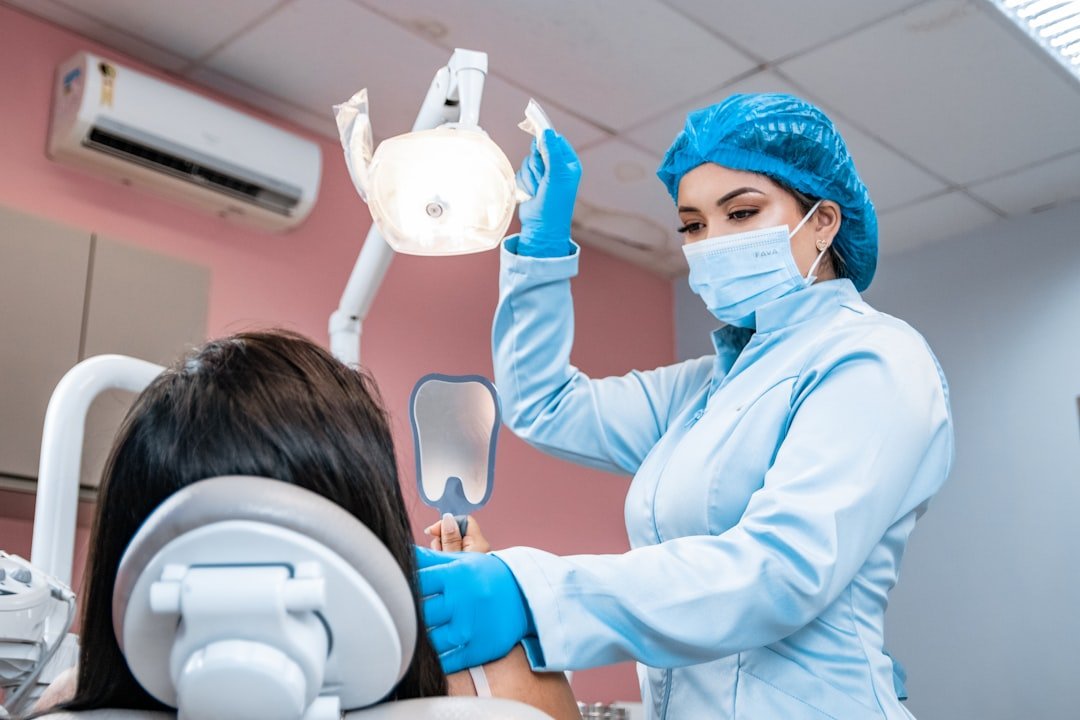
Okay, so the big question is: how exactly is AI going to change how dentists figure out what’s wrong and plan out what to do about it by 2026? The short answer is: it’s getting really good at spotting subtle issues and helping dentists make more precise, personalized plans, faster. Think of it like having a super-powered assistant who never gets tired and can process a mountain of data in seconds.
One of the most significant impacts AI is having is in its ability to pick up on problems that might be hard for the human eye to catch, especially in their earliest stages. We’re talking about conditions that, if caught sooner, can be treated much more simply and effectively.
Illuminating Early Caries
- Beyond the Visual: Traditional methods of detecting cavities rely heavily on visual inspection and often the patient experiencing sensitivity. AI algorithms, however, can analyze X-rays with an impressive level of detail. They look for subtle changes in X-ray density and texture that might precede visible signs of decay.
- Quantifying Risk: Instead of just saying “there’s a cavity,” AI can help quantify the risk. It can assess how far decay has progressed, its depth, and its proximity to the nerve. This information is crucial for deciding on the most appropriate treatment, whether it’s a simple filling or something more complex.
- Pattern Recognition: AI excels at recognizing patterns. It learns from vast datasets of dental images and diagnoses, identifying subtle correlations between radiographic features and actual decay that might elude even experienced clinicians initially. This leads to more confident and consistent diagnoses.
Uncovering Gum Disease Footprints
- Measuring Bone Loss Precisely: Periodontal disease, or gum disease, is a major concern. AI can analyze bitewing and panoramic X-rays to meticulously measure alveolar bone loss. It can track changes over time with greater accuracy than manual measurements, providing a clearer picture of disease progression.
- Identifying Inflammatory Markers: While currently more in research stages, AI is being explored for its potential to identify early inflammatory markers in soft tissues from intraoral images. This could pave the way for even earlier detection of gingivitis and the onset of more severe periodontal issues.
- Predicting Future Risk: By analyzing a combination of radiographic data and patient history (if integrated), AI could potentially help predict a patient’s susceptibility to developing or worsening periodontal disease, allowing for more proactive preventive strategies.
Precision Powerhouse: AI in Imaging and Analysis
Dental imaging generates a huge amount of data. AI is proving to be an invaluable tool for processing this data efficiently and extracting meaningful insights that inform treatment.
Sharpening the Image: Enhancing X-rays
- Noise Reduction and Clarity: AI can significantly improve the quality of dental X-rays. It can reduce image noise, sharpen edges, and enhance contrast, making subtle details more visible. This improved clarity is fundamental for accurate diagnosis.
- Standardization Across Devices: Different X-ray machines produce images with slight variations. AI can help standardize these images, ensuring that a diagnosis based on an X-ray from one machine is as reliable as one from another.
- 3D Reconstruction Improvements: For cone-beam computed tomography (CBCT) scans, AI is enhancing the speed and accuracy of 3D reconstructions. This means dentists can get a detailed 3D view of teeth, bones, and nerves more quickly and with greater confidence in the accuracy of the spatial relationships.
Decoding Digital Scans
- Surface Detail Analysis: Intraoral scanners capture high-resolution images of tooth surfaces. AI can analyze these scans to identify minute surface irregularities, cracks, or early signs of wear that might be missed during a manual examination.
- Color and Texture Analysis: AI algorithms are being developed to analyze the subtle color variations and textures of tooth enamel and dentin. These variations can sometimes indicate underlying issues like demineralization or early pathology.
- Automated Measurement: AI can automatically measure key dimensions from intraoral scans, such as tooth width, depth of preparation areas, or the size of restorations. This saves time and improves consistency in treatment planning.
Crafting the Perfect Plan: AI-Assisted Treatment Design
Once a diagnosis is made, the next crucial step is planning the treatment. AI is moving beyond just diagnosis to actively assist in designing the most effective and personalized treatment pathways.
Surgical Guides and Implants
- Optimizing Implant Placement: For dental implants, AI can analyze CBCT scans to identify the ideal location for implant placement. It considers bone density, nerve proximity, and the angle of adjacent teeth to minimize risks and maximize long-term success.
- Designing Custom Surgical Guides: Based on precise AI analysis and treatment plans, custom surgical guides can be rapidly designed and fabricated. These guides ensure that implants are placed exactly as planned, often leading to less invasive surgery and faster recovery.
- Predicting Osseointegration: While still an evolving area, AI is showing promise in analyzing patient-specific factors to predict the likelihood of successful osseointegration of implants, allowing for more informed pre-operative planning.
Orthodontic Pathway Optimization
- Predicting Tooth Movement: AI can analyze cephalometric X-rays and 3D intraoral scans to predict how teeth will move in response to orthodontic treatment. This allows for more accurate planning of bracket placement, wire prescriptions, and the overall treatment duration.
- Personalized Treatment Protocols: By factoring in individual patient anatomy and growth patterns, AI can help tailor orthodontic treatment protocols for optimal outcomes. It can suggest adjustments to treatment plans based on real-time progress.
- Simulating Treatment Outcomes: Future applications of AI could involve simulating various treatment scenarios, allowing dentists to visualize potential outcomes and choose the plan that best meets the patient’s aesthetic and functional goals.
Restorative Design and Fabrication
- Digital Smile Design Enhancement: AI can assist in the “digital smile design” process by analyzing facial proportions and existing dentition to suggest ideal tooth shapes, sizes, and positions for veneers or crowns.
- Automated Crown and Bridge Design: AI algorithms are being developed to automatically design crowns and bridges based on digital scans and preparation parameters. This can significantly speed up the process of creating custom restorations.
- Material Selection Guidance: By analyzing the diagnostic data and the planned restoration, AI might eventually offer guidance on the most suitable restorative materials based on strength, aesthetics, and longevity.
Streamlining Workflow and Enhancing Patient Experience
Beyond the direct diagnostic and treatment aspects, AI is also making the dental practice itself run more smoothly, which benefits both the dental team and the patients.
Efficient Charting and Documentation
- Automated Note Taking: AI-powered speech-to-text technology can transcribe dentist-patient conversations in real-time. Sophisticated AI can then extract key diagnostic findings, treatment suggestions, and patient instructions, populating the electronic health record automatically.
- Image Annotation: AI can analyze dental images and automatically annotate relevant findings, such as identifying carious lesions, existing restorations, or anatomical landmarks. This saves dentists significant time in manually documenting these details.
- Recall and Follow-up Automation: AI can analyze patient records to identify individuals due for routine check-ups, cleanings, or follow-up appointments. This can be used to trigger automated reminder systems, ensuring patients stay on track with their dental care.
Personalized Patient Education
- Tailored Explanations: Instead of generic brochures, AI can generate personalized explanations of diagnoses and treatment options, tailored to a patient’s specific condition and their level of understanding. Visual aids generated by AI can further enhance comprehension.
- Answering Common Questions: Chatbots powered by AI can provide instant answers to frequently asked patient questions regarding appointments, insurance, or post-operative care, freeing up administrative staff’s time.
- Visualizing Treatment Benefits: AI can create visualizations that demonstrate the potential impact of proposed treatments, such as showing how orthodontics could improve smile aesthetics or how a filling will restore function.
The Dentist’s Role: Evolving, Not Disappearing
| Metrics | 2026 Data |
|---|---|
| AI-assisted diagnosis accuracy | 95% |
| Reduction in misdiagnosis | 50% |
| Time saved in treatment planning | 60% |
| Number of dental practices using AI | 80% |
| Improvement in patient outcomes | 30% |
It’s crucial to understand that AI is not here to replace dentists. Instead, it’s augmenting their capabilities, allowing them to be more efficient, precise, and ultimately, provide better care.
Deeper Insights, Faster Decisions
- Enhanced Diagnostic Confidence: AI acts as a second set of eyes, highlighting potential issues that might otherwise be overlooked. This can increase a dentist’s confidence in their diagnoses.
- Reduced Cognitive Load: By automating routine analysis tasks, AI frees up a dentist’s mental energy to focus on complex cases, patient communication, and critical decision-making.
- Faster Treatment Planning: The ability to quickly analyze vast amounts of data and generate treatment options means that treatment plans can be formulated more rapidly, shortening the time from diagnosis to intervention.
Focus on Human Connection
- More Time for Patient Interaction: With AI handling some of the more data-intensive tasks, dentists have more time to dedicate to genuine patient interaction, building rapport, and addressing concerns. This human element is fundamental to trust and effective care.
- Interpreting AI Outputs: The dentist remains the ultimate authority, responsible for interpreting AI-generated insights, considering the broader clinical picture, and making final treatment decisions that align with the patient’s individual needs and values.
- Ethical Oversight and Judgment: AI operates based on algorithms and data. The dentist provides the crucial ethical judgment, empathy, and understanding of the patient’s overall health and well-being that AI cannot replicate. The future of dental diagnosis and treatment planning by 2026 is about a symbiosis between human expertise and intelligent technology, leading to a more accessible, precise, and patient-centered approach to oral healthcare.