


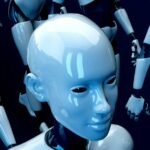


Generative AI, in its simplest form, is a type of artificial intelligence that can create new content – things like text, images, music, or computer code. Think of it as a very sophisticated co-creator or assistant, rather than a replacement for human intellect. In education, this means tools that can help with everything from drafting teaching materials to personalized learning for students.
At its core, generative AI uses complex algorithms and vast amounts of data to learn patterns and structures. Once it understands these, it can then generate new outputs that are similar to its training data but are distinct.
How it Works
Imagine feeding a machine countless essays. It analyzes sentence structure, vocabulary, argument formation, and common themes. With enough data, it can then write a new essay on a given topic, mimicking the style and structure it learned. The same principle applies to art, music, or code.
Types of Generative AI
While the field is rapidly evolving, a few main categories stand out:
- Large Language Models (LLMs): These are what most people think of when they hear “generative AI” in an educational context. Tools like ChatGPT or Bard fall into this category, generating human-like text, summaries, and translations.
- Image Generators: These create images from text prompts. Think of designing hypothetical scenarios for history classes or illustrating complex scientific concepts.
- Code Generators: These can write or suggest lines of code, which could assist computer science students or educators in developing interactive learning tools.
Opportunities for Educators
Generative AI offers educators a different set of tools, potentially freeing up time and enhancing the learning experience. It’s not about replacing teachers, but about providing them with powerful assistants.
Streamlining Content Creation
One significant area is the reduction of time spent on administrative and preparatory tasks.
- Lesson Plan Drafting: An AI can quickly generate initial drafts of lesson plans, complete with learning objectives, activities, and assessment ideas, based on a curriculum or topic. Educators can then refine and personalize these.
- Assessment Generation: Creating diverse questions for quizzes, homework, or exams can be time-consuming. AI can produce multiple versions of questions, varying difficulty levels, or even different question formats (multiple choice, short answer, true/false) based on provided material.
- Resource Curation: Teachers spend a lot of time finding relevant articles, videos, or examples. AI can help pinpoint and summarize resources aligned with specific learning goals.
- Personalized Study Guides: Based on lesson content, an AI can create tailored study guides or flashcards for students, focusing on areas identified as common struggles or individual weaknesses.
Enhancing Learning Experiences
Beyond content generation, AI can contribute to more engaging and effective learning for students.
- Personalized Feedback (Initial Drafts): AI can offer preliminary feedback on written assignments, such as grammar, style, or argument structure. This gives students immediate insights before a teacher’s full review, allowing for iterative improvement. It’s important to frame this as an initial filter, not a final judgment.
- Adaptive Learning Paths: For subjects like mathematics or foreign languages, AI can identify a student’s strengths and weaknesses and then recommend specific practice problems or resources to address those gaps, adjusting the learning path dynamically.
- Interactive Learning Simulations (Conceptual): While not full simulations, AI can describe and interactively explore scenarios. For history, it could describe a historical event from different perspectives based on prompts. For science, it could explain a complex process in simpler terms through a simulated dialogue.
- Language Practice: For language learners, AI can act as a conversational partner, providing sentence corrections and vocabulary suggestions, helping students practice communication in a low-stakes environment.
- Brainstorming and Idea Generation: Students can use AI as a thinking partner to brainstorm essay topics, project ideas, or solutions to problems, expanding their initial thoughts.
Challenges and Considerations
While the opportunities are notable, adopting generative AI in education comes with substantial challenges that need careful navigation. It’s not a plug-and-play solution.
Academic Integrity and Originality
This is perhaps the most immediate concern for many educators.
- Plagiarism and Cheating: Students can use AI to generate entire essays or answers. Distinguishing AI-generated content from original student work is difficult and current detection tools are often unreliable. This forces a re-evaluation of assessment methods.
- Developing Critical Thinking: If students rely on AI to generate answers, they might bypass the critical thinking and problem-solving processes that are central to learning. The goal is to use AI as a tool for deeper thinking, not a substitute for it.
- Authenticity of Learning: The core of education is intellectual development. If students consistently outsource cognitive tasks to AI, are they truly learning the material and developing skills?
Bias and Accuracy
Generative AI models are only as good as the data they’re trained on. This has significant implications.
- Propagating Biases: If the training data contains societal biases (racial, gender, cultural), the AI will likely perpetuate them in its outputs. This can lead to unfair or inaccurate representations, particularly in subjects like history, social studies, or literature.
- Factual Inaccuracies (“Hallucinations”): AI models can confidently generate incorrect information, known as “hallucinations.” They don’t “know” facts in the human sense; they predict the next most probable word or image based on patterns. Educators and students need to extensively verify any AI-generated content.
- Ethical Implications: Who is responsible if an AI generates harmful or biased content that is then used in an educational setting? This necessitates discussions around accountability.
Accessibility and Equity
The promise of personalized learning can be undermined if access isn’t equitable.
- Digital Divide: Access to robust internet, suitable devices, and specific AI tools is not universal. This could exacerbate existing inequalities, leaving some students and institutions at a disadvantage.
- Cost of Advanced Tools: While basic versions of some tools are free, more advanced or specialized AI applications often come with subscription fees, which can be a barrier for under-resourced schools.
- Training and Support: Educators need training to effectively integrate AI tools into their pedagogy. This requires institutional support, resources, and time, which are not always readily available.
Data Privacy and Security
Using AI, especially with student data, raises serious privacy concerns.
- Handling Sensitive Data: If AI tools are used for personalized learning, they might process student performance data, learning styles, or even personal identifiers. Ensuring this data is protected and not misused is paramount.
- Third-Party Vendors: Many AI tools are developed by external companies. Understanding their data handling policies, security measures, and compliance with educational privacy regulations (like FERPA in the US) is critical.
- Consent and Transparency: Clear policies are needed regarding how student data is used by AI, with transparent communication to students and parents, and mechanisms for informed consent.
Implementation Strategies for Educators
Integrating generative AI effectively requires a thoughtful, strategic approach, not a wholesale adoption.
Setting Clear Expectations and Policies
Before any widespread use, institutions need clear guidelines.
- AI Use Policies: Develop explicit policies about when and how students can use AI tools for assignments. Differentiate between permitted uses (brainstorming, drafting) and prohibited uses (submitting AI-generated content as original work).
- Ethical Guidelines for Educators: Establish guidelines for teachers on using AI in their professional roles, encompassing data privacy, bias checking, and ensuring AI tools complement, rather than replace, human interaction.
- Transparency with Students: Openly discuss the capabilities and limitations of AI with students. Help them understand what AI can and cannot do, and why responsible use is important for their learning.
Focusing on Pedagogy, Not Just Tools
AI should support learning objectives, not dictate them.
- Redesigning Assignments: Shift focus from product-oriented assignments (a final essay) to process-oriented ones (documenting the research and writing process, including AI use). Emphasize critical analysis, synthesis, and application of knowledge.
- Project-Based Learning: AI can be a powerful assistant in complex, long-term projects where students need to research, organize information, and develop creative solutions. Students can use AI to generate ideas, refine drafts, or analyze data, but the core intellectual work remains theirs.
- Emphasis on Source Verification: With potentially inaccurate AI outputs, teaching students how to critically evaluate information and verify sources becomes even more crucial.
- Developing “Prompt Engineering” Skills: Teach students how to formulate effective prompts to get useful output from AI. This develops their ability to articulate precise questions, define parameters, and think critically about desired outcomes.
Professional Development for Staff
Teachers need support to navigate this new landscape.
- Training on AI Fundamentals: Provide educators with a basic understanding of how generative AI works, its capabilities, and its limitations.
- Workshops on Ethical Use: Conduct workshops focusing on the ethical considerations of AI in the classroom, including academic integrity, bias, and privacy.
- Practical Application Seminars: Offer hands-on sessions where teachers can experiment with AI tools and share best practices and challenges with colleagues.
- Fostering a Community of Practice: Encourage educators to collaborate, share experiences, and collectively develop strategies for integrating AI effectively and responsibly.
The Future Landscape
| Opportunities | Challenges |
|---|---|
| Personalized learning experiences | Data privacy concerns |
| Automated grading and feedback | Ensuring ethical use of AI |
| Enhanced creativity and collaboration | Integration with existing educational systems |
| Improved accessibility for diverse learners | Training educators to use AI tools effectively |
Generative AI is not a passing fad. Its capabilities will only advance, necessitating continuous adaptation in education.
Continuous Dialogue and Research
The educational community needs an ongoing conversation about AI’s role.
- Policy Evolution: Policies around AI use in education will need to be dynamic, adapting as the technology matures and as we learn more about its impact.
- Research into Efficacy: More research is needed on the actual impact of generative AI on learning outcomes, student engagement, and teacher workload.
- Collaboration between Academia and Tech: A proactive dialogue between educators, researchers, and AI developers is essential to build tools that genuinely serve educational goals.
Redefining Literacy and Skills
The skills students need to thrive in an AI-powered world are changing.
- AI Literacy: Students will need to understand what AI is, how it works, its potential, and its limitations.
- Critical Thinking and Verification: The ability to critically assess AI-generated content, verify facts, and identify biases will be an indispensable skill.
- Creative Problem Solving: If routine tasks are automated, the premium on creative problem-solving, innovative thinking, and human-centric design will increase.
- Ethical Reasoning: Navigating the ethical complexities of AI will require a strong foundation in ethical reasoning and decision-making.
Generative AI marks a genuine shift in available tools, offering both practical assistance and significant challenges to established educational practices. Approaching it with diligence, a focus on learning outcomes, and a commitment to address ethical concerns will be essential for harnessing its benefits responsibly within our schools and universities.