








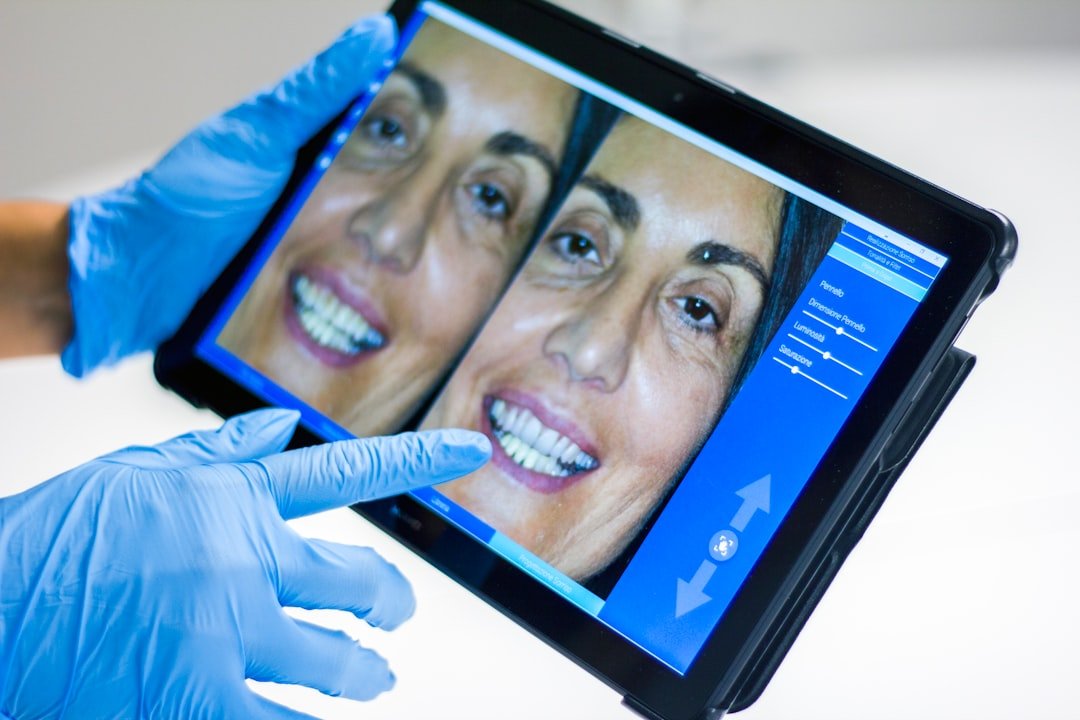
Generative AI is poised to be a game-changer in dentistry, moving beyond simple analytics to actively create new data and solutions. Think of it as a highly skilled assistant that can design, predict, and even help refine treatments. But what does that actually look like today, and what are we up against as we move forward? Let’s dive in.
Right now, generative AI isn’t science fiction; it’s finding practical applications in a few key areas of dentistry. It’s less about robots drilling teeth (for now!) and more about improving the processes around patient care.
Designing the Perfect Smile: Aesthetic Treatments
One of the most immediate and visually impactful uses of generative AI is in aesthetic dentistry. It’s about creating predictable and personalised outcomes for patients seeking cosmetic improvements.
3D Smile Design and Visualisation
Traditionally, planning a smile makeover involved taking impressions, creating models, and skilled hands painstakingly designing wax-ups. Generative AI can accelerate this dramatically.
- Predictive Morphing: By analysing existing patient photos, 3D intraoral scans, and a vast library of successful aesthetic cases, generative AI algorithms can predict how different restorative materials or orthodontic movements will affect their smile. They can generate multiple potential outcomes based on individual facial anatomy and patient preferences.
- Patient Engagement: This translates to better patient communication. Instead of just describing what a veneer might look like, dentists can show patients highly realistic, AI-generated visualisations of their future smile, factoring in tooth shape, size, colour, and even how it complements their lips and face. This reduces guesswork and improves patient satisfaction.
- Iterative Refinement: Patients can provide feedback on these AI-generated designs, allowing for quick iterations. The AI can then adjust based on these preferences, leading to a more collaborative and ultimately more pleasing result.
Optimising Orthodontic Treatment Planning
Orthodontics relies heavily on precise planning, and generative AI is starting to play a role here too.
- Predicting Tooth Movement: AI can learn from past orthodontic cases, including patient anatomy, treatment goals, and the resulting tooth movements. Generative models can then simulate different appliance designs (like aligners or braces) and predict their efficacy in achieving the desired occlusion and aesthetics.
- Personalised Aligner Design: For clear aligner therapy, generative AI can assist in designing sequences of aligners that optimise tooth movement for speed and comfort, potentially reducing the number of required aligners by predicting more efficient paths.
Enhancing Diagnostic Capabilities: Beyond Detection
While diagnostic AI has focused on detecting issues, generative AI can go a step further by creating or simulating conditions for learning and planning.
Generating Realistic Training Data for AI Models
Developing robust diagnostic AI requires vast amounts of high-quality data. Generative AI can create synthetic medical images that mimic real X-rays, CBCT scans, or intraoral photos.
- Augmenting Datasets: This is particularly useful for rare conditions or cases with specific nuances that might be underrepresented in real-world datasets. By generating realistic variations, AI developers can improve the accuracy and generalisability of diagnostic algorithms, making them more reliable in diverse clinical settings.
- Ethical Data Creation: Using synthetic data can also circumvent some of the privacy concerns associated with using real patient data for training.
Simulating Disease Progression and Treatment Response
Imagine being able to predict how a particular form of periodontal disease might progress in a specific patient, or how a chosen treatment might fare over time.
- Predictive Modelling: Generative AI can be trained on longitudinal data to simulate the progression of oral diseases. This can help dentists visualise potential future scenarios, enabling more proactive treatment planning and management strategies.
- Personalised Treatment Simulation: For more complex cases, generative AI could simulate the impact of different treatment interventions on a patient’s oral health, allowing dentists to compare potential outcomes and select the most effective approach for that individual. This moves beyond one-size-fits-all to truly personalised medicine.
Streamlining Workflow and Improving Education
Generative AI isn’t just about clinical outcomes; it’s also about making the day-to-day running of a dental practice more efficient and supporting the education of dental professionals.
Automated Report Generation
The administrative burden in dentistry can be significant. Generative AI can help alleviate this.
- Intelligent Summaries: AI can process clinical notes, radiographic findings, and treatment plans to automatically generate draft reports for patients, referring specialists, or insurance purposes. While human review is still crucial, this can drastically cut down on drafting time.
- Customised Patient Communication: Beyond formal reports, AI can also generate personalised patient educational materials based on their specific diagnosis and treatment plan, enhancing understanding and adherence.
Immersive Training and Skill Development
The future of dental education could look very different with generative AI at its core.
- Virtual Patient Simulators: Generative AI can create highly realistic virtual patients with a range of oral conditions. Dental students and practitioners can practice diagnostic skills, treatment planning, and even simulated procedures in a safe, controlled environment without risk to real patients.
- Scenario-Based Learning: These simulators can generate complex scenarios, prompting users to think critically and develop problem-solving skills. The AI can provide immediate feedback on decisions made, guiding the learning process.
The Technical Foundations: How It Works (Without Getting Too Abstract)
At its heart, generative AI relies on sophisticated algorithms trained on enormous datasets. It’s not magic; it’s a lot of clever mathematics and computing power.
Neural Networks and Deep Learning Architectures
The engines driving generative AI are primarily deep learning models, particularly neural networks.
Generative Adversarial Networks (GANs)
GANs are a foundational technology. They involve two neural networks – a generator and a discriminator – essentially playing a game against each other.
- The Generator’s Role: The generator’s job is to create new data (e.g., synthetic images, text). It starts producing random outputs.
- The Discriminator’s Role: The discriminator’s job is to distinguish between real data (from the training set) and fake data produced by the generator.
- The Learning Process: The generator gets better at fooling the discriminator, and the discriminator gets better at spotting fakes. Through this adversarial process, the generator becomes incredibly adept at producing highly realistic synthetic data that is often indistinguishable from real data to the human eye.
Variational Autoencoders (VAEs)
VAEs offer another approach to generative modelling, often used for generating new data points that are similar to the training data.
- Encoding and Decoding: VAEs learn a compressed representation (a “latent space”) of the input data. They then use a decoder to reconstruct the data from this compressed representation.
- Generating Novelty: By sampling from this latent space and feeding it into the decoder, VAEs can create novel data instances that share characteristics with the original training set. This is useful for generating variations of existing designs or features.
Transformer Models (for Text and Sequences)
While GANs and VAEs are common for images, transformer models have become dominant for sequential data, including text and time-series data.
- Attention Mechanisms: They use “attention mechanisms” to weigh the importance of different parts of the input sequence. This allows them to capture long-range dependencies and generate coherent and contextually relevant outputs, making them ideal for tasks like generating clinical notes or patient summaries.
The Importance of Data: Fueling the Engine
Generative AI is only as good as the data it’s trained on. This is a critical aspect for its successful implementation in any field, especially healthcare.
Large, Diverse, and High-Quality Datasets
To train effective generative models for dentistry, we need enormous amounts of data.
- Clinical Records: This includes anonymised patient records, detailing diagnoses, treatment histories, outcomes, and patient demographics.
- Imaging Data: A vast collection of high-resolution dental images – X-rays, CBCT scans, intraoral scans, photographs – is essential. This data needs to be expertly annotated and labelled to guide the AI.
- Biomechanical Data: For AI involved in treatment planning or device design, data on material properties, forces, and tissue responses would be invaluable.
Data Preprocessing and Annotation
Raw data is rarely usable directly.
- Standardisation: Images need to be standardised in terms of resolution, lighting, and orientation. Text needs to be cleaned of errors and inconsistencies.
- Expert Annotation: Dentists and other specialists are crucial for accurately labelling images (e.g., identifying carious lesions, bone loss) and validating generated outputs. This human oversight ensures the AI learns correct patterns.
Future Challenges: Navigating the Road Ahead
While the potential is immense, there are significant hurdles to overcome before generative AI becomes a standard tool in every dental practice.
Accuracy, Reliability, and Validation
Ensuring that AI-generated outputs are accurate and reliable is paramount, especially in a clinical setting where patient safety is the top priority.
The “Hallucination” Problem in AI
One of the inherent challenges with generative models is their tendency to “hallucinate” – to produce outputs that are plausible but factually incorrect or nonsensical.
- Clinical Consequences: In dentistry, a hallucinated tooth design or a mispredicted diagnosis could have serious clinical consequences for the patient. This necessitates robust validation protocols.
Rigorous Clinical Validation and Benchmarking
AI models, even when trained on excellent data, need to be rigorously tested in real-world clinical scenarios.
- Prospective Studies: Unlike retrospective studies that analyse past data, prospective studies will observe the AI’s performance in real-time clinical practice over extended periods. This is essential to confirm its safety and efficacy.
- Benchmarking Against Human Experts: Generative AI outputs will need to be benchmarked against the opinions and decisions of experienced dental professionals to ensure they meet the required standards of care.
Ethical Considerations and Patient Safety
As with any powerful new technology, especially in healthcare, ethical implications and patient safety must be at the forefront.
Bias in Training Data
If the data used to train generative AI models contains biases (e.g., underrepresenting certain demographics or oral health conditions), the AI will perpetuate and even amplify these biases.
- Disparities in Care: This could lead to AI tools that perform poorly for specific patient groups, exacerbating existing health disparities. Careful curation of diverse datasets and bias detection/mitigation strategies are crucial.
Responsibility and Accountability
Who is responsible if an AI-generated treatment plan leads to an adverse outcome?
- Legal Frameworks: Current legal and regulatory frameworks are not fully equipped to handle the complexities of AI-driven decision-making in healthcare. Clear lines of responsibility between AI developers, manufacturers, and clinicians will need to be established.
- Human Oversight is Key: It is widely agreed that generative AI should act as a tool to assist, not replace, the clinician. The final treatment decisions must always rest with the qualified dental professional.
Integration into Existing Workflows and Training
Bringing new technology into a busy dental practice is never straightforward.
Interoperability and Software Compatibility
Current dental practice management software and imaging equipment may not be designed to integrate seamlessly with advanced generative AI platforms.
- Seamless Integration: For AI to be practical, it needs to fit within existing digital workflows without causing significant disruption or requiring extensive system overhauls. This means developing AI solutions that are compatible with common dental software and hardware.
Upskilling the Dental Workforce
Dental professionals will need to be trained to understand, use, and critically evaluate generative AI tools.
- Education and Training Programmes: Dental schools and continuing education providers will need to develop curricula that cover the principles of AI, its specific applications in dentistry, and the ethical considerations involved. This ensures dentists can leverage these tools effectively and safely.
The Future Outlook: A Glimpse of What’s to Come
While there are challenges, the trajectory for generative AI in dentistry is undoubtedly exciting. We’re moving towards a more personalised, predictable, and efficient future for oral healthcare.
Hyper-Personalised Treatment Planning
The dream of truly bespoke dentistry is closer than ever.
Tailored Restorative and Prosthetic Design
Imagine AI designing implants, crowns, or dentures that are not only perfectly matched to a patient’s anatomy but also optimise for biomechanical forces and aesthetic harmony, all generated automatically based on comprehensive patient data.
- Optimised Material Selection: AI could even suggest the optimal materials for a given restoration based on predicted stress loads, longevity, and patient allergies.
Predictive Therapeutics and Disease Prevention
Generative AI could evolve to simulate individual responses to different therapeutic interventions, enabling proactive management of oral health.
- Early Intervention Alerts: By simulating disease progression, AI could flag patients at high risk for certain conditions, allowing for earlier and more personalised preventative measures.
Advanced Dental Education and Research
Generative AI will likely revolutionise how dental professionals learn and how research is conducted.
Dynamic Learning Environments
Virtual patients generated by AI can offer increasingly sophisticated and responsive learning experiences, adapting to the user’s progress and skill level.
- Accelerated Research: AI can accelerate the design and simulation phases of research, potentially leading to faster breakthroughs in materials science, diagnostics, and treatment methods.
Enhanced Patient Experience and Communication
The impact on the patient experience will be significant, leading to greater engagement and trust.
Interactive Treatment Exploration Tools
Patients could use AI-powered tools to visualise multiple treatment options, understand the implications of each, and actively participate in shared decision-making, leading to higher treatment acceptance and satisfaction.
- Demystifying Complex Procedures: Generative AI can simplify complex dental concepts into easily digestible visuals and explanations, empowering patients with knowledge.
Conclusion: Embracing the Generative Leap
Generative AI is not just a buzzword; it’s a powerful new set of tools that are already starting to reshape dentistry. While the current applications are promising, and the future holds even greater potential, navigating the challenges of accuracy, ethics, and integration will be key. The journey requires collaboration between AI developers, clinicians, researchers, and regulatory bodies to ensure that this transformative technology is harnessed responsibly for the benefit of all patients. It’s an evolving landscape, and staying informed and adaptable will be crucial for dental professionals looking to stay at the forefront of their field.