









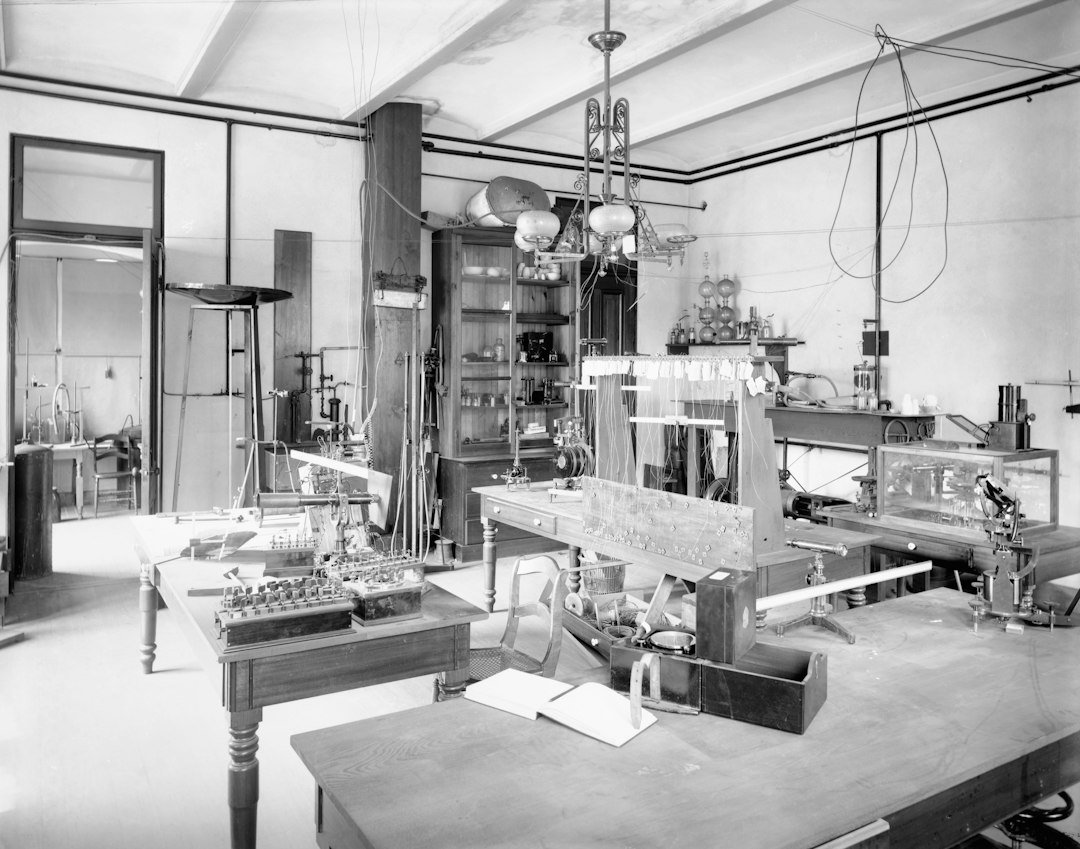
Educational technology, or ‘EdTech’ as it’s often called, has come a seriously long way from the dusty classrooms of yesteryear. Essentially, it’s about using tools and resources to make learning and teaching more effective, engaging, or accessible. While we might think of computers and tablets first, the story actually starts much, much earlier than that. It’s a fascinating journey, really, from simple slates to sophisticated AI, all aimed at improving how we gain knowledge and skills.
The Early Days: More Than Just Slates
When we talk about the history of educational technology, it’s easy to jump straight to electronics. But the truth is, any tool used to facilitate learning can be considered a form of EdTech. Think about it: before printing presses, handwritten manuscripts were painstakingly created and shared, a technology in themselves for disseminating knowledge. The invention of the chalkboard, for example, dramatically changed how group instruction could be delivered. It allowed a teacher to present information to an entire class simultaneously, making it far more efficient than individual tutelage or demonstrations.
The Power of Print
The invention of the printing press by Gutenberg in the mid-15th century was a monumental shift. Suddenly, books – once rare and expensive items – could be produced in much larger quantities and at a fraction of the cost. This democratised knowledge in an unprecedented way. Libraries could expand, individuals could own books, and standardised curricula became more feasible as identical texts could be distributed widely. It laid the groundwork for mass education by making learning materials accessible to a broader population than ever before. This wasn’t just about reading; it was about the systematic dissemination of information and the creation of a shared educational experience through common texts.
Classroom Innovations
Beyond print, the classroom itself saw innovations that qualify as early EdTech. The aforementioned chalkboard, popularised in the 19th century, was a game-changer for visual instruction in group settings. Suddenly, diagrams, calculations, and written explanations could be shared with an entire class at once, facilitating interactive teaching. Later, magic lanterns and epidiascopes emerged, allowing teachers to project images and even opaque objects onto a screen. While clunky by today’s standards, these were revolutionary for bringing visual aids and external content into the classroom, sparking imagination and making abstract concepts more concrete. These early tools highlighted a continuous human desire to enrich the learning environment and make information more digestible.
The Audio-Visual Revolution: Hear It, See It, Learn It
The 20th century really kicked off the ‘modern’ era of EdTech, driven by new communication technologies. The idea here was to move beyond static text and bring dynamic, sensory experiences into the learning process.
Radio and Television in Education
The advent of radio in the early 20th century presented a powerful new medium for education, particularly in remote areas or for reaching large audiences simultaneously. Broadcasts could deliver lectures, language lessons, and cultural programmes directly into homes and schools. Think of the BBC’s educational programming, which has been a staple for decades, bringing history, science, and literature to millions. It allowed access to expert voices and content that might otherwise have been inaccessible.
Television, emerging later, took this a step further by adding visuals. Educational TV programmes became incredibly popular, offering a more immersive learning experience. From children’s educational shows to Open University lectures, television brought the classroom, or at least elements of it, into living rooms. It demonstrated the power of combining audio and visual elements to explain complex topics, illustrate concepts, and even inspire curiosity in subjects that might otherwise seem dry. This era also saw the rise of educational films and documentaries, becoming common fixtures in schools to supplement textbook learning and provide real-world context.
The Rise of Programmed Instruction
Alongside these broadcast technologies, a different kind of EdTech emerged in the mid-20th century: programmed instruction. Pioneered by figures like B.F. Skinner, this approach focused on breaking down learning into small, sequential steps, with immediate feedback for learners. Teaching machines were developed, often mechanical devices, that presented a question, allowed the student to respond, and then immediately indicated if the answer was correct before moving on. The core idea was mastery learning, ensuring a student understood one concept before progressing to the next. While the mechanical devices themselves faded, the principles of self-paced learning, immediate feedback, and structured progression deeply influenced subsequent educational software and online learning design. It highlighted the importance of individualised learning paths, even if the technology at the time was rudimentary.
The Digital Age Dawns: Personal Computers and the Internet
The latter part of the 20th century saw the arrival of personal computers, fundamentally reshaping not just society but also education. This was a turning point, moving from passive consumption of educational content to active, interactive engagement.
Computers Enter the Classroom
Initially, computers in schools were often standalone machines used for teaching basic programming skills or as advanced typewriters. However, as software developed, their potential for interactive learning became clear. Early educational software focused on drills, tutorials, and simulations. These programmes could provide immediate feedback, track progress, and offer a more personalised learning experience than traditional textbooks or lectures. Think of early maths games or language learning software. While graphics were basic and processing power limited, they offered a glimpse into a future where learning could be adaptive and engaging in entirely new ways. The ability to practice repeatedly without judgment and receive instant corrections was a significant benefit, particularly for subjects requiring rote memorisation or procedural skills.
The World Wide Web Changes Everything
The commercialisation of the internet in the 1990s was nothing short of revolutionary for education. Suddenly, a vast repository of information became accessible to anyone with an internet connection. Websites dedicated to academic subjects, digital libraries, and online encyclopaedias began to emerge. Email enabled unprecedented collaboration between students and teachers, and even between students across geographical divides.
The internet quickly fostered the growth of online learning platforms. Early virtual learning environments (VLEs) like Blackboard and Moodle allowed institutions to host course materials, facilitate discussions, submit assignments, and manage grades all in one centralised place. This laid the groundwork for distance learning to move beyond correspondence courses and into a fully interactive, digital realm. The internet broke down geographical barriers, making education more accessible to those who couldn’t attend traditional brick-and-mortar institutions. It also empowered learners to conduct research with an ease unimaginable just decades prior, leading to a shift in teaching methodologies towards inquiry-based learning.
The 21st Century Explosion: Mobile, Social, and Data-Driven
The turn of the millennium and the years that followed brought an acceleration of technological advancements, making EdTech more pervasive, personal, and intelligent.
Mobile Learning and Ubiquitous Access
The proliferation of smartphones and tablets has brought learning literally into the palm of our hands. Mobile learning, or ‘m-learning’, means that educational content is no longer confined to a desktop computer or a classroom. Apps for language learning, revision tools, educational games, and digital textbooks are now commonplace. This allows for ‘learning on the go’, enabling students to utilise commute times, breaks, or any spare moment for educational purposes. It has made learning more flexible and integrated into daily life. Furthermore, mobile devices often come equipped with cameras, microphones, and GPS, opening up possibilities for augmented reality (AR) in education, fieldwork data collection, and location-based learning experiences. This ubiquitous access has been particularly transformative for adult learners and those in remote areas.
The Rise of Social Learning and MOOCs
The internet also facilitated social learning on a massive scale. Platforms like YouTube became accidental educational resources, with countless tutorials and explanatory videos created by individuals. Dedicated platforms for educational video content, such as Khan Academy, emerged, offering free, high-quality lessons across a vast array of subjects.
Massive Open Online Courses (MOOCs), offered by platforms like Coursera and edX, further democratised access to higher education content from top universities worldwide. These courses allowed millions of learners to audit or even gain certifications in subjects ranging from computer science to philosophy, often at little to no cost. While completion rates varied, MOOCs demonstrated the enormous appetite for flexible, high-quality online learning and highlighted the potential for scaling educational delivery globally. They also spurred discussions about the future of traditional university education and credentialing.
Personalised Learning and Adaptive Technologies
With more data available from online interactions, the focus has increasingly shifted towards personalised and adaptive learning. These systems use algorithms to tailor content, pace, and teaching methods to individual student needs and learning styles. They can identify areas where a student is struggling, provide targeted interventions, and adjust the difficulty of material in real-time. This moves beyond a ‘one-size-fits-all’ approach, aiming to optimise the learning path for each student. While still evolving, the promise of truly adaptive learning is to make education far more efficient and effective, catering to diverse learners within the same digital environment. Data analytics also helps educators identify trends, assess the effectiveness of teaching strategies, and intervene proactively.
The Cutting Edge: AI, VR, and the Future of Learning
We’re now entering an era where technologies once confined to science fiction are becoming practical tools for education, pushing the boundaries of what’s possible in the classroom and beyond.
Artificial Intelligence in Education
Artificial intelligence (AI) is rapidly becoming a significant player in EdTech. AI tutors can provide personalised support, answer questions, and even grade certain types of assignments, freeing up teachers to focus on more complex pedagogical tasks. AI-powered analytics can provide deep insights into student performance and learning patterns, helping educators understand where students excel or struggle more effectively. Beyond this, AI is instrumental in creating the adaptive learning systems mentioned earlier, constantly refining content delivery based on individual progress. Large Language Models (LLMs) like the one you’re reading now are also beginning to impact how students access information, draft essays, and even engage in debates, raising important questions about critical thinking and academic integrity that educators are actively addressing. The potential for AI to automate routine tasks and provide sophisticated feedback is immense.
Virtual and Augmented Reality
Virtual Reality (VR) and Augmented Reality (AR) are poised to revolutionise experiential learning. VR can transport students to historical events, inside the human body, or to distant planets, providing immersive experiences that would be impossible or impractical in a traditional classroom. Imagine dissecting a virtual frog without the mess, or exploring ancient Rome as if you were truly there. This can make abstract concepts tangible and engaging.
AR, on the other hand, overlays digital information onto the real world. Think of using a tablet to scan a textbook and see 3D models pop up, or using AR glasses to get real-time data about an object you’re observing. This blends the physical and digital, enhancing real-world learning environments with interactive digital content. Both VR and AR offer powerful new ways to engage learners and provide deeply experiential learning opportunities that cater to different learning styles. They can bring learning to life in a way that static textbooks simply cannot.
Blockchain and Credentialing
While still somewhat nascent, blockchain technology holds promise for education, particularly in the realm of credentialing and record-keeping. Imagine secure, tamper-proof digital certificates and academic records that are easily verifiable by employers and institutions worldwide. This could streamline the process of transferring credits, applying for jobs, and verifying qualifications, making educational achievements more portable and trustworthy. It also has implications for protecting intellectual property and managing educational resources. While not directly about learning content, it’s a foundational technology that could simplify and secure the administrative backbone of education.
The Lifelong Learning Landscape
Ultimately, the trajectory of educational technology points towards a future of lifelong learning, where education isn’t just confined to formal institutions or specific periods of life. EdTech facilitates continuous skill development, reskilling, and upskilling, which are increasingly vital in a rapidly changing job market. From micro-credentials to personalised learning pathways available on demand, technology is enabling individuals to take charge of their own learning journeys throughout their lives. The future of EdTech is about creating an accessible, engaging, and effective learning ecosystem that supports individuals from early childhood through retirement, constantly adapting to new knowledge and societal needs.