









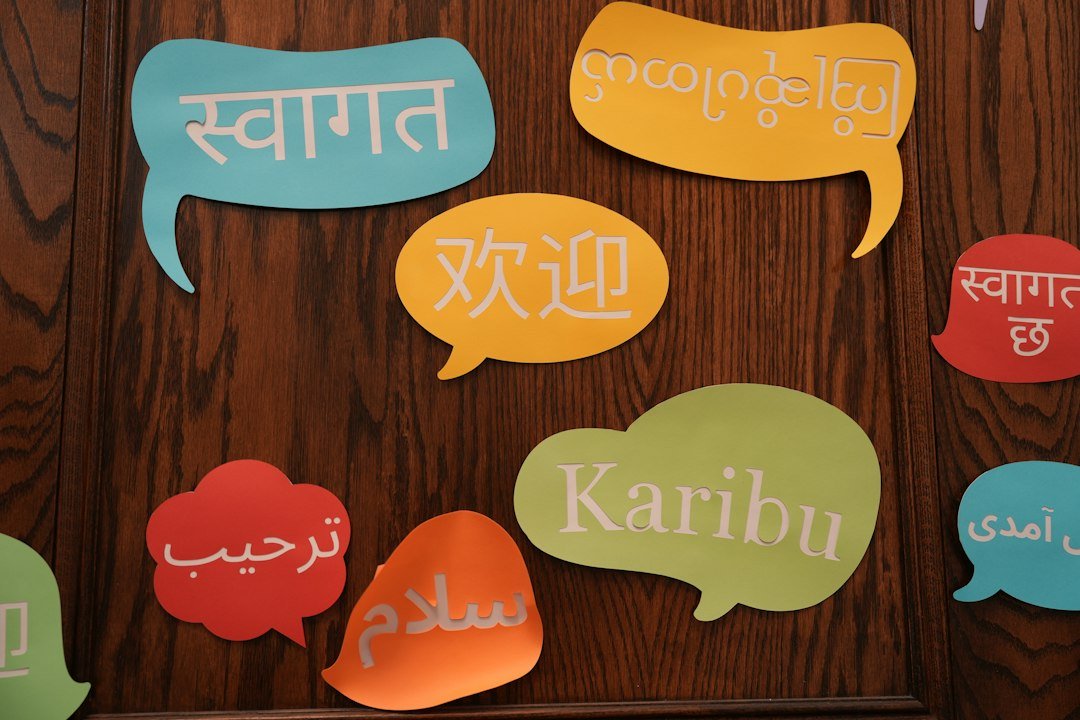
Right, so, you’re wondering about AI in the language classroom – what’s the deal, then? Basically, it’s a rapidly evolving landscape where artificial intelligence offers some pretty handy tools for language learning and teaching, but it also brings a few interesting challenges and things to think about. It’s not just about fancy apps; it’s about how we integrate these new capabilities thoughtfully, making sure they genuinely enhance the learning experience without inadvertently undermining crucial human interaction or critical thinking skills. We’re talking about everything from personalised feedback to automated resource generation, alongside the need to critically assess accuracy, ethical use, and the potential impact on traditional teaching methodologies.
Getting Started: The AI Landscape for Language Learning
Let’s cut to the chase: AI is no longer a futuristic concept. It’s here, and it’s rapidly making its way into how we learn and teach languages. Think of it as a new set of gears in the pedagogical machine, offering possibilities that simply weren’t available before. We’re talking about algorithms that can process vast amounts of data, recognise patterns, and even generate text and speech in ways that mimic human communication. This isn’t just about spell checkers anymore; it’s a far more sophisticated beast.
Understanding the Core AI Technologies
At its heart, much of the AI we’re seeing in language learning relies on a few key technologies. Natural Language Processing (NLP) is probably the most obvious one; it’s the tech that allows computers to understand, interpret, and manipulate human language. This is crucial for things like machine translation, sentiment analysis, and even grammar checking. Then there’s Machine Learning (ML), which is how computers learn from data without being explicitly programmed. This allows systems to improve their performance over time, for instance, by better predicting what a student might struggle with based on past interactions. Deep Learning (DL), a subset of ML, is behind some of the more impressive recent advancements, especially with large language models (LLMs) that can generate highly coherent and contextually relevant text. Speech Recognition and Synthesis are also vital, enabling interactive practice and providing audio feedback or examples.
AI’s Evolving Role in Education
For a while, AI in education was a bit niche, often confined to specific adaptive learning platforms. Now, with the advent of more accessible and powerful tools like ChatGPT, its presence is far more widespread. It’s moving beyond just supporting administrative tasks or providing rote drills; it’s starting to engage with the actual content and pedagogical process. This shift means educators need to move beyond simply being aware of AI; they need to understand its capabilities, its limitations, and critically, how to leverage it effectively and ethically in their specific contexts. It’s about being an informed user, not just a passive recipient of new tech.
Practical Tools and Their Classroom Applications
Right, so what does this actually look like in practice? We’ve got a whole host of tools, from sophisticated platforms to simple browser extensions, that can genuinely shake things up in the language classroom. The trick is knowing which tool for which job and how to weave them into your lessons without losing the human touch.
Language Model-Based Tools (e.g., ChatGPT, Bard, Claude)
These are the big disruptors. Large Language Models (LLMs) like ChatGPT, Google Bard (now Gemini), and Claude are incredibly versatile. They can generate text, summarise, translate, explain complex concepts, and even role-play.
Generating Bespoke Materials
Imagine needing a reading comprehension text about sustainable farming in French for your B1 class, specifically using the passé composé and some conditional clauses. You could spend ages crafting that yourself. Or, you could ask an LLM to generate it, specifying the target language, topic, CEFR level, and grammatical structures. You’d still need to review and edit it, of course, but it’s a massive time-saver for creating genuinely tailor-made resources. Similarly, you could ask it to generate specific vocabulary lists, dialogue prompts for a particular scenario, or even quizzes based on a given text.
Personalised Feedback and Explanations
LLMs can provide instant feedback on student writing. While not perfect, they can highlight grammatical errors, suggest vocabulary improvements, and even offer stylistic advice. More importantly, they can explain why something is incorrect, which is often more valuable than just pointing out the mistake. A student struggling with the subjunctive in Spanish could ask the AI to explain it in simpler terms, provide examples, or even generate exercises focused solely on that one tricky concept. This offers an immediate, always-available resource for clarification that a single teacher simply can’t provide to every student simultaneously.
Interactive Practice and Role-Playing
Students can use LLMs as conversation partners. They can role-play scenarios – ordering food in a restaurant, checking into a hotel, discussing current events – receiving responses that keep the conversation flowing. While it lacks the nuance and spontaneity of human interaction, it provides a safe, low-stakes environment for students to practise speaking and listening, experiment with new vocabulary, and build confidence without fear of judgment. You can instruct the AI to adopt a specific persona, respond with certain grammatical structures, or even challenge the student’s assertions, making for a dynamic practice partner.
AI-Powered Grammar and Writing Checkers
Beyond the general capabilities of LLMs, there are dedicated tools like Grammarly, LanguageTool, and DeepL Write. These have been around a bit longer and are often more refined for specific tasks.
Advanced Error Detection and Correction
These tools go beyond basic spell-checking. They can identify complex grammatical errors, issues with punctuation, stylistic inconsistencies, and even offer suggestions for conciseness or tone. For students writing essays or emails in a target language, this is invaluable. It helps them catch mistakes they might miss and learn from the corrections provided.
Style and Tone Suggestions
Many of these checkers can analyse the tone of a piece of writing and suggest alterations to make it sound more formal, informal, confident, or persuasive. This is particularly useful for advanced learners who need to master the nuances of register and appropriate communication in different contexts. Imagine a student needing to write a formal complaint letter in German; these tools can guide them on appropriate phrasing and vocabulary.
AI-Enhanced Translation Tools
DeepL, Google Translate, and similar services have come a long way. They’re not just word-for-word replacements anymore; they often produce remarkably natural-sounding translations, especially for common language pairs.
Facilitating Comprehension and Production
While direct reliance on machine translation for all output is generally discouraged in language learning, it has legitimate uses. For instance, students can use it to quickly grasp the gist of a complex authentic text before diving into a more detailed analysis. They can also use it to check their own translations, comparing their efforts with an AI’s output to identify discrepancies and learn from alternative phrasing. It can also be a springboard for productive tasks: translate a simple sentence from L1 to L2, then analyse the AI’s translation, breaking down its choices of vocabulary and grammar.
Cross-Lingual Communication
In scenarios requiring quick understanding of non-essential texts, like social media posts or news articles from different countries, AI translation can bridge gaps. It allows learners to engage with a wider range of authentic materials, even if their proficiency isn’t yet at a level to fully decode every word themselves. The key here is using it as a scaffold, not a crutch.
Speech Recognition and Synthesis Tools
These are excellent for pronunciation practice and listening comprehension. Think Duolingo’s speech recognition or more advanced platforms.
Pronunciation Practice and Feedback
Tools that use speech recognition can listen to a student’s spoken input and provide immediate feedback on pronunciation. They can often highlight specific sounds that are incorrect or unclear, allowing students to target their practice. This is incredibly helpful for languages with tricky phonetics, providing a patient, non-judgmental “listener” that can give instant pointers.
Listening Comprehension Aids
AI can generate audio in the target language at various speeds and accents, providing a customisable listening resource. Some tools can also transcribe spoken audio, which can be immensely useful for students trying to decipher fast or accented speech, allowing them to follow along with the text as they listen.
Evolving Teaching Techniques and Pedagogical Approaches
The introduction of AI isn’t just about new tools; it fundamentally shifts how we approach teaching and learning. It calls for a re-evaluation of traditional methods and an embrace of new pedagogical strategies. We’re moving from a model where the teacher is the sole source of information to one where the teacher becomes a guide, a facilitator, and a critical evaluator of AI-generated content.
Integrating AI as a Learning Companion
Instead of viewing AI as a replacement for human interaction, consider it an always-available learning companion. Students can interact with AI outside of class hours, practising skills, asking questions, and receiving instant feedback.
Flipped Classroom Models
AI tools slot perfectly into a flipped classroom approach. Students can use AI-generated explanations, exercises, or interactive practice sessions at home to familiarise themselves with new grammar or vocabulary. Class time can then be dedicated to more complex tasks, collaborative projects, and nuanced discussions that require human interaction and the teacher’s expertise. For example, students might use an LLM to generate summary notes on a complex historical event in the target language, then come to class ready to debate its implications.
Differentiated Instruction
AI’s ability to personalise content and pace makes it ideal for differentiated instruction. A struggling student can receive extra practice and simpler explanations, while an advanced learner can be challenged with more complex tasks or advanced vocabulary, all tailored by AI to their individual needs. This allows teachers to cater to a wider range of abilities within a single classroom, without having to individually prepare vastly different materials for each student.
Developing Critical AI Literacy
This is perhaps one of the most crucial aspects. Students (and teachers!) need to understand not just how to use AI, but how to evaluate its output. AI isn’t infallible, and its biases and inaccuracies need to be recognised.
Fact-Checking and Source Verification
AI models can “hallucinate” – producing plausible-sounding but entirely false information. Students must be taught to critically evaluate AI-generated content, cross-reference information, and identify potential biases. If an AI generates a reading text about a specific cultural event, students should be encouraged to verify details with reliable human-authored sources. This moves beyond language learning into broader critical thinking skills.
Understanding AI’s Limitations and Biases
Discussions about where AI gets its data from, how it might perpetuate societal biases, and the ethical implications of its use are vital. For example, if an AI is primarily trained on data from one specific dialect or cultural context, its output might not be appropriate or accurate for others. Students need to be aware that AI is a tool, not an oracle, and its output reflects the data it was trained on.
Redefining Assessment and Feedback
AI tools challenge traditional assessment methods. If students can use AI to write essays or complete grammar exercises, how do we accurately gauge their own proficiency?
Process-Oriented Assessment
Focus shifts from solely evaluating the final product to assessing the process of learning. How did students use AI? Did they simply copy and paste, or did they use it to generate ideas, refine drafts, and then critically evaluate the output before submitting? Teachers might require students to submit AI prompts, reflect on AI’s feedback, or even co-create texts with AI, demonstrating their ability to guide and critique the technology.
Formative Feedback and Self-Correction
AI can provide ongoing formative feedback, allowing students to self-correct and improve before summative assessments. This moves the teacher’s role from being the primary feedback provider to a facilitator who helps students interpret and act upon AI-generated feedback, addressing more complex issues that AI might miss.
Navigating the Tensions and Challenges
It’s not all plain sailing, though. AI introduces some genuine conundrums and requires careful consideration to ensure it genuinely serves educational goals rather than creating new problems.
Ethical Considerations and Academic Integrity
This is perhaps the biggest elephant in the room. The ease with which AI can generate coherent text raises serious questions about plagiarism and academic honesty.
Preventing Misuse and Cheating
Schools and teachers need clear policies regarding AI use. Is it allowed for brainstorming? For drafting? For final submission? Expectations must be explicitly communicated. Beyond prohibitions, educators need to design assignments that make AI-generated content less appealing or easily detectable. This might involve oral components, in-class writing, or tasks that require synthesis of personal experience or niche information AI struggles with. Teachers also need to become adept at identifying AI-generated text, using tools designed for this purpose, while acknowledging their limitations.
Data Privacy and Security
Many AI tools collect data about user interactions. For young learners, in particular, the privacy implications of this are significant. Schools must carefully vet tools to ensure they comply with data protection regulations (like GDPR in the UK and EU) and have robust security measures in place. This includes understanding what data is collected, how it’s stored, and who has access to it.
Equity and Access Issues
The digital divide isn’t just about internet access anymore; it’s about access to powerful computing resources and premium AI tools.
Bridging the Digital Divide
Not all students have access to the latest devices, fast internet, or subscriptions to advanced AI platforms. Relying heavily on these tools could exacerbate existing inequalities. Educators need to be mindful of this, ensuring that AI integration doesn’t leave some students at a disadvantage. This might mean providing school-based access, offering offline alternatives, or prioritising free, open-source AI tools.
Training and Professional Development for Educators
Many teachers are not AI experts. They need comprehensive, ongoing professional development to understand how AI works, how to use it effectively in their specific subject areas, and how to manage the associated challenges. Without adequate training, AI can feel overwhelming or threatening, leading to underutilisation or misuse. This isn’t just about technical skills; it’s about pedagogical integration.
Over-Reliance and the Loss of Core Skills
There’s a legitimate concern that if students rely too heavily on AI, they might fail to develop crucial language learning skills themselves.
Fostering Autonomous Learning vs. Dependence
If AI constantly corrects grammar, will students ever truly master grammatical rules themselves? If AI translates everything, will their vocabulary acquisition suffer? The key is careful integration that encourages active learning and critical engagement, not passive consumption. AI should be a tool for learning, not a replacement for it. Tasks should be designed to require students to think critically, experiment, and make mistakes, using AI as a guide or a check, not a crutch.
Maintaining Human Interaction and Empathy
Language learning is inherently a human endeavour. It involves understanding culture, nuance, non-verbal cues, and developing empathy. While AI can simulate conversation, it cannot replicate the richness and complexity of genuine human interaction. Classrooms must remain places where students interact with each other and with the teacher, practising communication in authentic, unpredictable ways that AI cannot fully replicate. We need to preserve the space for serendipitous learning and the emotional connection that comes from human dialogue.
The Future Trajectory: What’s Next for AI in Language Education?
So, where are we headed with all of this? AI in language education is far from static. It’s an area of rapid innovation, and what we see today is just the beginning. Anticipating these developments allows educators to stay ahead of the curve and plan for even more sophisticated integration.
More Sophisticated Personalisation
Current AI offers a degree of personalisation, but future iterations will be far more advanced. Imagine AI tutors that truly understand a student’s individual learning style, cognitive load, emotional state, and even their long-term learning goals.
Adaptive Learning Paths
AI will move beyond just recommending the next exercise to dynamically adjusting entire learning paths based on a student’s real-time performance, emotional engagement, and even their physiological responses (e.g., detecting frustration or boredom). This could mean a truly bespoke curriculum for every single student, adapting content, pace, and modality (visual, auditory, kinesthetic) on the fly.
Emotionally Intelligent AI Tutors
Future AI could potentially detect a student’s emotional state through voice analysis or even facial recognition (with appropriate ethical safeguards, of course). An AI tutor might then adjust its tone, offer encouragement, or rephrase explanations if it senses a student is struggling or becoming demotivated. This brings a layer of human-like empathy to the automated tutoring experience.
Enhanced Real-World Immersion and XR (Extended Reality)
Combining AI with Extended Reality (Virtual Reality, Augmented Reality, Mixed Reality) holds immense promise for creating highly immersive and interactive language learning environments.
AI-Powered Virtual Worlds
Imagine stepping into a VR world where every character is an AI-powered conversational agent speaking the target language. You could practise ordering food in a Parisian café, negotiating a deal in a Tokyo market, or discussing art in a Roman gallery, all within a realistic, interactive simulation. The AI characters would respond dynamically, offer corrections, and adapt to your proficiency level, making for incredibly rich practice opportunities.
Augmented Reality for Contextual Learning
AR could overlay AI-generated information onto the real world. Point your phone at a sign in a foreign city, and AI translates it and explains relevant cultural context. Or, in a classroom, AR could project virtual objects and scenarios for students to interact with in the target language, blurring the lines between the physical and digital learning spaces.
Ethical AI and Explainable AI (XAI)
As AI becomes more powerful, the need for transparency and ethical considerations will become even more critical.
Building Trust and Transparency
Future AI tools will likely incorporate more “Explainable AI” features. This means the AI won’t just give an answer or correction; it will be able to explain why it made that recommendation or identified that error. This transparency helps build student trust and, importantly, helps students learn the underlying rules and reasoning, rather than just passively accepting AI output. Understanding why a grammar correction was made is far more valuable than simply knowing it was made.
AI for Bias Detection and Mitigation
AI itself can be developed to detect and mitigate biases in language learning materials and interactions. For instance, it could flag textbook content that inadvertently promotes stereotypes or identify conversational prompts that might lead to culturally insensitive responses. This moves AI from being a potential source of bias to a tool for promoting more inclusive and equitable learning environments.
Ultimately, AI in the language classroom is a journey, not a destination. It’s about ongoing experimentation, critical reflection, and a commitment to leveraging these powerful tools in ways that genuinely empower both learners and educators. The conversation around tools, techniques, and tensions will continue to evolve, and staying engaged with it is key.