








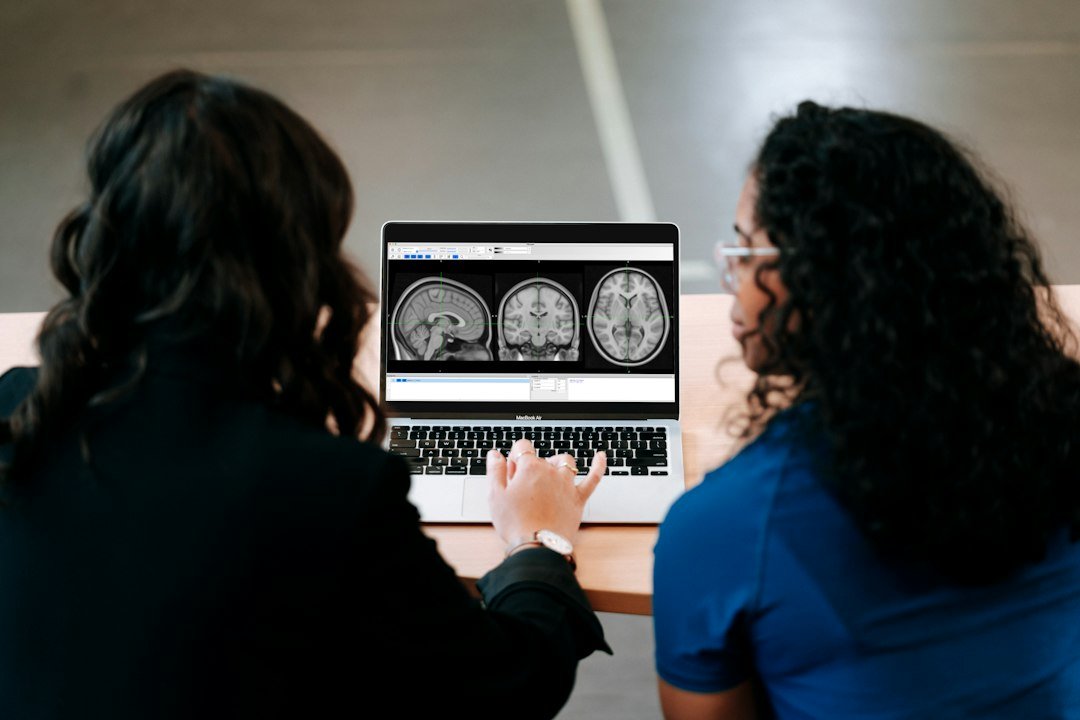
For those of us navigating the ever-evolving landscape of education, the question of whether AI will fundamentally reshape traditional teaching methods isn’t just academic; it’s a practical concern. The short answer, based on current research, is that it’s not a simple ‘versus’ scenario. Instead, the evidence strongly suggests that AI’s greatest potential lies in augmenting and enhancing traditional teaching, rather than outright replacing it. Think of it less as a battle and more as a collaboration, where each brings distinct strengths to the table, ultimately aiming to improve learning outcomes for students. The research points towards a future where human educators, empowered by intelligent tools, can offer more personalised, efficient, and engaging educational experiences.
Understanding the Landscape: AI in Education
When we talk about Artificial Intelligence in education, it’s a broad church. We’re not just talking about robots in classrooms (though that’s a part of it); we’re considering a range of technologies designed to simulate human intelligence. These can include machine learning algorithms that personalise learning paths, natural language processing tools that provide feedback on writing, intelligent tutoring systems, and even AI-powered analytics that help teachers identify at-risk students. The aim is generally to automate tasks, provide data-driven insights, and offer tailored support, all of which have direct implications for how we teach and how students learn.
Defining Traditional Teaching
To properly contrast, it’s worth a moment to clarify what we mean by “traditional teaching.” For the most part, this refers to instructor-led, classroom-based instruction, often characterised by a teacher delivering content, facilitating discussions, and providing assignments, with assessment typically occurring through tests, essays, and presentations. While it’s evolved over centuries, the core premise often revolves around a human educator directly interacting with and guiding a group of students. Its strengths lie in human connection, adaptability to complex social dynamics, and the ability to foster critical thinking and creativity in nuanced ways that AI still struggles with.
The Rise of AI Tools in Learning Environments
The proliferation of AI tools in education has been rapid. From adaptive learning platforms that adjust difficulty based on student performance to AI-powered grading tools for essays, the technology is becoming increasingly sophisticated and accessible. Companies are investing heavily, and educational institutions are experimenting with integrating these tools into their curricula. This isn’t just a niche phenomenon; it’s becoming a mainstream discussion, prompting educators and policymakers to seriously consider the implications for pedagogical practices and learning outcomes.
Personalisation and Adaptive Learning
One of the most frequently cited benefits of AI in education, supported by a growing body of research, is its ability to offer unparalleled levels of personalisation and adaptive learning. Traditional teaching, especially in larger classrooms, often struggles to cater to the diverse needs and learning paces of every individual student. AI, however, thrives on this challenge.
Tailored Learning Paths and Pacing
Research consistently shows that AI-powered adaptive learning systems can create highly individualised learning paths. These systems can assess a student’s prior knowledge, identify their strengths and weaknesses, and then adjust the content, difficulty, and pace of instruction accordingly. For instance, a student struggling with a particular mathematical concept might receive additional practice problems and targeted explanations, while another who has mastered it can move on to more advanced topics. Studies by organisations like the Gates Foundation and various educational technology research groups have demonstrated improved learning outcomes and increased engagement when students use these adaptive platforms. The core finding is that by matching content to individual needs, AI can make learning more efficient and effective, something that’s incredibly difficult for a single teacher to achieve for 30 or more students simultaneously.
Instant Feedback and Remediation
Another significant advantage is the capacity for immediate and highly specific feedback. In a traditional classroom, a teacher might mark an essay or a problem set days after it’s submitted, by which time the student may have moved on from the topic. AI-powered tools can provide instant feedback on answers, identify misconceptions in real-time, and offer immediate remediation. Whether it’s correcting a grammatical error in an essay, pointing out a logical flaw in a programming code, or explaining why a physics problem was answered incorrectly, this immediate loop allows students to correct their understanding promptly. Research published in journals like the Journal of Educational Psychology indicates that timely and specific feedback is crucial for learning, and AI excels in delivering this at scale. This frees up teachers to focus on more complex, nuanced feedback that AI currently can’t provide.
Addressing Learning Gaps Effectively
Adaptive systems are particularly effective at pinpointing and addressing learning gaps before they become significant obstacles. By continuously monitoring student performance and interaction with content, AI can flag areas where a student is consistently struggling. This data can then be used to recommend specific interventions, review foundational concepts, or alert the human teacher to provide targeted support. This proactive approach, backed by educational data mining research, can prevent students from falling behind and ensure a more equitable learning experience, as it doesn’t rely solely on a student’s ability to self-identify their struggles or a teacher’s capacity to observe every interaction.
Enhancing Teacher Capacity and Efficiency
Far from replacing teachers, research suggests that AI can significantly enhance their capacity and efficiency, allowing them to focus on the higher-order aspects of teaching that require human intuition and empathy. The mundane, time-consuming tasks that often drain a teacher’s energy are precisely where AI can step in and provide substantial relief.
Automating Repetitive Administrative Tasks
Consider the sheer volume of administrative tasks teachers face: grading multiple-choice quizzes, tracking attendance, organising resources, and generating reports. AI can automate many of these repetitive, low-complexity tasks. Grading objective assessments, for example, can be done instantly by AI, providing immediate results to students and freeing up countless hours for teachers. Research in educational technology highlights that by offloading these tasks, teachers gain valuable time that can be redirected towards lesson planning, developing more engaging activities, or providing one-on-one support to students who need it most. This isn’t about job displacement; it’s about enabling teachers to be more effective and less burdened by administrative overhead.
Data-Driven Insights for Pedagogical Decisions
One of the most powerful contributions of AI is its ability to process vast amounts of data and provide actionable insights. Learning analytics, powered by AI, can identify patterns in student performance, predict which students are at risk of disengaging or failing, and highlight areas where the curriculum might need adjustment. For example, AI could analyse quiz results across an entire cohort and identify a specific concept that a large percentage of students are misunderstanding, prompting the teacher to revisit that topic with a different approach. Studies on learning analytics consistently show that when teachers are equipped with these data-driven insights, they can make more informed pedagogical decisions, tailor their instruction more effectively, and intervene proactively, leading to improved student outcomes. This goes beyond simple aggregate scores; it delves into the “why” behind student performance.
Supporting Differentiated Instruction
Differentiated instruction – tailoring teaching methods to meet individual student needs – is a cornerstone of effective pedagogy but incredibly challenging to implement consistently in a diverse classroom. AI can be a game-changer here. By providing teachers with detailed data on each student’s learning profile, progress, and areas of struggle, AI tools empower teachers to differentiate their instruction more effectively. They can quickly identify which students need extra challenge, who requires remedial work, and what type of support would be most beneficial for each. This doesn’t mean AI does the differentiation for them; rather, it provides the insights and resources that make effective differentiation manageable for a human teacher. Research by educational psychologists supports the notion that well-differentiated instruction leads to better engagement and achievement, and AI provides the logistical support to make this a reality for busy educators.
The Human Element: Where Traditional Teaching Excels
While AI offers impressive capabilities, particularly in areas of personalisation and efficiency, research unequivocally points to the irreplaceable value of the human element in education. There are crucial aspects of teaching and learning that AI, in its current or foreseeable forms, simply cannot replicate.
Fostering Social-Emotional Development
Education isn’t just about transferring knowledge; it’s about developing well-rounded individuals. The classroom is a vital social environment where students learn collaboration, empathy, resilience, conflict resolution, and critical social skills. A human teacher is central to fostering this social-emotional development. They model appropriate behaviour, facilitate group dynamics, mediate disputes, and provide emotional support. Research in developmental psychology consistently highlights the importance of strong teacher-student relationships for student well-being and academic success. AI lacks the capacity for genuine empathy, understanding of complex social cues, or the nuanced human connection necessary to build these foundational social-emotional competencies. It cannot truly “see” a child’s struggles beyond their academic performance, nor can it offer the comforting presence or understanding nod that a human can.
Cultivating Critical Thinking and Creativity
While AI can process information and even generate text or images, its ability to genuinely foster higher-order thinking skills like critical thinking, complex problem-solving, and true creativity remains limited. These skills often require abstraction, novel connections, ethical reasoning, and the ability to challenge assumptions – areas where human intuition and experience are paramount. A teacher can guide a nuanced discussion, encourage students to debate different perspectives, prompt them to think outside the box, and provide subjective, qualitative feedback on creative projects in ways that AI struggles with. Educational research consistently shows that complex problem-solving and creative expression benefit immensely from open-ended exploration and the subjective guidance of an experienced human mentor, which AI cannot fully emulate.
Adapting to Unforeseen Circumstances and Nuance
Classrooms are dynamic environments. Unexpected questions arise, emotional situations unfold, and a teacher needs to adapt their approach on the fly. A child might be having a difficult day at home, affecting their learning, or a current event might suddenly become highly relevant to the curriculum. A human teacher possesses the flexibility, intuition, and common sense to respond to these unforeseen circumstances with sensitivity and effectiveness. AI systems, while sophisticated, operate within predefined parameters and algorithms. They struggle with ambiguous situations, subtle non-verbal cues, and the need for spontaneous, context-aware human judgment. The ability to read a room, understand subtle shifts in student engagement, and adjust a lesson plan in real-time based on unexpected student input is a uniquely human teaching skill.
Bridging the Gap: The Future of AI-Human Collaboration
The most compelling research doesn’t pit AI against traditional teaching, but rather explores how they can synergise. The future of education, according to most experts, involves a collaborative model where AI enhances the capabilities of human educators, leading to a richer and more effective learning experience for students.
AI as a Co-Pilot, Not a Replacement
Think of AI as a powerful co-pilot for teachers. It can handle the data analysis, the repetitive tasks, and the initial personalisation, freeing up the human teacher to focus on the truly human aspects of education: mentoring, inspiring, fostering critical thinking, and addressing emotional needs. This is the model supported by research from organisations like UNESCO and various educational technology think tanks. They advocate for a balanced approach where AI takes on the ‘heavy lifting’ of data processing and automation, allowing teachers to spend more quality time interacting with students, building relationships, and focusing on complex pedagogical challenges that demand human expertise. The research points towards improved teacher satisfaction and reduced burnout when AI effectively handles some of the more tedious aspects of their job.
Hybrid Learning Models
The rise of hybrid learning models, partly accelerated by recent global events, demonstrates how AI and traditional methods can be integrated. In these models, AI might deliver personalised content and assessments online, while the classroom time is dedicated to collaborative projects, in-depth discussions, and hands-on activities led by a human teacher. Research into blended learning environments consistently shows that the combination of online, often AI-supported, learning with face-to-face interaction can be more effective than either approach in isolation. This allows students to gain the benefits of AI’s adaptive nature for core content acquisition, while still benefiting from the social and interactive aspects of traditional classroom teaching for deeper understanding and skill development.
Training Teachers for an AI-Integrated Future
For this collaborative future to be successful, a critical component identified by research is the need for effective teacher training. Educators need to understand not just how to use AI tools, but when and why to use them. They need to develop digital literacy and pedagogical strategies that leverage AI’s strengths while mitigating its weaknesses. Studies on technology integration in education consistently show that without adequate professional development, even the most advanced tools may not be used effectively. Equipping teachers with the skills to interpret AI-generated data, customise AI learning paths, and strategically integrate AI into their lesson plans is paramount. This isn’t just about using a new app; it’s about a fundamental shift in teaching practice that requires ongoing support and training.
Challenges and Considerations
While the research paints a promising picture of AI’s potential in education, it’s crucial to acknowledge the challenges and considerations that need careful attention as we move forward. Ignoring these could undermine the very benefits we seek to achieve.
Ethical Concerns and Bias
A significant area of concern, highlighted by research in AI ethics, is the potential for bias embedded within AI algorithms. If the data used to train AI systems reflects existing societal biases, the AI itself can perpetuate and even amplify them. This could manifest in discriminatory learning paths, biased assessment criteria, or even inadvertently disadvantaging certain student demographics. Ensuring fairness, transparency, and accountability in AI design and deployment is paramount. Moreover, there are ethical considerations around data privacy and security. The vast amounts of student data collected by AI systems raise questions about who owns this data, how it’s protected, and how it’s used. Robust ethical frameworks and regulations are essential to build trust and prevent misuse.
Digital Divide and Equity
The benefits of AI in education will only be realised if access to these technologies is equitable. The digital divide – disparities in access to technology and internet connectivity – could exacerbate existing inequalities if AI-powered learning tools are only available to affluent schools or students. Research consistently shows that unequal access to educational resources widens achievement gaps. Therefore, policymakers and educators must actively work to ensure that all students, regardless of their socioeconomic background or geographic location, have access to the necessary infrastructure and devices to benefit from AI-enhanced education. This involves strategic investment and thoughtful implementation plans to prevent AI from becoming another factor contributing to educational inequity.
Over-reliance and Loss of Foundational Skills
There’s a legitimate concern, explored in cognitive science research, that over-reliance on AI could potentially hinder the development of certain foundational skills. For example, if AI perpetually corrects grammar, will students truly learn the rules themselves? If AI solves complex problems, will students lose the ability to grapple with them independently? The goal should not be to outsource learning to AI entirely but to use it as a scaffold. Striking the right balance is crucial. Educators need to design learning experiences where AI supports, rather than replaces, active learning and critical engagement. The aim is to empower students, not to create a generation dependent on AI for every cognitive task. This requires careful pedagogical design and an understanding of when AI assistance is beneficial and when it might impede deeper learning.