








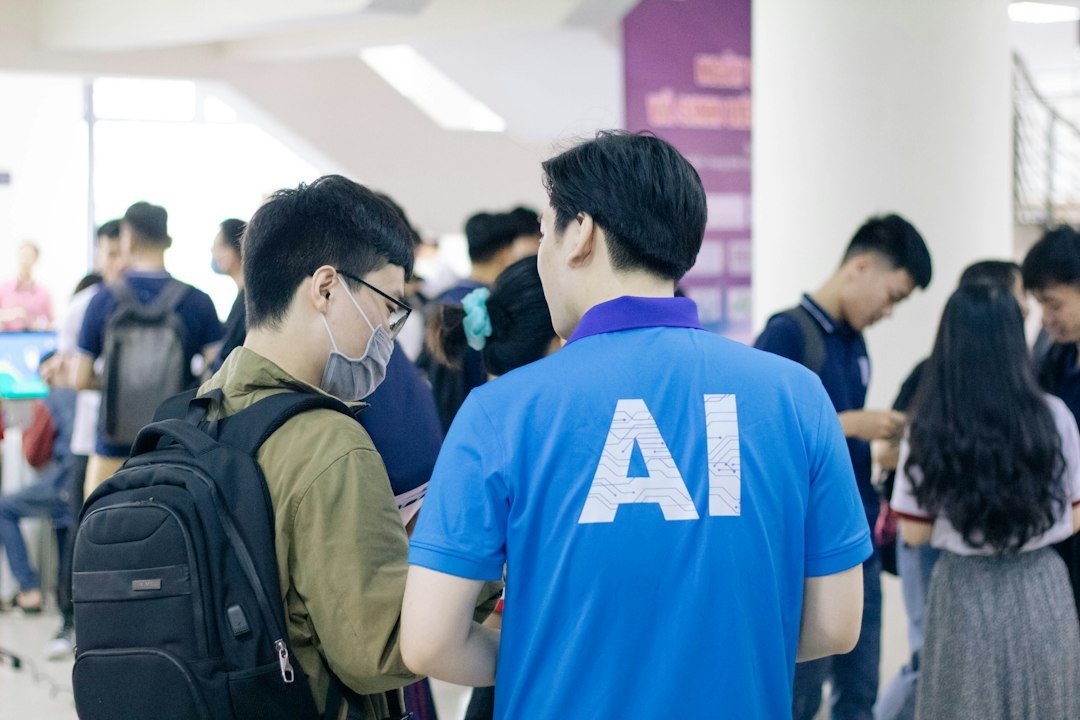
Here’s the lowdown: the future, regardless of the specific path a student chooses, will be intertwined with Artificial Intelligence (AI). This isn’t about everyone becoming an AI engineer, but rather understanding how to work with AI, leverage its capabilities, and navigate a world increasingly shaped by it. Think of it like learning to use a computer in the late 20th century – it wasn’t just for programmers, it became a fundamental tool for almost every profession. The AI skills we’re talking about today are the modern equivalent. They are about critical thinking, adaptability, and understanding the ethical implications, not just the technical wizardry.
Understanding What AI Actually Is (and Isn’t)
Before we can talk about skills, it’s crucial for students to have a realistic grasp of what AI entails. There’s a lot of hype and even fear surrounding AI, often fueled by science fiction or sensationalist headlines. We need to cut through that noise and get to the practical realities.
Distinguishing AI from Automation
It’s easy to conflate AI with simple automation, but they’re distinct. Automation refers to tasks performed by machines following predefined rules, like a factory assembly line or a programmed script. AI, on the other hand, involves systems that can learn from data, identify patterns, make decisions, and even adapt their behaviour without explicit programming for every single scenario. A robot arm repeatedly tightening a bolt is automation; a system that learns to identify faulty bolts from a camera feed and adjusts its inspection criteria over time is AI. Students need to grasp this difference to understand where AI offers unique value and where it’s simply overkill for a task that could be automated more simply.
Debunking Common AI Myths
One of the biggest hurdles is the prevalence of myths. The idea of sentient AI, machines taking over the world, or AI being an infallible oracle are all common misconceptions. Students should learn that AI systems are tools, created by humans, and are subject to the biases present in the data they are trained on. They don’t ‘think’ or ‘feel’ in the human sense. They operate based on complex algorithms and statistical probabilities. Understanding these limitations is just as important as understanding the capabilities, as it fosters a healthy critical perspective and avoids unrealistic expectations or unfounded fears. It also highlights the continued necessity of human oversight and judgment.
The Breadth of AI Applications
AI isn’t just about chatbots or self-driving cars. It’s in our streaming service recommendations, medical diagnostics, fraud detection, climate modelling, and even designing new materials. Students need to see this widespread application to understand that AI isn’t a niche topic, but a pervasive force across almost every sector. This broad understanding helps them recognise potential AI opportunities and challenges within their chosen fields, no matter how traditional they might seem at first glance. It encourages them to think beyond obvious tech roles and see AI as a tool applicable to diverse problems.
Cultivating AI Literacy and Critical Thinking
Beyond understanding what AI is, students need to develop a foundational literacy that enables them to interact with and critically evaluate AI systems. This isn’t about coding, but about informed engagement.
Understanding Data: The Fuel of AI
AI runs on data. Therefore, understanding what data is, where it comes from, how it’s collected, and its potential biases is paramount. Students should be aware of the concept of ‘garbage in, garbage out’ – if the data used to train an AI is flawed, incomplete, or biased, the AI’s outputs will reflect those flaws. This involves recognising different types of data (structured, unstructured), understanding basic statistical concepts, and appreciating the importance of data quality. It’s about asking questions like: “Where did this data come from?” and “Who collected it, and why?”
Evaluating AI Outputs with a Critical Eye
Just because an AI generates an answer or a recommendation doesn’t mean it’s inherently correct, fair, or even sensible. Students must develop the ability to critically evaluate AI outputs, cross-referencing information, identifying potential hallucinations (where AI fabricates information), and questioning the underlying assumptions. This requires strong analytical skills and a healthy dose of scepticism. For instance, if an AI suggests a treatment plan, a student in a medical field would need to understand the data it was trained on and still apply their own clinical judgment, rather than blindly accepting the AI’s recommendation. It’s about using AI as an assistant, not as a replacement for human intellect.
Recognizing AI Bias and Fairness
This is a critical area. As mentioned, AI systems learn from data, and if that data reflects existing societal biases (e.g., historical gender or racial disparities in hiring, or biased medical data), the AI will perpetuate and even amplify those biases. Students need to be able to identify potential sources of bias, understand its implications (from unfair loan applications to inaccurate facial recognition), and advocate for fairer AI systems. This requires an understanding of ethical principles and social awareness, moving beyond purely technical considerations. It’s about ensuring AI serves all of society equitably.
Basic Interaction with AI Tools
While not every student needs to code AI, interacting with common AI tools will become standard practice. This includes knowing how to effectively use generative AI (like large language models for drafting, summarising, or brainstorming), image generation tools, or AI-powered analytical software. The skill here isn’t programming these tools, but rather ‘prompt engineering’ – learning how to formulate clear, effective queries and commands to get the desired output. It’s about being able to integrate these tools into their workflow efficiently and discerningly, understanding their strengths and weaknesses in different contexts.
Developing Problem-Solving and Adaptability in an AI-Driven World
The landscape of work is changing rapidly because of AI. Students need skills that allow them to thrive in an environment where routine tasks are increasingly automated and new challenges emerge constantly.
Framing Problems for AI Solutions
One of the most valuable skills will be the ability to identify problems that AI can help solve, and equally importantly, those where it can’t. This involves breaking down complex issues, understanding their components, and determining if an AI approach (e.g., machine learning, natural language processing) is appropriate or if a traditional solution is better. It requires creative thinking to see how AI can augment human capabilities, not just replace them. This isn’t about building the AI, but about understanding its potential utility.
Collaborative Work with AI
The future workplace will often involve humans and AI systems working together. Students need to learn how to effectively collaborate with AI as a tool or partner. This means understanding how to delegate tasks to AI, interpret its contributions, and integrate AI-generated insights into human decision-making processes. It’s about synergistic collaboration, where human creativity and critical thinking combine with AI’s analytical power and speed. For example, an architect might use AI to generate multiple design iterations, but it’s the human architect who evaluates, refines, and brings the artistic vision.
Continuous Learning and Upskilling
The field of AI is evolving at an astonishing pace. What’s cutting-edge today might be commonplace tomorrow, or even obsolete. Therefore, students must cultivate a mindset of continuous learning and adaptability. This means being open to new technologies, actively seeking out information about AI advancements, and being prepared to acquire new skills throughout their careers. It’s about understanding that learning doesn’t stop after graduation; it’s a lifelong process, especially in a field as dynamic as AI.
Embracing Interdisciplinary Thinking
AI doesn’t exist in a vacuum. Its most impactful applications often arise at the intersection of different disciplines. A student studying biology might use AI for drug discovery, or a history student might use it to analyse vast archives. Encouraging interdisciplinary thinking helps students see how AI can be applied across various fields, fostering innovation and a holistic understanding of complex problems. It’s about breaking down traditional academic silos and seeing the connections.
Ethical Considerations and Responsible AI Use
As AI becomes more powerful, the ethical implications become more pronounced. Students must be equipped to navigate these complex moral and societal challenges.
Understanding Privacy and Data Security
AI relies heavily on data, much of which can be personal. Students need to understand the importance of data privacy, the risks associated with data breaches, and the ethical responsibility of protecting sensitive information. This involves familiarity with concepts like anonymisation, data encryption, and regulations like GDPR. It’s about appreciating the power of data and the imperative to use it responsibly.
Addressing the Societal Impact of AI
AI will undoubtedly reshape society, from employment patterns and economic structures to healthcare access and surveillance. Students should engage with discussions about AI’s broader societal impact, both positive and negative. This includes considering job displacement, the future of work, algorithmic discrimination, and the potential for AI to exacerbate existing inequalities or create new ones. It’s about fostering a sense of civic responsibility and thinking about how AI can be developed and deployed in a way that benefits everyone.
The Morality of Autonomous Systems
As AI systems gain more autonomy, especially in critical areas like self-driving cars or military applications, ethical questions become incredibly complex. Who is responsible when an autonomous system makes a mistake? How do we embed human values into machine decisions? Students should be prepared to grapple with these difficult philosophical and practical questions, understanding that there are no easy answers but that careful consideration is paramount.
Advocating for Transparency and Accountability
Black box AI models, where it’s difficult to understand how a decision was reached, pose significant challenges to accountability. Students should understand the importance of AI transparency (explainable AI) and advocate for systems where decisions can be scrutinised and understood. This is particularly crucial in fields like law, finance, and healthcare, where AI decisions can have life-altering consequences. It’s about demanding that AI systems aren’t just powerful, but also fair and auditable.
Developing Human-Centric Skills for the AI Era
While AI excels at data processing and pattern recognition, uniquely human skills will become even more valuable. These are the attributes that AI struggles to replicate, making them crucial for future success.
Emotional Intelligence and Empathy
AI can process information, but it cannot truly understand or experience human emotions. Skills like empathy, emotional intelligence, and interpersonal communication will be vital for roles requiring complex human interaction, negotiation, leadership, and care. In a world where routine tasks are automated, the ability to connect with others on a human level, understand their needs, and motivate them will be in high demand. This applies across professions, from customer service to healthcare to management.
Creativity and Innovation
While generative AI can produce novel content, true creativity – the ability to conceptualise entirely new ideas, solve problems in unconventional ways, or forge unique artistic expressions – remains a distinctly human domain. Students need to cultivate creative thinking, learn to brainstorm effectively, experiment with ideas, and push boundaries. AI can be a tool in the creative process, but the initial spark, the artistic vision, and the innovative leap still come from humans.
Complex Problem Solving and Strategic Thinking
AI can analyse vast datasets to identify patterns, but it’s human intelligence that can frame truly complex, ill-defined problems, synthesise disparate information, and formulate long-term strategies. This involves critical thinking, strategic planning, foresight, and the ability to deal with ambiguity. These are the skills needed to navigate unforeseen challenges and guide organisations through uncertain futures, making high-level decisions that AI can only inform, not dictate.
Adaptability and Resilience
The pace of change brought about by AI will require individuals who are highly adaptable and resilient. Students need to learn to embrace change, pivot when necessary, recover from setbacks, and view challenges as opportunities for growth. This is less about specific knowledge and more about a robust mindset that can navigate constant disruption. It’s about psychological preparedness for a dynamic future.
Ethical Leadership and Judgment
As AI becomes integrated into every facet of life, ethical leadership and sound judgment will be paramount. Leaders will need to make difficult decisions about how AI is deployed, considering not just profit or efficiency, but also societal impact, fairness, and human well-being. Students should develop their moral compass, cultivate a strong sense of responsibility, and learn to make principled decisions even when faced with complex ethical dilemmas that AI cannot resolve. This is where human values truly lead the way.