







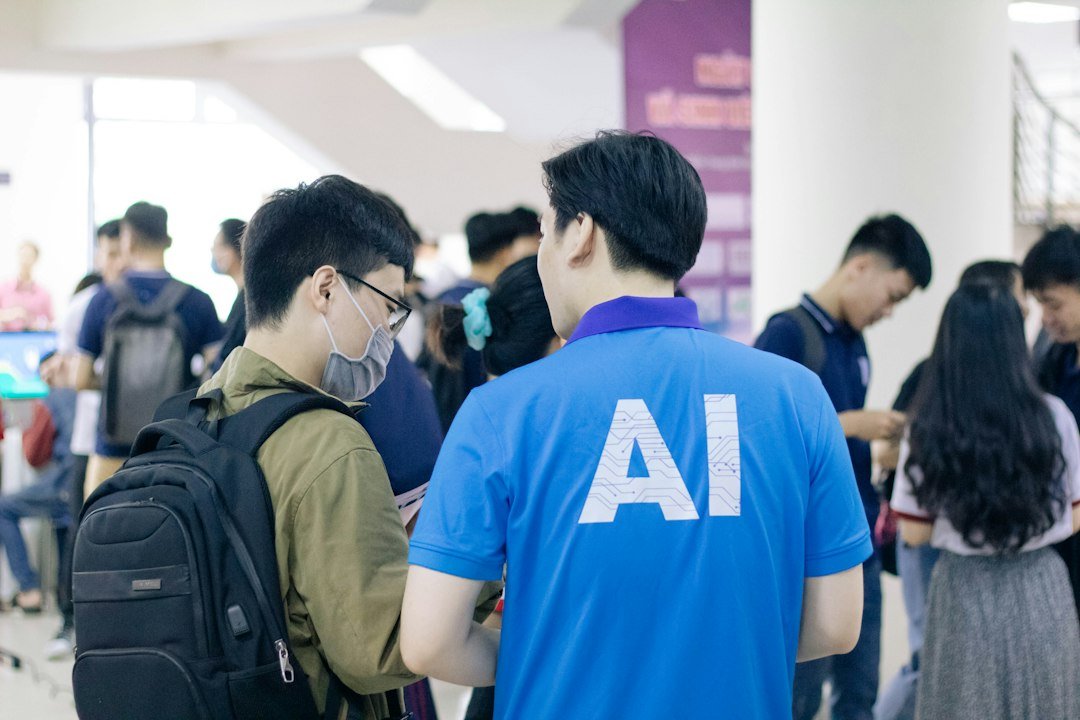
The education sector truly stands at a crossroads, and it’s becoming abundantly clear that artificial intelligence (AI) isn’t just another passing trend; it’s a fundamental shift that education needs to embrace, not resist. Simply put, for education to remain relevant and effective in an increasingly AI-driven world, integrating AI into its core practices and curricula is no longer optional.
The Urgency of Adaptation: Why Now?
We’re not talking about some far-off future scenario; AI is already here, rapidly transforming industries and daily life. To prepare students for the world they will actually inhabit, education must reflect this reality. Resisting AI means preparing students for a world that’s quickly disappearing, leaving them ill-equipped for the challenges and opportunities ahead.
The Evolving Job Market
Consider the job market. Many roles that exist today will be significantly augmented or even replaced by AI in the coming years. New roles, often demanding skills in prompt engineering, AI ethics, data interpretation, and human-AI collaboration, are emerging at an unprecedented pace. If education doesn’t adapt, it risks producing graduates who lack the very competencies employers seek. We’ve seen this pattern before with the internet revolution, and the stakes are arguably higher now.
Personalised Learning at Scale
Traditional education often struggles with a ‘one-size-fits-all’ approach. Classrooms are diverse, with students possessing varying learning styles, paces, and prior knowledge. AI offers the potential for true personalisation at a scale previously unimaginable. This isn’t about replacing teachers but empowering them to cater more effectively to individual student needs, a significant improvement on current models.
Global Competitiveness
Countries and educational systems that embrace AI will inevitably gain a competitive edge. Students from these systems will be better prepared to innovate, problem-solve, and contribute to a global economy increasingly driven by technological advancements. Falling behind risks marginalising an entire generation of learners on the world stage.
Practical Applications of AI in the Classroom
Embracing AI isn’t about some dystopian future where robots teach our children. It’s about leveraging powerful tools to enhance human teaching and learning. The applications are diverse and growing daily.
Intelligent Tutoring Systems
Imagine a virtual tutor available 24/7, capable of understanding a student’s misconceptions, providing tailored explanations, and offering practice problems at just the right level of difficulty. AI-powered intelligent tutoring systems can do exactly this. They can identify gaps in understanding that a teacher, with 30 other students to manage, might miss, providing immediate, targeted feedback that significantly accelerates learning. For subjects like mathematics, coding, or even language acquisition, these systems can be revolutionary.
Adaptive Learning Platforms
These platforms adjust content and pace based on a student’s performance. If a student grasps a concept quickly, the platform moves them forward. If they struggle, it offers remedial content, different explanations, or alternative learning paths. This ensures that students are always challenged but never overwhelmed, optimising their engagement and comprehension. This goes far beyond simple multiple-choice quizzes; it involves sophisticated algorithms analysing interaction patterns, response times, and content mastery.
Automated Assessment and Feedback
Marking essays and lengthy assignments is incredibly time-consuming for teachers. AI tools are becoming increasingly adept at providing preliminary feedback on written work, identifying grammatical errors, suggesting improvements in structure, and even flagging potential plagiarism. While human oversight remains crucial for nuanced feedback and deeper understanding, AI can free up significant teacher time, allowing them to focus on higher-level teaching and individual student support rather than repetitive marking tasks. This doesn’t just benefit teachers; students receive much quicker, often more consistent, feedback, which is vital for learning.
Content Curation and Creation
AI can assist teachers in finding and curating relevant, up-to-date educational resources from the vast expanse of the internet. Beyond curation, AI generative tools can help create personalised learning materials, quizzes, or even scenarios for role-playing exercises, saving teachers hours of preparation time. Imagine an AI generating differentiated worksheets for a class with varying abilities on the fly.
Accessibility Enhancements
AI offers incredible potential for making education more accessible to students with diverse needs. Real-time captioning, text-to-speech, speech-to-text, and even AI-driven translation tools can break down barriers for students with hearing impairments, visual impairments, or those learning in a second language. This inclusivity is a powerful argument for AI’s integration.
Rethinking the Role of the Educator
The advent of AI doesn’t diminish the role of the teacher; it transforms it, elevating it to a more strategic and human-centric function. Teachers will no longer be mere conduits of information but facilitators of deeper learning, critical thinking, and socio-emotional development.
From Information Dispenser to Facilitator
If AI can deliver content and even provide initial feedback, what does that leave for the teacher? A great deal, actually. Teachers can shift their focus from rote instruction to guiding discussions, fostering collaborative projects, encouraging critical analysis of AI-generated information, and developing crucial soft skills like creativity, communication, and emotional intelligence – areas where human interaction is irreplaceable.
Designing AI-Enhanced Learning Experiences
Educators will become designers of learning experiences that effectively integrate AI tools. This means understanding how to select appropriate AI applications, how to prompt students to use them effectively, and how to interpret the data and insights AI provides to inform their teaching strategies. It’s a move towards a blended pedagogical approach.
Cultivating AI Literacy and Ethics
A crucial new responsibility for educators will be to teach AI literacy. This involves understanding how AI works, its capabilities and limitations, its ethical implications, and how to use AI tools responsibly and effectively. Students need to learn to critically evaluate AI-generated content, recognise bias, and understand issues of data privacy and algorithmic transparency. This is vital for responsible citizenship in the AI age.
Focusing on Higher-Order Thinking Skills
With AI handling many of the lower-level cognitive tasks (like memorisation and basic problem-solving), teachers can dedicate more time to nurturing higher-order thinking skills: critical thinking, complex problem-solving, creativity, innovation, and synthesis. These are the skills that AI cannot easily replicate and are paramount for future success.
Navigating the Challenges and Ethical Considerations
Embracing AI isn’t without its hurdles. It requires careful planning, robust infrastructure, and a thoughtful approach to the ethical dilemmas it presents. Ignoring these challenges would be naive and counterproductive.
Equity and Access
One of the biggest concerns is ensuring equitable access to AI tools and resources. If AI-enhanced education becomes the norm, but only privileged schools or students have access to the necessary technology, the existing educational divide could widen significantly. Governments and educational bodies must proactively address this, perhaps through centralised platforms or funding initiatives.
Data Privacy and Security
AI systems often rely on vast amounts of student data. Protecting this data, ensuring its privacy, and using it ethically are paramount. Robust security protocols, clear data governance policies, and transparency with students and parents about how data is used are non-negotiable. Building trust in these systems is crucial for their widespread adoption.
Algorithmic Bias
AI algorithms are trained on data, and if that data reflects existing societal biases, the AI can perpetuate or even amplify them. This is a serious concern in education, where biased algorithms could inadvertently disadvantage certain groups of students or reinforce stereotypes. Constant vigilance, auditing of algorithms, and a commitment to diverse and representative training data are essential.
Teacher Training and Professional Development
The successful integration of AI hinges heavily on equipping teachers with the necessary skills and confidence. This requires comprehensive and ongoing professional development that goes beyond basic software training. It needs to foster an understanding of AI’s pedagogical potential, how to design AI-enhanced lessons, and how to address ethical considerations in the classroom. This is a significant investment that cannot be overlooked.
Over-Reliance and Critical Thinking
There’s a risk that students might become overly reliant on AI tools, potentially hindering their development of fundamental skills or critical thinking. Educators need to design tasks that encourage students to use AI as a tool for augmentation, not as a replacement for their own intellectual effort. Striking this balance is key. Students must learn when and how to leverage AI, and equally important, when to rely on their own cognitive abilities.
The Path Forward: A Call to Action
The shift towards AI in education isn’t a matter of if, but when and how effectively. Proactive engagement is far more beneficial than reactive scrambling.
Developing a National AI in Education Strategy
Governments and educational ministries need to develop comprehensive national strategies for integrating AI into education. This includes funding for research and development, establishing ethical guidelines, investing in infrastructure, and planning for large-scale teacher training. A fragmented approach will only lead to disparities and inefficiencies.
Fostering Collaboration and Pilot Programmes
Encouraging collaboration between educators, AI developers, researchers, and policymakers is vital. Pilot programmes in schools can provide invaluable insights into what works, what doesn’t, and how AI tools can be best adapted to diverse educational contexts. This iterative approach allows for learning and refinement.
Cultivating an Open Mindset
Perhaps the most fundamental step is fostering an open and adaptable mindset within the entire educational community – from policymakers and school leaders to teachers, parents, and students. Resistance to change, while understandable, will ultimately hinder progress. Embracing AI requires curiosity, a willingness to experiment, and a commitment to continuous learning.
Prioritising Human-Centred AI
Crucially, the focus must always remain on how AI can enhance human learning and teaching, not replace it. The goal is to create a more engaging, personalised, and effective educational experience, empowering both students and educators. AI should be a tool to augment human capabilities, fostering creativity, critical thinking, and socio-emotional skills, rather than detracting from them.
In conclusion, the integration of AI into education is an inevitable and necessary evolution. By proactively addressing the challenges and thoughtfully leveraging the immense potential of AI, we can ensure that our educational systems are not only future-proof but are also leading the way in preparing the next generation for a world where human ingenuity, augmented by intelligent technology, will define success. It’s time to stop debating if it will happen, and start planning how we make it happen well.