








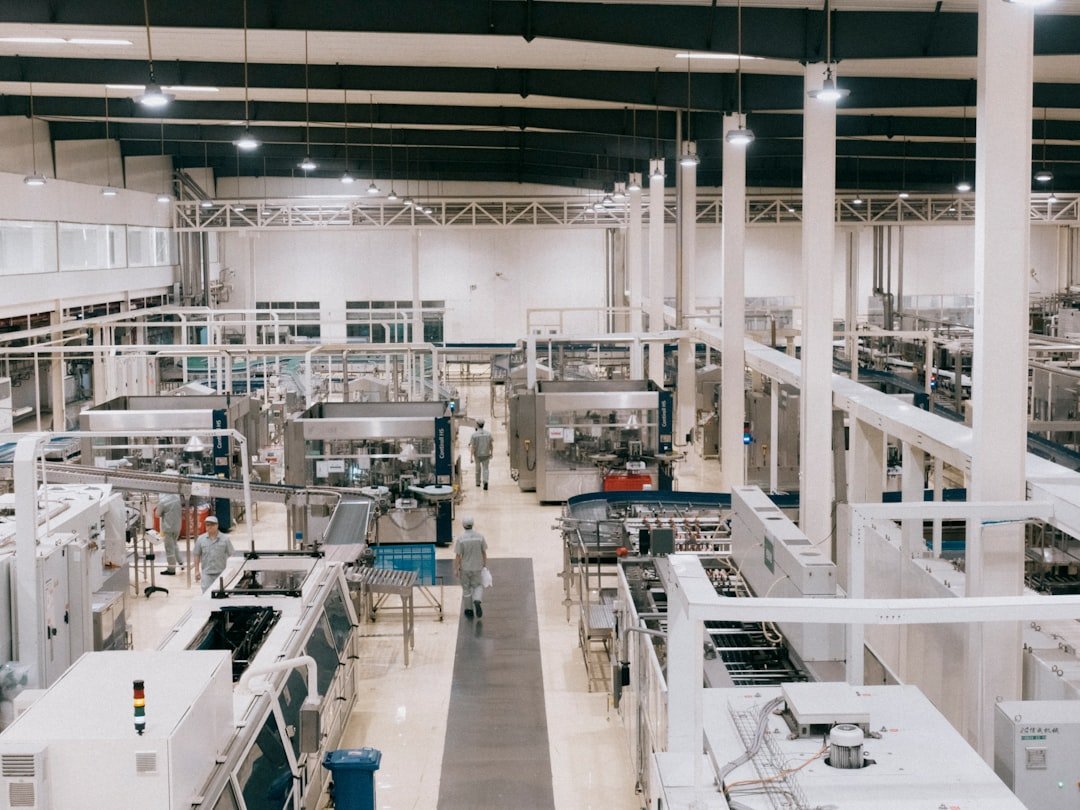
It’s becoming increasingly clear that an “AI Factory” – effectively, a sophisticated infrastructure for building and deploying AI models at scale – isn’t just a niche tool anymore. For businesses truly committing to AI (“all-in adapters”), it’s quickly maturing into a core enterprise capability, much like cloud computing or robust data analytics became over the past decade. This means it’s less about one-off AI projects and more about establishing a systematic, repeatable, and scalable approach to developing, testing, and integrating AI across the entire organisation.
Why the AI Factory is Now Essential
We’re past the experimental phase where AI was a cool side project. Companies are now looking at fundamental transformations powered by AI, and that requires a more industrialised approach. Imagine trying to build a complex product like a car with bespoke, handcrafted parts for every single component. It’s inefficient, expensive, and impossible to scale. An AI factory offers the assembly line and integrated supply chain for AI models, allowing for consistent quality, faster deployment, and better resource utilisation.
Building Blocks of the Modern AI Factory
So, what exactly goes into this “factory”? It’s not a single piece of software but rather an amalgamation of processes, tools, and platforms designed to streamline the AI lifecycle. Think of it as a comprehensive ecosystem designed for efficiency and scalability.
Data Ingestion and Engineering Pipeline
This is where it all begins. Without quality data, even the most sophisticated AI models are useless. The AI factory needs robust mechanisms for bringing in data, cleaning it, transforming it, and making it ready for model training.
Automated Data Collection and Integration
Modern enterprises deal with data from countless sources – internal databases, external APIs, IoT devices, user interactions, and more. The factory needs the ability to automatically ingest this diverse data, ideally in real-time or near real-time, without constant manual intervention. This often involves connectors, ETL (Extract, Transform, Load) pipelines, and data streaming technologies.
Data Quality and Governance
Bad data leads to bad AI. The factory must embed processes and tools for data validation, anomaly detection, and data cleansing. This isn’t just about fixing errors; it’s about establishing clear data governance policies regarding privacy, security, and compliance (e.g., GDPR, CCPA), ensuring that the data used for training is both accurate and ethically sourced.
Feature Engineering and Management
Once raw data is ingested, it needs to be processed into features that AI models can actually learn from. This stage often requires extensive domain expertise. An AI factory seeks to standardise and automate parts of this process, providing a “feature store” where curated and engineered features can be stored, discovered, and reused across different models, reducing redundant effort and ensuring consistency.
Model Development and Training Infrastructure
This is the core engine where AI models are actually built and refined. It needs to be flexible enough to support various machine learning frameworks and powerful enough to handle large-scale training jobs.
Scalable Compute Resources
Training large AI models, especially deep learning models, is computationally intensive. The factory needs access to scalable compute resources, often leveraging cloud-based GPUs or TPUs (Tensor Processing Units). This means dynamic provisioning of resources based on demand, avoiding bottlenecks during heavy training periods and optimising costs during quiescent phases.
Machine Learning Framework Ecosystem
No single framework fits all problems. An AI factory must support a diverse ecosystem of machine learning frameworks (e.g., TensorFlow, PyTorch, scikit-learn, XGBoost) and allow data scientists to choose the best tool for their specific task without operational headaches. Pre-configured environments and containerisation technologies like Docker facilitate this.
Experiment Tracking and Version Control
AI development is highly iterative. Data scientists run countless experiments, tweaking hyperparameters, trying different algorithms, and using various datasets. The factory needs robust systems for tracking these experiments, logging metrics, and versioning models and code. This ensures reproducibility, auditability, and collaboration, allowing teams to quickly roll back to previous versions or compare performance.
Model Deployment and Operationalisation (MLOps)
Getting a model from a data scientist’s notebook into production is often the hardest part. This is where MLOps comes into play, industrialising the process of deploying, monitoring, and maintaining AI models.
Automated Model Deployment Pipelines
Just like traditional software development uses CI/CD (Continuous Integration/Continuous Delivery) pipelines, an AI factory requires automated pipelines for model deployment. This includes testing the model, packaging it into a deployable format (e.g., a container), and pushing it to a production environment with minimal human intervention.
Real-time Inference and API Management
Once deployed, models need to serve predictions, often in real-time. The factory must provide infrastructure for low-latency inference, potentially across multiple geographical regions. This involves robust API management, load balancing, and auto-scaling capabilities to handle varying request loads efficiently.
Model Monitoring and Management
Deployed models don’t just “work” indefinitely. Their performance can degrade over time due to concept drift (changes in the underlying data distribution) or data drift (changes in input features). The factory needs continuous monitoring for performance metrics, data quality, and potential biases, triggering alerts or automatic retraining when necessary. A “model registry” helps manage the lifecycle of various models, their versions, and their deployment status.
Governance, Security, and Compliance
As AI becomes central to business operations, the implications of its usage become more significant. An AI factory must embed robust governance, security, and compliance mechanisms from the ground up.
Explainability and Interpretability Tools
Understanding why an AI model made a particular decision is crucial, especially in regulated industries or for user trust. The factory should integrate tools and techniques for model explainability (XAI), allowing developers and stakeholders to gain insights into model behaviour and identify potential biases or flaws.
Data Privacy and Security Controls
Protecting sensitive data throughout the AI lifecycle is paramount. This includes granular access controls, encryption at rest and in transit, anonymisation techniques, and adherence to relevant data privacy regulations. The AI factory should enforce these controls across all stages, from data ingestion to model inference.
Ethical AI Frameworks
Beyond legal compliance, companies are increasingly concerned with ethical AI development. The factory should support frameworks and processes for identifying and mitigating biases in data and models, promoting fairness, and ensuring transparency in AI applications. This might involve bias detection tools, fairness metrics, and clear guidelines for AI development.
The Organisational Shift: Beyond Technology
It’s crucial to understand that an AI factory isn’t just a collection of tools; it demands a significant organisational shift. Technology alone won’t deliver the promised benefits without the right people, processes, and culture.
Cross-functional Teams and Collaboration
AI development thrives on collaboration. The factory model encourages cross-functional teams comprising data scientists, machine learning engineers, software engineers, domain experts, and even legal and compliance professionals. Breaking down silos and fostering a shared understanding of the AI lifecycle is vital.
Standardisation and Best Practices
To achieve the “factory” efficiency, standardisation is key. This means establishing clear best practices for data handling, model development, testing, and deployment. It might involve creating internal libraries, templates, and guidelines that accelerate development and maintain quality across disparate projects.
Talent Development and Upskilling
The demand for AI skills is immense. An AI factory implicitly supports continuous learning and upskilling within the organisation. By providing structured environments and shared resources, it enables data scientists to focus on model innovation rather than infrastructure headaches, and helps engineers specialise in MLOps.
Challenges and Considerations
While the benefits are clear, building and operating an AI factory comes with its own set of challenges.
Cost and Complexity
The initial investment in infrastructure, tools, and skilled personnel can be substantial. Integrating various complex systems and ensuring their seamless operation requires significant expertise and ongoing maintenance. Businesses need to carefully evaluate the return on investment and build out their factory iteratively.
Tool Sprawl and Integration Headaches
The ML tooling landscape is vast and rapidly evolving. Choosing the right components and ensuring they integrate smoothly can be a monumental task. Avoiding “tool sprawl” where numerous, often overlapping, tools are adopted without proper integration strategy is critical. A holistic vision for the entire AI lifecycle is needed.
Securing Executive Buy-in
Establishing an AI factory requires a strategic, long-term commitment from leadership. It’s not a short-term project but an ongoing investment in a fundamental capability. Articulating the value proposition – competitive advantage, operational efficiency, enhanced customer experience – is crucial for securing the necessary resources and support.
Evolving AI Landscape
The field of AI is dynamic. New models, algorithms, and techniques emerge constantly. An AI factory needs to be agile and designed for adaptability, allowing it to incorporate new technologies and methodologies without requiring a complete overhaul. This implies a modular architecture and a culture of continuous improvement.
In conclusion, for organisations committed to leveraging AI as a fundamental driver of their business, the transition to an “AI Factory” infrastructure is no longer optional. It represents a mature approach to scaling AI development and deployment, moving beyond individual projects to a systematic, industrialised capability. By focusing on robust data pipelines, scalable training infrastructure, seamless MLOps, and comprehensive governance, businesses can unlock the full potential of AI, turning innovative ideas into impactful, enterprise-wide solutions. It’s about making AI a predictable, repeatable, and core part of how the business operates, rather than a bespoke, time-consuming effort every single time.