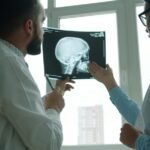







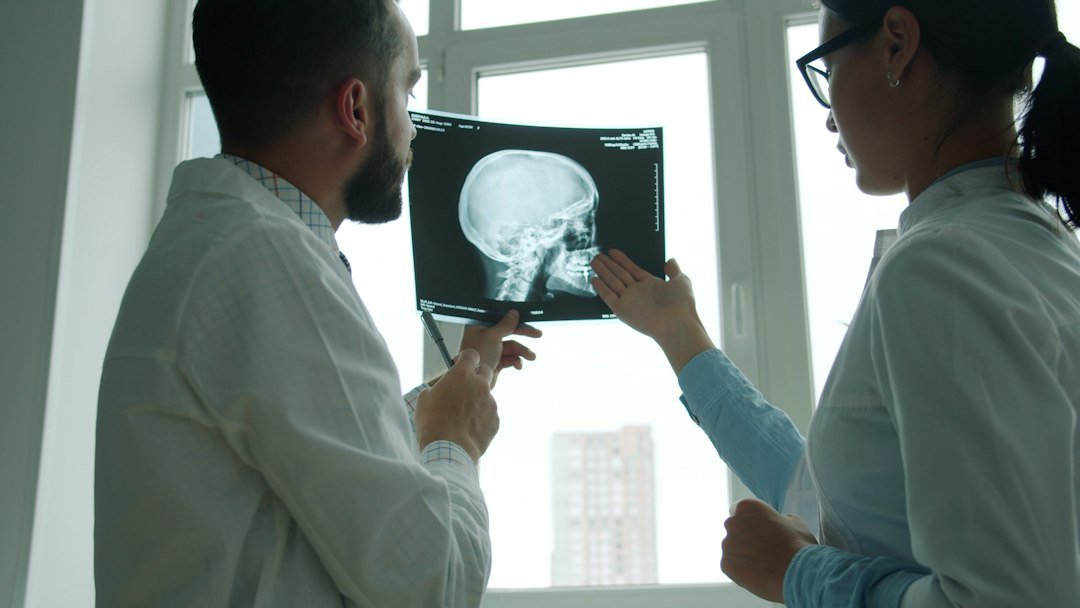
AI in radiology is rapidly changing how we diagnose and treat patients, mainly by making things quicker, more accurate, and generally more efficient. It’s not about replacing radiologists, but rather giving them powerful tools to enhance their capabilities and improve patient care.
The AI Landscape in Radiology: A Quick Overview
Artificial Intelligence (AI) isn’t a single thing; it’s a broad field encompassing various techniques. In radiology, the most talked-about and applied of these is machine learning, particularly deep learning. This involves training algorithms on vast datasets of medical images to identify patterns, abnormalities, and often, subtle details that might be missed by the human eye, especially under pressure or fatigue.
These systems are becoming increasingly sophisticated. We’re moving beyond simple detection tasks to more complex analyses like predicting disease progression, personalising treatment plans, and even assisting with interventional procedures. The sheer volume of imaging data generated globally makes AI an almost indispensable tool for managing and extracting meaningful insights.
What’s Driving the Adoption?
Several factors are pushing AI to the forefront of radiology. Firstly, the ever-increasing workload on radiologists is a major concern. More scans are being performed, often with greater complexity, leading to burnout and potential diagnostic errors. AI offers a way to offload some of the more repetitive or time-consuming tasks.
Secondly, the sheer power of modern computing and the availability of large, annotated datasets are enabling the development of highly accurate AI models. Cloud computing has also made these powerful tools more accessible to smaller departments and research institutions.
Finally, the promise of improved patient outcomes is a huge motivator. Earlier and more accurate diagnoses, personalised treatment approaches, and better risk stratification all contribute to better care.
Practical Applications of AI in Daily Radiology Practice
It’s not just hype; AI is already being used in a variety of ways within radiology departments, and these applications are becoming more refined and widespread.
Image Acquisition and Optimisation
Even before a radiologist sees an image, AI can play a crucial role. In MRI, for example, AI algorithms can help reduce scan times by intelligently reconstructing images from less data, without compromising quality. This means patients spend less time in the scanner, and departments can process more patients.
For X-rays and CT scans, AI can assist in optimising radiation doses, ensuring patients receive the lowest effective dose while maintaining diagnostic image quality. This is particularly important for paediatric imaging where radiation sensitivity is a greater concern. AI can also help in reducing artefacts caused by patient movement, leading to clearer images and fewer repeat scans.
Detection and Characterisation of Abnormalities
This is arguably where AI has made the most significant impact so far. Algorithms can be trained to identify a wide range of abnormalities, from tiny lung nodules on CT scans to subtle fractures on X-rays or lesions on MRI.
For instance, in mammography, AI-powered systems can act as a “second reader,” flagging suspicious areas that might warrant a closer look by the radiologist. This can increase the detection rate of early-stage breast cancer. Similarly, in neuroimaging, AI can help identify early signs of stroke, multiple sclerosis lesions, or brain tumours, often with impressive accuracy.
It’s not just about finding things; AI can also help characterise them. For example, an algorithm might not just detect a lung nodule but also provide a probability score for it being malignant or benign, based on its shape, size, and growth patterns over time. This information can help guide further investigation and treatment decisions.
Workflow Efficiency and Prioritisation
Radiology departments are busy places, and anything that can streamline the workflow is incredibly valuable. AI can help in several ways.
One notable application is intelligent worklist prioritisation. AI can analyse incoming scans and flag those with critical findings, such as acute bleeds in the brain or pulmonary embolisms, ensuring they are reviewed by a radiologist with urgency. This can significantly reduce the time to diagnosis for life-threatening conditions.
Automated measurement and quantification tools are another boon. Instead of manually measuring tumour sizes or organ volumes, AI can do this quickly and consistently, reducing inter-observer variability and freeing up radiologists’ time for more complex diagnostic tasks. This is particularly useful for tracking disease progression over time.
Reporting Assistance and Clinical Decision Support
AI isn’t just about images; it’s also about information. Algorithms can assist in generating structured reports, automatically populating fields with measurements and observations, reducing the clerical burden on radiologists. Some systems can even draft preliminary reports based on their analysis of the images, which the radiologist then reviews and edits.
Beyond reporting, AI can provide clinical decision support. By integrating imaging findings with patient history, lab results, and genomic data, AI can offer insights into the most likely diagnosis or the most appropriate treatment pathway. For example, AI could suggest further imaging studies or recommend specific follow-up protocols based on a patient’s risk profile and imaging findings.
Challenges and Considerations for AI Integration
While the potential of AI in radiology is immense, its implementation isn’t without hurdles. Careful consideration and robust planning are essential for successful integration.
Data Quality and Availability
AI models are only as good as the data they are trained on. High-quality, diverse, and well-annotated datasets are crucial. Unfortunately, real-world data can be messy, incomplete, or biased. Ensuring consistency in image acquisition protocols and standardising annotation practices across different institutions is a significant challenge.
Furthermore, acquiring sufficient data for rare diseases or specific patient demographics can be difficult. If an AI model isn’t trained on representative data, its performance in a clinical setting might be suboptimal or even discriminatory towards certain patient groups.
Regulatory and Ethical Concerns
The introduction of AI into healthcare raises important ethical questions. Who is responsible if an AI makes a diagnostic error? How do we ensure fairness and prevent algorithmic bias, particularly in relation to different patient populations? Transparency in how AI models make their decisions is also a key concern; clinicians need to understand the ‘why’ behind an AI’s output.
Regulatory bodies are playing catch-up. While frameworks for medical device approval exist, applying them to dynamic, learning AI systems is complex. Ensuring that AI models are rigorously tested, validated, and continuously monitored post-deployment is crucial for patient safety.
Integration with Existing IT Infrastructure
Healthcare IT systems are often complex and fragmented. Integrating new AI tools seamlessly into existing PACS (Picture Archiving and Communication Systems), RIS (Radiology Information Systems), and EHRs (Electronic Health Records) can be a significant technical challenge. Interoperability standards are essential, but often, proprietary systems create hurdles.
Beyond technical integration, workflow integration is also vital. AI tools need to fit naturally into the radiologist’s workflow, enhancing rather than disrupting it. If an AI solution adds more steps or complicates existing processes, its adoption will be limited.
The Role of the Radiologist: Evolution Not Replacement
Perhaps the biggest overarching challenge is managing the perception and reality of AI’s role. There’s often a fear that AI will replace radiologists. However, the prevailing view among experts is that AI will augment, rather than eliminate, the role of the radiologist.
Radiologists will likely shift their focus from purely descriptive tasks to more complex diagnostic reasoning, oversight of AI systems, and direct patient interaction. They will need to understand the capabilities and limitations of AI, interpret its outputs critically, and integrate AI-derived insights into a holistic view of the patient. Continuous education and training will be key to this evolution.
Emerging Trends and Future Directions
The field of AI in radiology is moving at an incredible pace, with new research and applications emerging constantly.
Explainable AI (XAI)
One of the criticisms of deep learning models is their “black box” nature – it’s often difficult to understand why a model made a particular decision. Explainable AI (XAI) aims to address this by developing models that can provide human-understandable explanations for their outputs.
In radiology, XAI could manifest as highlighting the specific pixels or regions on an image that led the AI to a particular diagnosis, or by generating natural language explanations. This would increase trust in AI systems, help radiologists understand potential errors, and facilitate regulatory approval. As AI becomes more integrated into high-stakes clinical decisions, explainability will become increasingly important.
Federated Learning and Privacy-Preserving AI
Training robust AI models requires vast amounts of data, often sensitive patient information. However, data privacy regulations, such as GDPR in the UK and Europe, make sharing patient data across institutions challenging.
Federated learning offers a solution. Instead of sending raw data to a central server, AI models are trained locally on data at various hospitals. Only the learned parameters (the “intelligence” of the model) are then shared and aggregated centrally. This allows for collaborative model training without compromising patient privacy, potentially unlocking access to much larger and more diverse datasets. Other privacy-preserving techniques like differential privacy and homomorphic encryption are also gaining traction.
Multimodal AI and Integrated Diagnostics
Currently, many AI applications focus on single imaging modalities (e.g., CT or MRI). The future lies in multimodal AI, which can integrate and analyse data from various sources simultaneously. This could include combining imaging data with clinical notes, lab results, genomic data, and even wearable device data.
This holistic approach promises a more comprehensive understanding of a patient’s condition, leading to more accurate diagnoses, personalized prognoses, and tailored treatment plans. For example, an AI could combine a patient’s genetic profile with their MRI scan to predict their response to a specific chemotherapy regimen for a brain tumour. Integrated diagnostics, where AI acts as a central intelligence layer combining information from across the patient journey, is a powerful vision for the future.
AI for Interventional Radiology and Robotics
AI’s role isn’t limited to diagnostic interpretation. In interventional radiology, AI can assist with procedure planning, guiding catheters, and even performing certain tasks robotically. For instance, AI could help precisely target a tumour for biopsy or ablation, improving accuracy and reducing complications.
Robotic systems, guided by AI, could perform repetitive or highly precise tasks, freeing up interventional radiologists to focus on more complex decision-making and patient interaction. This could lead to less invasive procedures, faster recovery times, and improved patient safety.
Training and Education for the Future Radiologist
As AI reshapes the landscape of radiology, the training and education of future radiologists must adapt. It’s not just about understanding medical images anymore; it’s about understanding the tools that interpret them.
Cultivating AI Literacy
Future radiologists need to be “AI literate.” This means understanding the fundamental concepts behind AI, knowing the strengths and weaknesses of different algorithms, and being able to critically evaluate the performance of AI systems. They won’t need to be AI programmers, but they will need to be intelligent consumers and collaborators with AI.
This education should start early in medical school and residency, integrated into existing curricula rather than treated as a separate, optional module. Case-based learning, where AI tools are used to assist in diagnosis, will be crucial for hands-on experience.
Adapting Clinical Workflows and Practice
Radiology departments will need to proactively adapt their clinical workflows to effectively incorporate AI. This involves training staff on new AI software, understanding how AI outputs integrate into existing reporting systems, and establishing protocols for AI oversight and validation.
Ongoing professional development will be essential for practising radiologists to stay abreast of the rapid advancements in AI. Workshops, online courses, and peer-to-peer learning will play a vital role in ensuring the workforce remains competent and confident in utilising these new tools.
Focusing on “Human-Centric” Skills
With AI handling more of the pattern recognition and data analysis, the human-centric skills of radiologists will become even more important. This includes complex clinical reasoning, ethical decision-making, effective communication with patients and referring clinicians, and a holistic understanding of patient care.
Radiologists will transition into roles that involve curating AI insights, validating AI decisions, and using AI to inform broader clinical strategies. Their role will shift towards a higher level of cognitive function, integrating information from various sources (including AI) to provide comprehensive, nuanced patient care. The future radiologist will be a diagnostician, a consultant, and an orchestrator of advanced technology.