


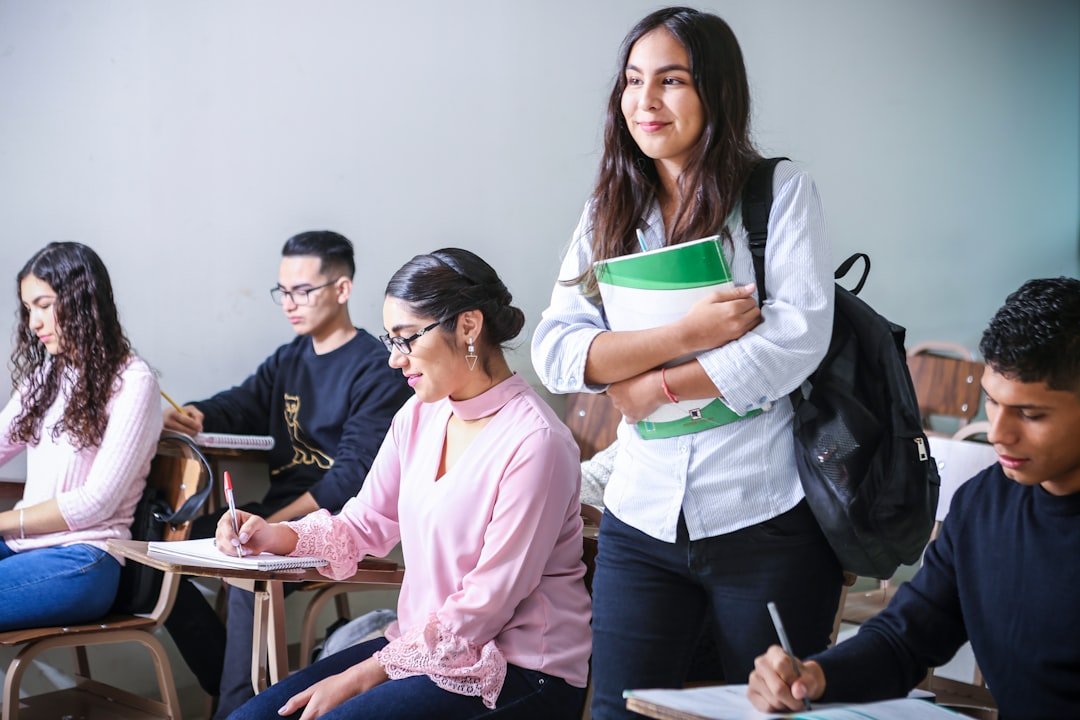
AI is rapidly transforming education, moving away from a one-size-fits-all model towards a truly personalised learning experience for every student. The core idea is simple: AI can understand individual learning styles, paces, and needs, then adapt content and teaching methods accordingly. This means more effective learning, increased engagement, and ultimately, better educational outcomes for everyone.
One of the most significant ways AI is personalising education is by deeply understanding each student’s unique learning journey. It’s no longer about a static curriculum but a dynamic path tailored to individual strengths and weaknesses.
Diagnostic AI for Initial Assessment
Before a student even begins a new topic, AI can quickly and accurately assess their prior knowledge and skills. This isn’t just a simple pre-test; sophisticated algorithms can pinpoint specific gaps in understanding or identify areas where a student already excels. For example, an AI might determine that a student struggles with algebraic equations but has a strong grasp of geometry, allowing the curriculum to immediately focus on the former without wasting time on the latter.
Real-time Performance Tracking
As students progress through lessons and assignments, AI continuously monitors their performance. This includes tracking completion rates, accuracy on quizzes, time spent on specific tasks, and even patterns in their mistakes. This real-time data is invaluable for educators and students alike, offering immediate insights into areas of difficulty or mastery. Instead of waiting for a summative assessment, both the teacher and student can see exactly where adjustments are needed, whether it’s revisiting a concept or moving on to more challenging material.
Identifying Learning Styles and Preferences
AI can go beyond just what a student knows and delve into how they learn best. Through interactions with educational platforms, AI can infer a student’s preferred learning style – whether they respond better to visual aids, audio explanations, interactive simulations, or text-based materials. For instance, if an AI observes a student consistently replaying video explanations or excelling with diagram-based questions, it might then prioritise delivering future content in a visual format. This subtle adaptation makes learning feel more intuitive and less like a struggle.
Pace Optimisation
Every student learns at their own pace. AI excels at adjusting the speed of content delivery to match this individual rhythm. If a student grasps a concept quickly, the AI can present more challenging material or move to the next topic without delay. Conversely, if a student is struggling, the AI can offer additional explanations, different examples, or recommend supplementary resources, all without making the student feel rushed or left behind. This dynamic pacing ensures that no student is bored by content that is too easy or overwhelmed by content that is too difficult.
Tailoring Content and Delivery
Beyond understanding individual needs, AI actively adapts the actual content and how it’s delivered, making learning resources truly responsive to the student.
Adaptive Curriculum Generation
Imagine a curriculum that literally reshapes itself based on a student’s progress. AI can do this. Instead of a fixed sequence of lessons, AI can dynamically generate or recommend the next set of learning activities. If a student masters a particular skill quickly, the AI might skip a few introductory modules and move them directly to more advanced applications. If they’re struggling, it can loop back to foundational concepts, providing alternative explanations or different exercises until mastery is achieved. This ensures every minute of learning time is productive.
Personalised Resource Recommendation
AI-powered educational platforms can act like highly intelligent librarians, recommending specific articles, videos, interactive simulations, or even external websites that are perfectly matched to a student’s current learning needs and interests. If a student is fascinated by space exploration, an AI might recommend supplementary physics lessons using examples from astrophysics. If they’re struggling with a particular mathematical concept, it could suggest a different teacher’s explanation video or an interactive game that explains the same principle in a new way.
Dynamic Content Modification
Beyond recommending resources, AI can actually modify existing content in real-time. This could involve simplifying language for a student with reading difficulties, adding more detailed explanations for complex topics, or providing different types of examples to cater to diverse learning styles. For instance, a complex science text could be rewritten by AI at a lower reading level for a student who needs it, or an interactive maths problem could be rephrased to provide additional hints if a student is stuck.
Multi-modal Content Delivery
Some students learn best by listening, others by watching, and still others by doing. AI can deliver content across various modalities, switching between them based on what’s most effective for a given student or topic. A lesson might start with a textual explanation, transition to an animated video, and then offer an interactive simulation, with the AI guiding the student towards the modality where they show the most engagement and comprehension. This flexibility caters to the diverse ways humans process information.
Providing Intelligent Feedback and Support
Feedback is crucial for learning, and AI can provide it in ways that are immediate, specific, and incredibly helpful, going far beyond what a single human teacher can manage for every student.
Instant Corrective Feedback
One of the most immediate benefits of AI in education is instant feedback. When a student answers a question incorrectly, an AI system can immediately explain why, point to the specific error, and even suggest how to correct it. This eliminates the delay often experienced in traditional classrooms, allowing students to rectify misunderstandings before they become ingrained. It’s like having a personal tutor looking over your shoulder, offering guidance exactly when you need it.
Explanations for Mistakes
Beyond simply marking an answer wrong, AI can analyse the nature of a student’s mistakes. Did they make a calculation error? Misunderstand a key term? Apply the wrong formula? By diagnosing the type of error, the AI can provide targeted explanations that address the root cause of the misunderstanding, rather than just telling the student they were incorrect. This leads to deeper learning and prevents recurring errors.
Hints and Scaffolding
When a student is struggling with a problem, AI can offer intelligent hints rather than just giving the answer. These hints can be progressively revealed, starting with a gentle nudge and gradually providing more explicit guidance as needed. This “scaffolding” approach helps students work through challenges independently, building their problem-solving skills and confidence. It teaches them how to arrive at the answer, not just what the answer is.
Emotional and Motivational Support (Emerging)
While still an emerging area, AI is starting to be developed to offer more than just academic feedback. Some systems are designed to detect signs of frustration or disengagement and respond with encouraging messages, suggest taking a break, or even recommend a more engaging activity. This aims to keep students motivated and reduce feelings of overwhelm, transforming the AI from just a tool into a supportive learning companion. This is particularly useful in remote learning environments where direct human interaction is limited.
Augmenting Teacher Capabilities
AI isn’t replacing teachers; it’s empowering them. By taking on data analysis, content adaptation, and some feedback tasks, AI frees up teachers to focus on the truly human aspects of education: mentorship, complex problem-solving, and socio-emotional development.
Data-Driven Insights for Teachers
AI collects vast amounts of data on student performance and engagement. This data is then synthesised and presented to teachers in easily digestible dashboards. Teachers can quickly see which students are excelling, which are struggling with specific concepts, and identify common misconceptions across the class. This allows them to tailor their in-class instruction, group students effectively for collaborative work, and provide targeted interventions for those who need it most. It transforms teaching from an art based on intuition into a science informed by data.
Automated Grading and Assessment
For certain types of assignments, such as multiple-choice tests, fill-in-the-blank questions, or even some essay formats (with advanced NLP), AI can automate the grading process. This saves teachers an enormous amount of time, allowing them to focus on providing richer, qualitative feedback on complex projects that require human judgment. It also speeds up the feedback loop for students, who receive their results much faster.
Personalised Lesson Planning Support
AI can assist teachers in developing personalised lesson plans by suggesting resources, activities, and differentiated instruction strategies based on the needs of their specific students. If a teacher knows a significant portion of their class struggles with a certain topic, AI can recommend alternative teaching methods or supplementary materials to address those weaknesses, making lesson preparation more efficient and effective.
Early Warning Systems
AI can act as an early warning system, identifying students who might be at risk of falling behind or disengaging before problems become severe. By analysing patterns in performance, attendance, and interaction with learning materials, AI can flag students who show signs of struggle, allowing teachers or school counsellors to intervene proactively. This preventative approach can significantly improve student outcomes and reduce dropout rates.
Addressing Challenges and Ethical Considerations
While the potential of AI in education is immense, it’s crucial to acknowledge and address the challenges and ethical considerations to ensure its responsible and equitable implementation.
Data Privacy and Security
The collection of vast amounts of student data by AI systems raises significant concerns about privacy and security. Robust measures must be in place to protect sensitive personal and academic information from breaches and misuse. Strict adherence to data protection regulations like GDPR is paramount, along with clear policies on how data is collected, stored, and used. Trust from students, parents, and educators is fundamental.
Algorithmic Bias
AI algorithms are only as unbiased as the data they are trained on. If historical educational data contains biases (e.g., favouring certain demographics or learning styles), the AI could perpetuate or even amplify these biases, leading to unfair or inequitable outcomes for certain student groups. Continuous auditing and conscious design are required to identify and mitigate algorithmic bias, ensuring that AI serves all students fairly.
The Digital Divide
Access to technology and reliable internet remains a significant barrier for many students, creating a “digital divide.” The benefits of AI-personalised education will only reach those with access to the necessary devices and connectivity. Addressing this infrastructure gap through public policy and educational initiatives is crucial to ensure AI doesn’t exacerbate existing inequalities but rather helps to bridge them.
Over-reliance and Loss of Critical Thinking
There’s a risk that students might become overly reliant on AI for answers or problem-solving, potentially hindering their development of critical thinking, creativity, and independent learning skills. Educators must design learning experiences that integrate AI as a tool for deeper understanding, not as a shortcut. The goal is to enhance human intelligence, not replace it.
Teacher Training and Adoption
For AI to be successfully integrated, teachers need adequate training, support, and a clear understanding of its benefits and limitations. Without proper professional development, AI tools might remain underutilised or misused. Teachers need to feel empowered by AI, not threatened or overwhelmed by it, which requires ongoing dialogue, collaboration, and accessible training resources.
In conclusion, AI offers an unprecedented opportunity to revolutionise education, moving us towards a future where every student receives a learning experience truly tailored to their individual needs and potential. By personalising learning paths, adapting content, providing intelligent feedback, and empowering educators, AI can foster deeper engagement, more effective learning, and ultimately, better outcomes for all. However, careful consideration of privacy, bias, accessibility, and pedagogical implications is essential to harness this transformative power responsibly.