






Nvidia is making a significant move beyond its traditional GPU stronghold, venturing directly into AI-powered personal computers and the nascent world of “AI Agent PCs.” Essentially, they’re not just selling the chips anymore; they’re aiming to shape the entire AI PC experience, from the silicon all the way up to intelligent software agents that can interact with you and your data. This expansion highlights their ambition to be the foundational technology provider for the next generation of computing, where AI isn’t just a feature, but the core operating principle.
The traditional personal computer, while still a workhorse, is evolving. We’re moving from a passive device that executes commands to a more proactive, intelligent assistant. Nvidia sees this shift as a massive opportunity, one that demands a different kind of hardware and software integration than we’ve seen before.
Beyond the Central Processing Unit
For decades, the CPU was king. But with the rise of AI, especially large language models and complex neural networks, the GPU has emerged as the essential accelerator. Nvidia’s dominance in high-performance GPUs for data centres has positioned them perfectly for this transition. Now, they’re bringing that expertise directly to consumers.
The Rise of Edge AI
While cloud-based AI offers immense power, it has limitations: latency, privacy concerns, and reliance on internet connectivity. Edge AI – AI processing that happens directly on your device – addresses these issues. Nvidia’s strategy involves embedding powerful AI capabilities right into the PC, making it more responsive, private, and capable even offline.
Nvidia’s Vision for AI-Powered Personal Computers
Nvidia isn’t merely slapping an “AI Inside” sticker on existing machines. Their approach is comprehensive, encompassing specific hardware, integrated software layers, and a clear vision for how these machines will function.
The Role of Blackwell and Grace Hopper
While these architectures are primarily known for data centre applications, the innovations developed there trickle down to consumer-grade hardware. The advancements in parallel processing, memory bandwidth, and power efficiency are crucial for bringing sophisticated AI models to personal devices without requiring industrial cooling.
RTX GPUs as the AI Engine
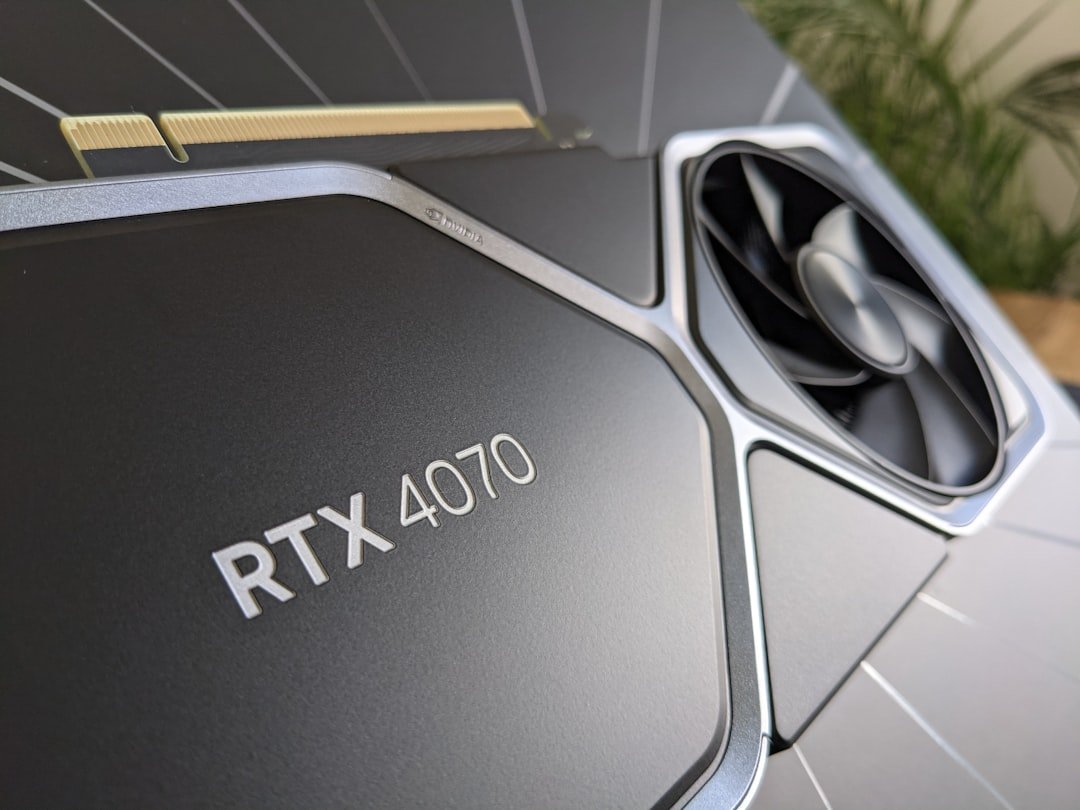
Nvidia’s RTX series GPUs are not just for gaming anymore. They feature Tensor Cores, specifically designed for accelerating AI workloads. These cores are the backbone of Nvidia’s AI PC strategy, providing the raw computational power needed for demanding AI applications like real-time language processing, generative art, and complex simulations.
DLSS and AI-Enhanced Gaming
Even in their traditional gaming stronghold, AI is playing a critical role. Technologies like DLSS (Deep Learning Super Sampling) use AI to intelligently upscale lower-resolution images, delivering better visual quality and frame rates without significant performance overhead. This demonstrates the practical application of AI on Nvidia’s consumer hardware.
AI for Content Creation
For professionals and enthusiasts in fields like video editing, 3D rendering, and graphic design, AI offers transformative capabilities. Nvidia’s GPUs accelerate AI-powered features in creative applications, enabling faster rendering, intelligent upscaling of assets, and even generating elements from text prompts.
Introducing the AI Agent PC
This is where Nvidia’s ambitions get really interesting. The “AI Agent PC” isn’t just about running AI models; it’s about having an intelligent, personalised assistant that operates autonomously and proactively on your behalf.
What is an AI Agent?
Think of an AI agent as a sophisticated software entity that can understand your goals, access and process information from your local machine and potentially the internet, and then take actions to achieve those goals. It’s more than a chatbot; it’s an executor.
Local vs. Cloud-Based Agents
A key aspect of Nvidia’s strategy is to enable these AI agents to run predominantly on your local machine. This offers several advantages: enhanced privacy (your personal data stays on your device), lower latency (no internet handshake required for every action), and the ability to function offline.
Enhanced Privacy and Data Security
With sensitive personal and professional data residing on our computers, the prospect of an AI agent processing it all locally is far more appealing from a privacy standpoint than sending it all to a remote cloud server. This is a significant differentiator.
Offline Functionality
Imagine having an AI assistant that can manage your schedule, draft emails, organise your files, or even analyse local documents without needing an internet connection. This capability could be invaluable for productivity, especially in environments with unreliable connectivity.
How Will AI Agents Work?
Nvidia envisions a future where these agents are deeply integrated into your operating system and applications. They won’t just respond to prompts; they’ll anticipate needs, learn from your behaviour, and seamlessly assist you with tasks.
Personalised Assistants
These agents will be trained on your specific data, preferences, and work patterns, becoming genuinely personalised assistants rather than generic AI tools. They’ll understand your unique context.
Automating Mundane Tasks
From organising your downloads to summarising lengthy documents or even responding to routine emails, AI agents could take over many of the repetitive, time-consuming tasks that currently eat into our productivity.
Proactive Problem Solving
Beyond simple automation, these agents could proactively identify issues or opportunities. For example, an agent might flag an upcoming deadline based on your calendar and suggest relevant files, or analyse your project structure and recommend optimisations.
The Software Stack: Critical for Success
Hardware is only one piece of the puzzle. Nvidia knows that a robust and accessible software ecosystem is crucial for the widespread adoption of AI PCs and AI agents.
CUDA and cuDNN
At the foundation are CUDA (Compute Unified Device Architecture) and cuDNN (CUDA Deep Neural Network library). These are the fundamental tools that allow developers to harness the power of Nvidia GPUs for AI, providing the programming interface and optimised libraries needed for deep learning workloads.
TensorRT for Optimisation
For pushing AI models from development to deployment on personal hardware, TensorRT is key. It’s an SDK for high-performance deep learning inference, optimising models for efficiency and speed on Nvidia GPUs, ensuring that AI applications run smoothly on your PC.
NVIDIA AI Workbench
To make AI development more accessible, Nvidia is providing tools like AI Workbench. This platform simplifies the process of creating, training, and deploying AI models, from the cloud directly to local devices. It’s about democratising AI creation, allowing more developers to build applications for AI PCs.
Streamlined Development Workflow
AI Workbench aims to abstract away much of the complexity involved in setting up AI development environments. This means less time wrestling with dependencies and more time building innovative AI solutions.
Cross-Platform Compatibility
With AI Workbench, developers can work on AI models that are compatible across different Nvidia hardware, from data centres to individual PCs, creating a unified development experience.
Operating System Integration
For AI agents to truly flourish, they need deep integration with the underlying operating system. Nvidia is likely working with OS vendors to ensure their AI technologies are seamlessly woven into the user experience, allowing agents to interact with files, applications, and system settings.
Challenges and Opportunities
| Product | Features |
|---|---|
| Nvidia AI-Powered Personal Computers | Utilizes AI for enhanced performance and user experience |
| Nvidia AI Agent PCs | Designed for AI-powered intelligent agents and conversational AI applications |
While Nvidia’s vision is compelling, transforming personal computing with AI agents presents its own set of challenges and opportunities.
User Trust and Data Privacy
The biggest hurdle will undoubtedly be building and maintaining user trust. Giving an AI agent access to personal data and the ability to act autonomously raises significant privacy and security concerns. Clear ethical guidelines, robust security measures, and transparent controls will be paramount.
Transparent Controls
Users will need granular control over what an AI agent can access, what actions it can take, and when it operates. A “black box” approach simply won’t suffice.
Explanability of AI Actions
It will be important for AI agents to be able to explain their actions and decisions to users, rather than simply carrying them out without context. This helps build trust and allows users to correct or guide the agent.
Performance and Efficiency
Running sophisticated AI models locally requires significant computational power without excessive heat or power consumption. Nvidia’s hardware advancements are crucial here, but continuous improvements in efficiency will be needed as AI models become even larger and more complex.
Optimising for Battery Life
For laptops, where AI PCs are particularly exciting, optimising AI inference for minimal battery drain will be a key competitive advantage.
Managing Heat Dissipation
As powerful GPUs are integrated into smaller form factors, managing heat effectively is an engineering challenge that Nvidia is constantly addressing.
Developer Adoption and Ecosystem
No matter how powerful the hardware, an ecosystem needs applications. Nvidia needs to cultivate a vibrant developer community that builds innovative AI agent-based applications for their platform. The success of AI Workbench is critical for this.
Open Standards and Interoperability
While Nvidia will drive its own technologies, encouraging open standards and ensuring interoperability with broader AI frameworks will benefit the entire ecosystem and attract more developers.
Training and Education
Providing comprehensive resources, tutorials, and support for developers looking to build AI agent applications will be vital for fostering growth.
Competition from Other Chipmakers
Nvidia isn’t alone in recognising the potential of AI PCs. Intel, AMD, Qualcomm, and other chipmakers are also heavily investing in AI accelerators for personal computing. This competition will drive innovation but also means Nvidia needs to continually differentiate its offerings.
Intel’s NPU Initiative
Intel’s push for Neural Processing Units (NPUs) directly integrated into their CPUs shows a commitment to on-device AI acceleration, offering a different architectural approach.
Qualcomm’s Arm-Based AI Chips
Qualcomm’s focus on Arm-based chips with robust AI capabilities, particularly for thin and light laptops, presents a strong challenge in terms of power efficiency and mobile AI.
Conclusion: The Future is Intelligent
Nvidia’s expansion into AI-powered personal computers and AI Agent PCs marks an ambitious and logical next step for the company. By combining their leading GPU technology with a comprehensive software stack and a clear vision for intelligent, personalised assistants, they are positioning themselves at the forefront of the next wave of computing innovation. While challenges around trust, performance, and competition remain, the prospect of a computer that truly understands and assists us, operating proactively and privately, is undeniably compelling. The era of the intelligent personal computer, powered by AI agents, appears to be just around the corner, and Nvidia intends to be its architect.