








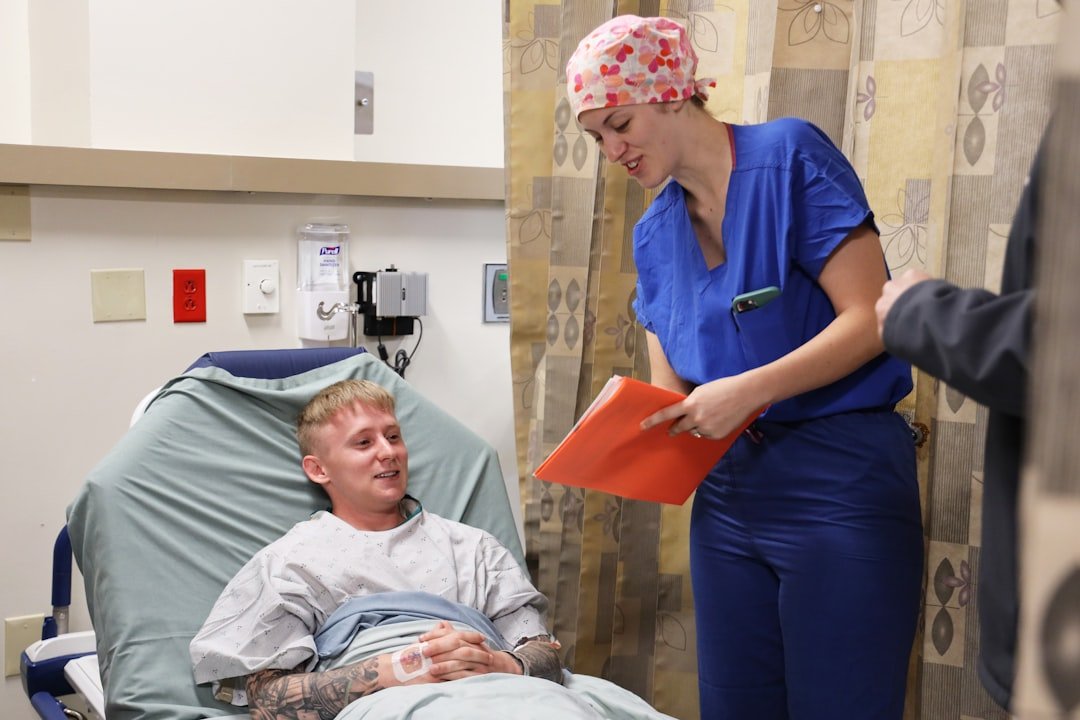
AI is stepping up to help make urgent care smoother and faster for everyone involved, from patients waiting in the lobby to the medical staff working to see who needs attention most urgently. Essentially, AI tools are being developed and deployed to analyze patient information more quickly and accurately, flagging those who are most critically ill so they can be seen first. This helps streamline the whole process, aiming to reduce wait times and ensure that serious cases aren’t overlooked.
The Traditional Triage Bottleneck
Think about a busy emergency room or an urgent care clinic. The front desk staff, often nurses, are the first point of contact. Their job is to quickly assess each person walking in, figure out how sick they are, and decide who gets seen by a doctor or other healthcare provider next. This is called triage.
It’s a high-pressure job. They have to rely on their training, experience, and the patient’s own description of their symptoms, which can sometimes be vague, incomplete, or even misleading. The goal is to get the sickest people treated as quickly as possible, but also to manage the flow of patients to avoid overwhelming the clinical team or leaving less critical cases waiting indefinitely. The reality is that this manual process can be prone to human error and can lead to long wait times, especially during peak hours.
The Impact of Delays
When triage is slow or inaccurate, the consequences can be significant. For patients, the stress and anxiety of waiting when they feel unwell can be immense. For those with genuinely serious conditions, even a short delay can potentially worsen their outcome. For the clinic or hospital, it means increased patient dissatisfaction, potential for missed diagnoses, and a strain on resources. The sheer volume of patients in some settings makes it incredibly difficult for even experienced staff to maintain consistent, perfect triage accuracy.
The Need for a Smarter Approach
This is where the idea of using technology, specifically Artificial Intelligence (AI), comes into play. The hope is that AI can augment the human element of triage by providing a more objective, data-driven, and efficient assessment tool. It’s not about replacing the human touch, but about providing a reliable assistant that can process information rapidly and highlight potential risks, allowing human clinicians to focus their expertise where it’s needed most.
How AI is Applied in Triage
Digital Triage Tools
One of the most direct applications of AI in triage is through digital tools that patients can interact with before or upon arrival. These can range from chatbots on clinic websites to interactive kiosks in waiting rooms.
Chatbots and Virtual Assistants
Patients might start by interacting with an AI-powered chatbot. They can describe their symptoms in their own words, answer a series of questions designed by medical professionals, and provide some basic demographic information. The AI analyzes these inputs, compares them against vast datasets of medical knowledge, and can then suggest a likelihood of certain conditions or recommend a level of urgency.
Natural Language Processing (NLP)
A key technology here is Natural Language Processing (NLP). This allows the AI to understand and interpret human language, even if it’s informal or uses slang. NLP helps the chatbot grasp the nuances of a patient’s description, making the initial information gathering more comprehensive than a simple multiple-choice form.
Symptom Checkers and Risk Stratification
AI-driven symptom checkers, often integrated into these digital tools, go beyond simply listing possible ailments. They employ algorithms that assign risk scores based on the combination of symptoms, patient history (if available), and other data points. This allows for a more sophisticated stratification of patients, identifying those who might be experiencing a critical issue that requires immediate attention, even if their stated symptoms seem mild to a layperson.
Analyzing Existing Data for Predictive Insights
AI can also look at data that’s already being collected within a healthcare system to identify patterns that might indicate an increased risk of urgent need.
Electronic Health Records (EHR) Analysis
When a patient presents at an urgent care facility, their Electronic Health Record (EHR) often contains a wealth of information. AI can rapidly scan these records, looking for pre-existing conditions, recent hospitalizations, medication lists, or known allergies that might influence how a current symptom should be interpreted. For example, a patient with a history of heart disease presenting with chest pain warrants immediate, different consideration than someone without that history.
Identifying High-Risk Patients Proactively
By analyzing EHRs, AI can even help identify patients who might be at risk of developing a severe condition, allowing for proactive interventions. This could involve flagging patients who are overdue for certain screenings or those whose vital signs, though currently stable, have deviated from their baseline in a concerning way.
Real-time Monitoring and Alerts
In some advanced settings, AI can integrate with real-time monitoring devices, such as wearable sensors. If a patient’s vital signs start to show concerning trends, the AI can generate an alert for the clinical team, prompting them to check on that individual before their condition deteriorates significantly.
Enhancing Clinical Decision Support
Augmenting Physician Judgment
It’s crucial to understand that AI in triage isn’t about replacing doctors or nurses. Instead, it’s about becoming a powerful tool that supports their decision-making process. Think of it as a highly intelligent assistant that sifts through vast amounts of data to highlight key information.
Providing Objective Data Points
When a patient arrives, the AI can quickly process their submitted digital information or information pulled from their EHR. It can then present the clinical staff with a summary of potential risks, relevant medical history, and even suggest a potential triage category or differential diagnoses. This objective data can help clinicians ensure they haven’t missed anything and can validate their own assessments.
Reducing Cognitive Load
The sheer volume of decisions that healthcare professionals make daily can lead to cognitive fatigue. By automating the initial data processing and highlighting critical information, AI can help reduce this cognitive load, allowing clinicians to dedicate more mental energy to complex patient care.
Streamlining the Workflow
The benefits of AI extend beyond just the initial assessment. It can help smooth out the entire patient journey within an urgent care setting.
Faster Patient Identification and Prioritization
By rapidly analyzing incoming patient data, AI can help identify critical cases almost instantly. This means that a patient who might appear outwardly calm but is experiencing a life-threatening emergency can be flagged and moved up the queue more quickly. This proactive identification is a key benefit.
Efficient Resource Allocation
Once patients are triaged more accurately and quickly, healthcare facilities can allocate their resources more effectively. This means ensuring that the right medical staff, equipment, and rooms are available for the patients who need them most urgently, reducing bottlenecks and improving overall efficiency.
Improving Patient Experience
Reducing Wait Times
For patients, the most tangible improvement AI can bring is often a reduction in the time spent waiting. Long waits in an urgent care setting can be incredibly frustrating and anxiety-inducing.
Quicker Initial Assessments
When AI tools are used for initial symptom checking and data gathering, the process can be significantly faster than a traditional manual intake. This means patients get through the initial stages of their visit more quickly.
More Accurate Triage Leading to Fairer Queuing
By prioritizing patients based on medical need rather than simply the order of arrival, AI can help ensure that those who are most unwell are seen sooner. This perceived fairness can improve overall patient satisfaction, even if the absolute wait time for some less critical cases might not change dramatically.
Enhanced Communication and Information
AI can also play a role in keeping patients informed about their status.
Real-time Updates
While still developing, some AI systems could potentially provide patients with more accurate estimated wait times or updates on their position in the queue, reducing uncertainty and anxiety.
Clearer Information Gathering
By using structured digital questionnaires, AI can ensure that crucial pieces of information aren’t missed during the initial patient intake. This leads to a more complete picture for the clinical team and can help avoid the need for repeated questioning.
Challenges and Future Directions
| Metrics | Benefits |
|---|---|
| Reduced wait times | AI can quickly assess and prioritize patient needs, leading to faster treatment for those in urgent need. |
| Improved accuracy | AI algorithms can analyze patient data and symptoms to provide more accurate triage decisions, reducing errors. |
| Enhanced resource allocation | AI can help allocate resources more efficiently by directing patients to the most appropriate care settings. |
| Streamlined workflows | AI can automate routine tasks, allowing healthcare professionals to focus on more complex patient needs. |
| Enhanced patient experience | By reducing wait times and improving accuracy, AI can contribute to a better overall patient experience. |
Data Privacy and Security Concerns
As with any technology dealing with sensitive personal information, data privacy and security are paramount.
HIPAA Compliance and Beyond
Healthcare organizations must ensure that any AI system they implement is fully compliant with regulations like HIPAA (Health Insurance Portability and Accountability Act) in the US, and similar data protection laws globally. This involves robust encryption, secure data storage, and strict access controls.
Patient Consent and Transparency
It’s important for patients to understand how their data is being used by AI systems. Transparency about the role of AI in their care and obtaining informed consent are ethical necessities.
Integration and Interoperability
Implementing AI solutions into existing healthcare workflows is not always a straightforward process.
Technical Infrastructure Requirements
Existing IT systems in many healthcare facilities might not be equipped to handle the computational demands or data integration requirements of advanced AI. Upgrades and new infrastructure can be costly and time-consuming.
Seamless Workflow Integration
The AI tools need to be integrated in a way that genuinely complements, rather than disrupts, the established clinical workflow. This requires careful design and ongoing feedback from the healthcare professionals who will be using the system.
Bias in AI Algorithms
A significant ethical challenge with AI is the potential for bias embedded within the algorithms themselves.
Training Data Bias
If the data used to train an AI algorithm is not representative of the diverse patient population, the AI might perform poorly or even discriminate against certain groups. For example, an AI trained predominantly on data from one demographic might be less accurate when assessing symptoms in another.
Mitigation Strategies and Continuous Improvement
Developers are actively working on techniques to identify and mitigate bias in AI. This includes using more diverse training datasets, employing fairness metrics during development, and conducting ongoing audits to detect and correct biased outputs.
The Evolving Role of Healthcare Professionals
As AI becomes more integrated into healthcare, the roles of doctors and nurses will likely evolve.
Focusing on Complex Cases and Human Interaction
With AI handling more of the initial data processing and risk assessment, healthcare professionals can spend more time on patients with complex conditions, those requiring nuanced clinical judgment, and on providing empathetic human interaction, which AI cannot replicate.
Need for New Skills and Training
Healthcare professionals will need to develop new skills in interpreting AI outputs, understanding AI limitations, and collaborating effectively with AI systems. This will necessitate changes in medical education and ongoing professional development.
The Future Outlook
AI as an Indispensable Partner
The trend suggests that AI will become an increasingly indispensable partner in urgent care settings. Rather than being a futuristic concept, it’s rapidly becoming a practical reality that can significantly improve efficiency and patient outcomes.
Predictive Triage and Proactive Care
Future AI systems might move beyond reactive triage to become truly predictive. They could anticipate potential health crises before they occur, allowing for proactive interventions and a shift towards preventative healthcare even within urgent care contexts.
Personalized Patient Journeys
AI could help personalize the entire patient journey, from initial symptom assessment and appointment scheduling to post-visit follow-up, creating a more tailored and supportive experience for each individual.
Continuous Evolution of AI in Healthcare
The field of AI is constantly advancing. This means that the capabilities of AI tools in healthcare will continue to expand.
Advanced Diagnostics and Treatment Recommendations
As AI algorithms become more sophisticated, they may be able to offer more advanced diagnostic insights and even provide initial treatment recommendations for certain conditions, further augmenting the capabilities of clinicians.
Bridging Gaps in Healthcare Access
In regions with healthcare professional shortages, AI could play a crucial role in extending access to basic diagnostic capabilities and triage services, helping to bridge gaps in healthcare delivery.
Collaboration is Key
The successful integration of AI in urgent care hinges on close collaboration between AI developers, healthcare providers, policymakers, and patients. Open communication and a shared commitment to ethical and effective implementation will be vital for realizing the full potential of AI in improving urgent care workflows for everyone.