

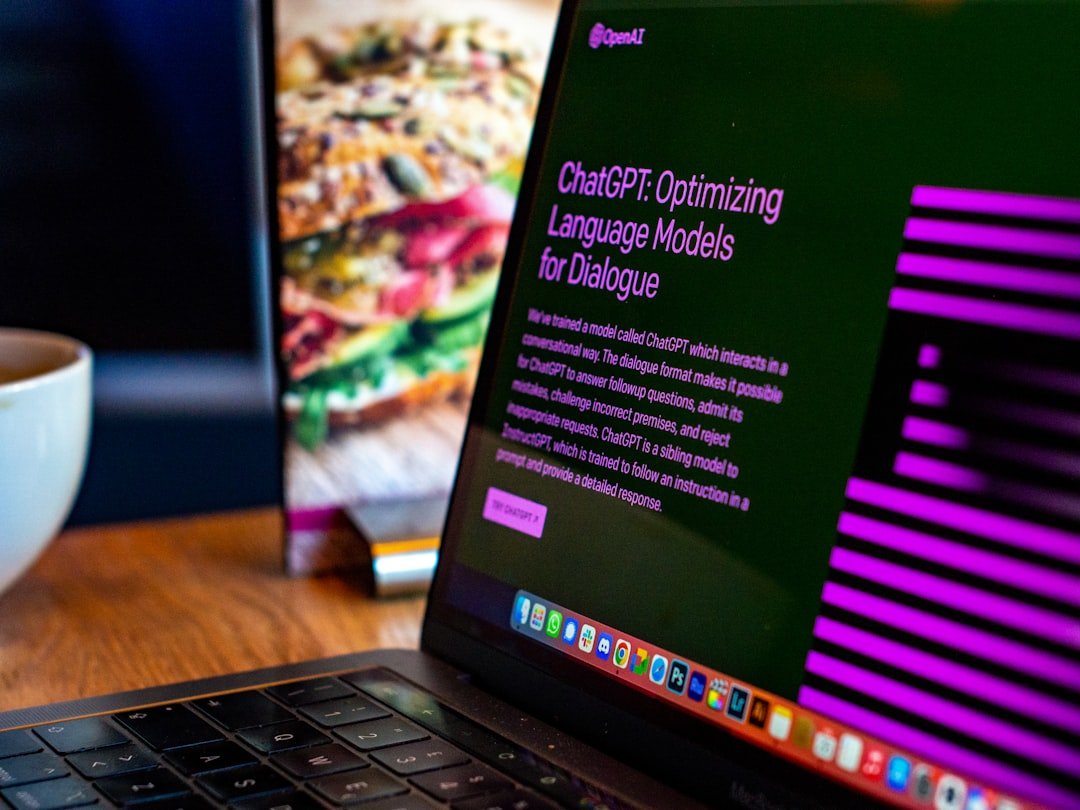
Generative AI has burst onto the scene, and it’s definitely making waves in education. The big question on a lot of people’s minds is: is it a good thing for our classrooms? The short answer is: it’s a bit of both. Generative AI tools, like chatbots that can write essays or create images, offer some really exciting possibilities for learning, but they also come with a set of challenges we need to tackle head-on.
The Upside: How Generative AI Can Help Students and Teachers
Let’s start with the good stuff. Generative AI isn’t just a fancy new toy; it has the potential to genuinely enhance the learning experience for everyone involved.
Personalized Learning Made Easier
One of the biggest dreams in education has always been true personalization – tailoring the learning experience to each student’s needs and pace. Generative AI can make this a lot more achievable.
Tailored Explanations
Imagine a student struggling with a complex math problem. Instead of a generic explanation that might not click, an AI tutor could rephrase it, provide different examples, or even break down the concept into smaller, more digestible steps, all based on what the student seems to understand or misunderstand. It’s like having a patient, always-available tutor for every student.
Adaptive Practice
AI can generate practice questions that get harder as a student masters a topic or easier if they’re struggling. This ensures students are consistently challenged without being overwhelmed, allowing them to build confidence and solidify their knowledge effectively.
Exploring Different Learning Styles
Not everyone learns the same way. Some students thrive with visual aids, others with audio explanations, and some with hands-on activities. Generative AI can help create resources that cater to these diverse styles, offering a more inclusive learning environment.
Boosting Creativity and Exploration
Beyond just understanding existing material, generative AI can also be a powerful tool for fostering creativity and encouraging students to explore new ideas.
Brainstorming and Idea Generation
Students can use AI to brainstorm ideas for essays, projects, or creative writing. It can offer different angles, suggest plot points, or even propose artistic styles, pushing students beyond their initial thoughts and sparking novel directions.
Prototyping and Experimentation
For students in design, art, or even science, AI can help quickly generate prototypes or visualize concepts. This allows for rapid iteration and experimentation, letting them explore more possibilities before committing to a final outcome.
Learning Through Creation
Instead of just consuming information, students can use AI to create things. This active engagement can lead to deeper understanding and a more meaningful learning experience. For example, a history student could use AI to generate a fictional diary entry from a historical figure, prompting them to research and think critically about that person’s life.
Streamlining Teacher Workloads
Teachers are often swamped with administrative tasks and lesson planning. Generative AI can offer some much-needed relief, allowing them to focus more on teaching and less on paperwork.
Content Creation Assistance
AI can help teachers draft lesson plans, create quizzes, generate writing prompts, or even develop outlines for lectures. This isn’t about replacing the teacher’s expertise but about providing a starting point and saving valuable time.
Differentiated Material Generation
Teachers can use AI to quickly create different versions of assignments or resources for students at varying levels. This makes differentiation much more manageable and less labor-intensive.
Feedback and Assessment Support
While direct grading of complex assignments by AI is still a work in progress and raises concerns, AI can assist in providing initial feedback on grammar, structure, or clarity in student writing. It can also help flag areas for the teacher to focus on, making the grading process more efficient.
The Downside: Navigating the Risks of Generative AI in Education
It’s not all smooth sailing, though. There are some significant risks and challenges that come with integrating generative AI into the educational landscape. Ignoring these would be irresponsible.
Academic Integrity and Cheating
This is arguably the most immediate and widely discussed concern. If AI can write essays, solve math problems, or generate code, how do we ensure students are actually doing the work themselves?
The “Essay Mill” Problem on Steroids
The ease with which AI can produce human-sounding text means students could potentially submit AI-generated work as their own. This undermines the learning process and makes it difficult to assess genuine understanding.
Difficulty in Detection
While AI detection tools are emerging, they are not foolproof and can sometimes produce false positives or negatives. This creates an ongoing arms race between AI generation and AI detection, making it harder for educators to guarantee the authenticity of student submissions.
Shifting Focus of Assessment
If AI can produce perfect essays, then perhaps our current assessment methods need to evolve. We might need to move towards more in-class assessments, oral exams, or project-based learning that is harder to outsource to AI.
Accuracy, Bias, and Misinformation
Generative AI models are trained on vast datasets, and these datasets are not always perfect. This can lead to inaccurate information, biased outputs, and the potential for spreading misinformation.
Hallucinations and Factual Errors
AI models can sometimes “hallucinate” – confidently present false information as fact. This is particularly dangerous in an educational setting where students are looking for reliable knowledge.
Inherited Biases
The data used to train AI reflects existing societal biases. This means AI outputs can inadvertently perpetuate stereotypes related to race, gender, socioeconomic status, or other characteristics, which can be harmful and unfair in an educational context.
Difficulty in Verifying Information
Students (and teachers) need to be critical consumers of AI-generated content. However, the confident tone of AI can make it difficult for some to discern truth from fiction, especially when presented with seemingly well-reasoned but incorrect information.
Equity and Access Issues
While AI has the potential to democratize learning, it also risks widening existing divides if not implemented thoughtfully.
Digital Divide Amplified
Access to reliable internet, devices, and potentially paid AI tools isn’t universal. Schools in under-resourced areas or students from lower socioeconomic backgrounds might be left behind if AI becomes a central part of the curriculum without equitable access.
Skill Gap for Teachers and Students
Effectively using generative AI requires new skills – prompt engineering, critical evaluation of AI outputs, and understanding AI ethics. Not all educators or students will have the same opportunities to develop these skills.
Over-Reliance and Skill Atrophy
There’s a concern that if students become too dependent on AI for tasks like writing or problem-solving, they might not develop those fundamental skills themselves.
Erosion of Foundational Skills
If AI can instantly draft an essay, why bother learning the process of outlining, drafting, revising, and editing? This could lead to a generation of students who are good at prompting AI but less adept at independent critical thinking and communication.
Reduced Problem-Solving Abilities
Similarly, if AI can instantly provide solutions to math or coding problems, students might not develop the perseverance and analytical skills needed to tackle challenges independently.
Best Practices: Making Generative AI Work for Education
Given the potential benefits and risks, how do we move forward? It’s about being strategic and focusing on responsible integration.
Embrace AI as a Tool, Not a Replacement
The most crucial principle is to view AI as a powerful assistant, not a substitute for human learning or teaching.
Focus on Augmenting, Not Automating
AI should be used to enhance existing teaching methods, personalize learning, and free up teacher time, rather than to automate tasks that are core to skill development. For example, use AI to generate initial drafts of lesson plans, then have the teacher refine and personalize them.
Encourage Co-Creation
Students can learn a great deal by working with AI. Prompting AI to generate different options for an essay introduction, for instance, and then discussing why one opener is more effective than another, teaches critical thinking and understanding of rhetorical choices.
Define “Human” Tasks
Educators need to consider which tasks are essential for students to complete independently to develop critical skills, and which tasks can be augmented or supported by AI.
Teach AI Literacy and Critical Evaluation
Students and educators alike need to develop a new set of skills to navigate the AI landscape responsibly.
Understanding How AI Works
A basic understanding of how AI models are trained, their limitations, and the concept of “hallucinations” is vital. This demystifies the technology and empowers users to be more discerning.
Prompt Engineering Skills
Learning to craft effective prompts is key to getting useful and relevant outputs from AI. This involves understanding how to be specific, provide context, and iterate on queries.
Critical Analysis of AI Output
Students need to be taught to question AI-generated content. Just because AI says something doesn’t make it true. They need to cross-reference information, look for biases, and assess the logic and coherence of the output.
Ethical Considerations
Discussions about plagiarism, data privacy, and the societal impact of AI should be a regular part of the curriculum.
Rethink Assessment Strategies
If traditional assessments are easily circumvented by AI, we need to adapt.
Focus on Process, Not Just Product
Instead of just grading the final essay, assess the student’s writing process: their outlines, drafts, research notes, and reflections on their writing journey. AI can’t replicate this genuine effort.
In-Class and Oral Assessments
These formats make it much harder for students to rely on AI. Think about timed in-class essays, presentations, or Q&A sessions where students have to explain their thinking verbally.
Authentic, Project-Based Learning
Assigning projects that require real-world application, critical thinking, problem-solving, and creativity often goes beyond what AI can currently replicate without significant human direction.
Develop Clear Guidelines and Policies
Schools and districts need to establish clear expectations for the use of generative AI.
School-Wide AI Policies
These policies should address what is acceptable use, what constitutes plagiarism, and the consequences for misuse. Involve students, teachers, and parents in developing these policies to foster understanding and buy-in.
Teacher Training and Support
Educators need to be adequately trained on how to use AI tools effectively in their teaching and how to guide students in their use. This support should be ongoing.
Phased Implementation
Introducing AI tools gradually, starting with pilot programs and gathering feedback, can help institutions identify and address challenges before a full-scale rollout.
The Future of Learning: A Collaborative Approach
Generative AI is undeniably a powerful force that is already shaping the future of education. It’s not a question of if it will be part of our classrooms, but how we will integrate it responsibly and effectively.
The Evolving Role of the Educator
The teacher’s role is shifting from being the sole purveyor of information to becoming a facilitator, guide, and critical thinking coach. Educators will help students leverage AI tools to deepen their understanding and develop essential 21st-century skills.
Preparing Students for an AI-Infused World
The job market and society at large are increasingly reliant on AI. Education has a crucial role to play in equipping students with the skills and ethical understanding they’ll need to thrive in this evolving landscape. This involves not just teaching them how to use AI, but how to think critically about it.
Continuous Learning and Adaptation
The field of AI is moving at an unprecedented pace. Educational institutions and educators must commit to ongoing learning and be prepared to adapt their strategies as AI technology continues to evolve. What works today might need tweaking tomorrow.
Specific Examples of Generative AI in Action
To make this more concrete, let’s look at some specific ways generative AI can be integrated into different subjects and age groups.
Language Arts and Creative Writing
- Brainstorming and Outlining: A student working on a short story could ask AI for three different plot twists or character motivations. They would then choose the most compelling and develop it further.
- Drafting Support (with caution): Instead of writing an entire essay, a student could ask AI to “generate a thesis statement for an essay on the impact of the printing press” or “provide three supporting arguments for the idea that renewable energy is crucial for the future.” The student would then build on these suggestions.
- Vocabulary Enrichment: Students could ask AI to explain a word in several different ways or provide synonyms and antonyms in context.
Mathematics and Science
- Problem-Solving Walkthroughs: For a complex calculus problem, AI could walk a student through the steps, explaining the reasoning behind each manipulation, rather than just providing the answer.
- Hypothesis Generation: In a science class, students could use AI to brainstorm potential hypotheses for an experiment based on a given phenomenon.
- Simulations and Visualizations: AI can help generate descriptions or even rudimentary visual aids for scientific concepts that might be difficult to imagine, like the structure of a molecule or the movement of tectonic plates.
History and Social Studies
- Simulated Debates: Students could ask AI to embody historical figures and engage in a debate on a specific topic, requiring students to research, prepare arguments, and respond to AI-generated counterpoints.
- Historical Context Creation: AI can help students understand the daily life, societal norms, or political climate of a particular era by generating descriptive narratives or “what if” scenarios.
- Analyzing Primary Sources (with caveats): While caution is needed here due to accuracy concerns, AI could potentially help summarize lengthy historical documents or identify key themes, with students then doing the critical analysis.
Art and Design
- Inspiration and Mood Boards: Students can provide AI with keywords or images and ask it to generate a series of visual concepts or color palettes for a project.
- Experimenting with Styles: AI can quickly generate variations of an artistic piece in different styles (e.g., cubist, impressionist), allowing students to explore aesthetic possibilities.
- Generating Placeholder Assets: For digital design projects, AI can create placeholder images or textures to help students visualize the final product.
By focusing on these practical applications and maintaining a critical yet open mindset, we can harness the power of generative AI to create a more dynamic, personalized, and effective learning experience for the future.