








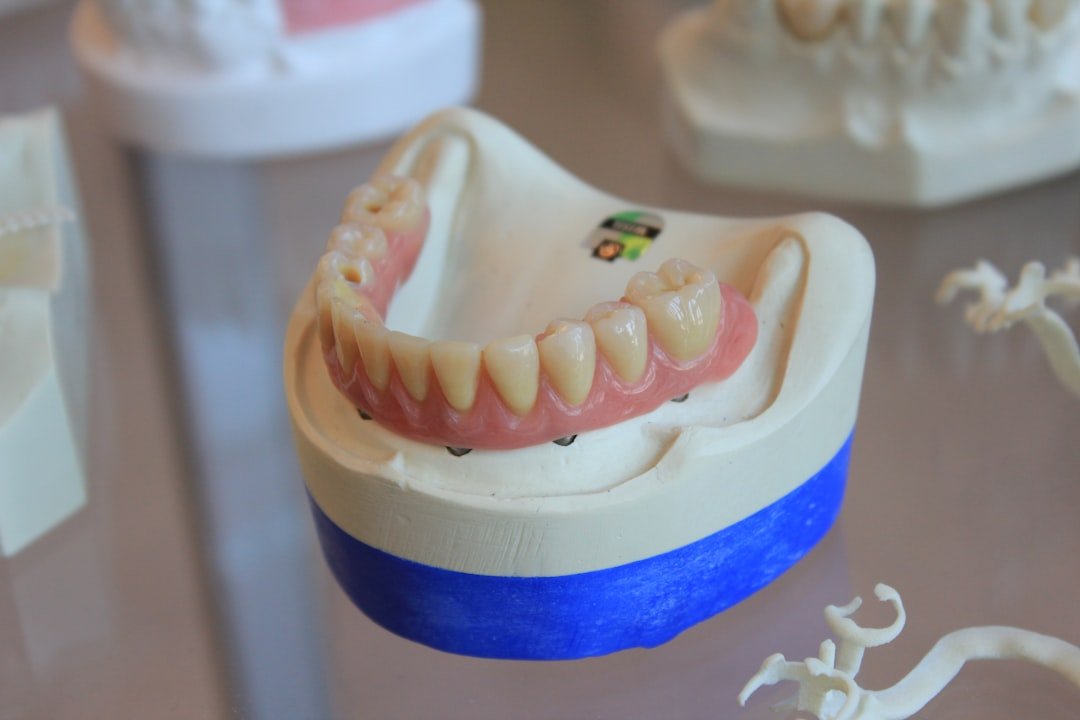
Artificial intelligence is making its way into digital dentistry and CAD-CAM workflows, offering practical ways to improve efficiency and consistency. Simply put, AI tools are automating parts of the design and manufacturing process, helping practitioners handle more cases with greater precision and often reducing the manual effort involved. This isn’t about replacing the dentist; it’s about providing powerful assistants that can handle repetitive tasks, analyze complex data, and suggest optimized solutions, freeing up human expertise for critical decision-making and patient interaction.
When we talk about AI in digital dentistry, we’re primarily referring to machine learning algorithms trained on vast datasets of dental scans, designs, and clinical outcomes. These algorithms learn patterns and relationships that humans might miss or take much longer to identify. The practical upshot is a suite of tools that can enhance various stages of the CAD-CAM workflow, from initial diagnostics to final restoration fabrication.
Data Acquisition and Pre-processing
Before any design work begins, AI can play a crucial role in preparing the data.
Image and Scan Analysis
Intraoral scanners capture incredibly detailed 3D models of teeth and soft tissues. AI can analyze these scans to detect common artifacts, identify areas that might need rescanning for better quality, or even segment the arches automatically. This speeds up the initial setup, ensuring the design process starts with clean, accurate data. For example, an AI might automatically remove irrelevant scan data such as areas of the tongue or cheeks that were unintentionally captured, leaving only the essential dental anatomy.
Automatic Segmentation
One of the more time-consuming steps in preparing a case is segmenting the individual teeth and identifying the margin lines. AI algorithms, trained on thousands of segmented arches, can automate this process with impressive accuracy. They can distinguish between different anatomical structures, separating individual teeth, identifying existing restorations, and suggesting the optimal margin line for prep teeth. This saves significant chairside or lab time that would otherwise be spent manually tracing these outlines.
AI-Assisted Diagnosis and Treatment Planning
Beyond just preparing data, AI is beginning to offer valuable insights for diagnosis and treatment planning.
Caries and Periapical Lesion Detection
AI models trained on radiographic images (2D X-rays and 3D CBCT scans) can assist in identifying subtle signs of caries or periapical lesions. While not a definitive diagnosis on its own, AI can highlight suspicious areas for the dentist to review, potentially catching issues earlier. This acts as a second set of eyes, improving diagnostic consistency.
Orthodontic Planning
In orthodontics, AI can analyze cephalometric X-rays and 3D intraoral scans to predict tooth movements and analyze occlusal relationships. It can assist in generating potential treatment plans, predicting the outcome of different appliance choices, and identifying potential complications before treatment even begins. This streamlines the planning phase and offers a more data-driven approach.
Implant Placement Planning
AI can help analyze CBCT scans to identify optimal implant placement positions, considering bone density, proximity to vital structures, and occlusal forces. By processing complex 3D data, AI can suggest ideal angulations and depths, assisting the clinician in planning a more predictable surgical outcome. This helps in avoiding key anatomical structures and maximizing primary stability.
Enhancing CAD-CAM Design Workflows
The true power of AI in digital dentistry comes alive within the CAD-CAM design phase, where it takes on many of the tedious or complex tasks.
Automated Restoration Design
This is perhaps one of the most impactful applications of AI.
Crown and Bridge Design
Instead of manually sculpting a crown or bridge from scratch, AI algorithms can propose a full anatomical design based on the preparation, antagonist teeth, and adjacent teeth. These algorithms learn from extensive libraries of optimal tooth forms and occlusal schemes. The AI-generated design serves as an excellent starting point, requiring only minor adjustments from the dental professional to customize it to the specific patient’s needs and preferences. This dramatically reduces design time and ensures functional occlusion.
Denture Design
Designing complete dentures involves intricate considerations of aesthetics, phonetics, and occlusion. AI tools are emerging that can assist in automatically positioning denture teeth based on anatomical landmarks and patient-specific data. This simplifies a traditionally complex and time-consuming design process, leading to more consistent and predictable results.
Occlusal Adjustment and Optimization
Achieving ideal occlusion is critical for the longevity of a restoration and patient comfort. AI can analyze the proposed design against the antagonist arch and suggest micro-adjustments to optimize contact points, eliminate interferences, and ensure smooth excursive movements. This moves beyond simple “cut to fit” approaches and towards a more biomechanically sound design.
Material Selection and Manufacturing Optimization
AI isn’t just for design; it also has implications for the manufacturing process.
Predictive Material Performance
AI models can be trained on data relating to material properties, design parameters, and clinical outcomes. This allows them to predict the performance and potential longevity of a restoration made from a particular material, given the design and occlusal forces. This can assist in making informed decisions about material choice for specific clinical situations.
Milling Path Optimization
For in-office or lab milling, optimizing the milling path can reduce tool wear, decrease milling time, and improve surface finish. AI algorithms can analyze the restoration geometry and material properties to generate the most efficient and precise milling strategies, contributing to a smoother manufacturing process and better final product.
Quality Control and Validation
After design and manufacturing, AI can still contribute to ensuring the quality and accuracy of the final product.
Design Verification
Fit and Margin Assessment
AI can compare the designed restoration to the prepared tooth model to assess the marginal fit and internal adaptation. It can highlight areas where the fit might be compromised, indicating potential issues before the restoration is even manufactured. This proactive check helps avoid costly remakes and ensures a precise fit.
Occlusal Clearance Check
Beyond initial design, AI can perform a final check of all occlusal and interproximal clearances. This ensures there are no premature contacts or tight spots that could lead to discomfort or complications after seating.
Post-Manufacturing Evaluation
Automated Defect Detection
For milled or 3D-printed restorations, AI-powered vision systems can inspect the finished product for surface defects, voids, or inaccuracies that might occur during manufacturing. This automates a traditionally manual visual inspection process, increasing consistency and catching imperfections that might be missed by the human eye.
Dimensional Accuracy Verification
AI can compare a scan of the manufactured restoration to the original design file to verify dimensional accuracy. This ensures that the final physical product matches the digital blueprint perfectly, which is crucial for predictable clinical outcomes.
Integration and Workflow Streamlining
The real value of AI will be in its seamless integration into existing digital dentistry workflows, making the entire process more fluid and less prone to manual errors.
Interoperability with Existing Systems
AI tools are increasingly being developed as modules that can integrate with popular CAD-CAM software platforms. This means practitioners don’t necessarily need to completely overhaul their existing setup; instead, they can adopt AI functionalities as enhancements to their current workflow. Data can flow smoothly from one AI-powered step to the next, minimizing manual data entry and transfer errors.
Personalized and Adaptive Workflows
As AI systems learn from more and more cases, they can begin to adapt to individual practitioner preferences and typical case profiles. An AI might learn a dentist’s preferred margin design or a lab’s specific aesthetic requirements, automatically incorporating these into future designs. This moves towards a more personalized and predictive workflow that anticipates needs rather than simply reacting to inputs. The more data an AI system is exposed to, the better it becomes at understanding specific nuances and tailoring its output accordingly.
Training and Education
AI also has a role to play in the training and education of dental professionals. By providing vast amounts of data and offering simulated design environments, AI can assist in teaching advanced design principles, surgical planning, and diagnostic skills. It can highlight common errors or suboptimal design choices, acting as a virtual mentor for students and practitioners looking to refine their skills. This educational aspect helps in bridging the gap between theoretical knowledge and practical application, allowing individuals to learn from a statistically significant number of cases.
Practical Considerations and Looking Forward
| Metrics | AI in Digital Dentistry | CAD-CAM Workflows |
|---|---|---|
| Accuracy | Highly accurate in image analysis and diagnosis | Precision in designing and manufacturing dental prosthetics |
| Efficiency | Speeds up the process of image analysis and treatment planning | Reduces production time for dental restorations |
| Customization | Enables personalized treatment plans based on patient data | Allows for customized design of dental prosthetics |
| Integration | Can be integrated with existing digital dental systems | Seamless integration with digital scanning and milling equipment |
| Cost | Initial investment required for AI software and training | Upfront cost for CAD-CAM equipment and software |
While AI offers compelling advantages, it’s important to approach its adoption with a practical mindset. The technology is rapidly evolving, and its full potential is still being explored.
Data Security and Privacy
A critical aspect of using AI in healthcare is the management of sensitive patient data. Ensuring the robust security and privacy of dental scans, medical histories, and treatment plans is paramount. Reputable AI providers adhere to strict data protection regulations. Understanding how AI tools handle and store data is a key consideration for any dental practice or lab. Compliance with regulations like HIPAA or GDPR is non-negotiable.
Ethical Implications and Responsibility
AI tools are assistants, not decision-makers. The ultimate responsibility for diagnosis, treatment planning, and restoration design remains with the dental professional. Understanding the limitations of AI and ensuring that human oversight is always present is crucial. It is about augmenting human intelligence, not replacing it, and maintaining ethical guidelines in patient care is paramount.
The Learning Curve
Integrating new technology always involves a learning curve. While AI aims to simplify workflows, understanding how to effectively use and calibrate these tools requires some initial effort. Training and ongoing support from AI developers are important for smooth adoption.
Continuous Evolution
The field of AI is dynamic. What looks cutting-edge today might be standard practice tomorrow. Dental practices and labs willing to embrace AI should look for scalable solutions that can be updated and adapted as the technology matures. This long-term perspective will ensure investments in AI remain relevant and valuable.
In summary, AI in digital dentistry and CAD-CAM workflows presents a clear path to greater efficiency, precision, and consistency. These tools offer tangible benefits by automating complex tasks, providing data-driven insights, and streamlining various stages of the dental restoration process. The focus is on practical enhancements that support dental professionals in delivering high-quality patient care, rather than on futuristic speculation.