








AI is fundamentally reshaping biomedical engineering, moving it beyond traditional boundaries by offering unprecedented capabilities in data analysis, pattern recognition, and predictive modelling. This integration is leading to more personalised treatments, more efficient diagnostic tools, and accelerated drug discovery processes, ultimately transforming how we approach healthcare.
The AI Revolution in Medical Imaging and Diagnostics
The field of medical imaging has seen a remarkable evolution, with AI playing a central role in enhancing accuracy, efficiency, and accessibility. Traditionally, interpreting medical images like X-rays, MRIs, and CT scans has relied heavily on the expertise and sometimes subjective judgment of radiologists. AI systems, however, bring a new level of objective analysis to the table.
Enhanced Image Analysis and Interpretation
One of the most significant impacts of AI in biomedical engineering is its ability to process and interpret vast quantities of medical image data with remarkable speed and precision. Algorithms, particularly deep learning models, are trained on enormous datasets of annotated images, allowing them to identify subtle patterns and anomalies that might be easily missed by the human eye.
For instance, in oncology, AI algorithms can detect early signs of cancerous lesions in mammograms or lung CT scans, often before they become clinically apparent to human observers. This early detection is crucial for improving patient outcomes, as it allows for earlier intervention and treatment. Systems like these aren’t replacing radiologists but are acting as powerful assistive tools, providing a ‘second opinion’ that can reduce diagnostic errors and improve overall diagnostic confidence.
Beyond simple detection, AI can also quantify features within images. In cardiology, AI can analyse echocardiograms to measure heart chamber volumes, ejection fractions, and wall motion abnormalities more consistently and quickly than manual methods. This quantitative analysis provides clinicians with more objective metrics for monitoring disease progression and treatment effectiveness.
Automation of Workflow and Reduced Workload
The sheer volume of medical images generated daily presents a significant challenge for healthcare systems. Radiologists often face heavy workloads, leading to potential burnout and increased turnaround times for reports. AI offers a viable solution by automating several aspects of the imaging workflow.
AI algorithms can be deployed for triage, prioritising urgent cases by quickly scanning images for critical findings like acute strokes or fractures. This ensures that the most time-sensitive cases are reviewed by human experts first, potentially saving lives and improving patient care pathways. Furthermore, AI can automate repetitive tasks such as image registration, segmentation, and measurement, freeing up radiologists’ time to focus on more complex cases requiring higher-level cognitive interpretation.
Consider the task of segmenting organs or tumours in 3D scans. What might take a human expert hours to delineate precisely can be accomplished by an AI algorithm in minutes, with comparable or even superior accuracy. This automation not only speeds up the diagnostic process but also contributes to greater consistency in measurements across different patients and time points.
Development of Novel Diagnostic Biomarkers
AI is also instrumental in pushing the boundaries of what can be extracted from medical images, moving beyond purely visual interpretation to uncover novel diagnostic and prognostic biomarkers. This involves radiomics, a field where AI algorithms extract a large number of quantitative features from medical images, far beyond what the human eye can discern.
These radiomic features, combined with clinical data, can be used to predict patient response to therapy, classify tumour aggressiveness, or even predict the likelihood of disease recurrence. For example, AI models trained on radiomic data from MRI scans of brain tumours have shown promise in differentiating between various tumour types without the need for invasive biopsies. This non-invasive characterisation can significantly impact treatment planning and patient management.
Moreover, AI is being used to integrate information from multiple imaging modalities (e.g., PET, CT, MRI) to create a more comprehensive picture of a patient’s condition. This multi-modal data fusion, powered by AI, can reveal insights that would be impossible to glean from individual modalities alone, leading to more accurate diagnoses and more personalised treatment strategies.
AI in Drug Discovery and Development
The process of discovering and developing new drugs is notoriously expensive, time-consuming, and carries a high failure rate. AI is beginning to revolutionise this landscape within biomedical engineering, offering tools that can accelerate various stages, from target identification to clinical trial optimisation.
Accelerating Target Identification and Validation
Identifying suitable biological targets – typically proteins or genes whose activity can be modulated by a drug – is the first critical step in drug discovery. Traditionally, this has involved extensive experimental research and often trial-and-error approaches. AI algorithms, particularly those leveraging machine learning, are now streamlining this process.
AI can analyse vast datasets of genomic, proteomic, and clinical data to identify potential disease targets with greater efficiency. By crunching through millions of scientific papers, patents, and experimental results, AI can pinpoint promising proteins or pathways implicated in specific diseases, offering insights that might take human researchers years to uncover. For instance, in the search for new cancer therapies, AI can identify novel oncogenes or tumour suppressor pathways that are disrupted in various cancer types.
Furthermore, AI can predict the functional consequences of modulating these targets, helping researchers prioritise those with the highest likelihood of therapeutic success and minimal off-target effects. This predictive power significantly reduces the number of experimental validations needed, saving both time and resources.
De Novo Drug Design and Optimisation
Perhaps one of the most exciting applications of AI in drug discovery is its ability to design novel molecules from scratch (de novo drug design) or optimise existing lead compounds. Traditional drug design is often a laborious process involving combinatorial chemistry and high-throughput screening.
Generative AI models, such as variational autoencoders (VAEs) and generative adversarial networks (GANs), are being trained on vast libraries of known drug molecules and their properties. These models can then generate novel molecular structures that are predicted to have desired pharmacological characteristics, such as high binding affinity to a specific target and good pharmacokinetic properties (e.g., solubility, permeability, metabolism).
For example, an AI model could be tasked with generating a molecule that selectively inhibits a particular enzyme implicated in an autoimmune disease, while also predicting its toxicity profile. This capability drastically expands the chemical space that can be explored, potentially leading to the discovery of entirely new classes of drugs that might have been overlooked by traditional methods.
Beyond de novo design, AI can also optimise existing lead compounds. By analysing structure-activity relationships, AI algorithms can suggest modifications to a lead compound’s chemical structure to improve its potency, selectivity, or reduce its toxicity, guiding medicinal chemists towards more promising analogues.
Predicting Drug-Target Interactions and Repurposing
Understanding how drugs interact with their biological targets is fundamental to drug discovery. AI models can predict drug-target interactions (DTIs) with high accuracy, even for novel molecules or targets. This is done by analysing the chemical structure of compounds and the 3D structure of proteins, predicting how well they might bind together.
This predictive capability is invaluable for drug repurposing – finding new uses for existing drugs. Many approved drugs have known safety profiles, making their repurposing a faster and less risky pathway to market than developing entirely new compounds. AI can scan databases of existing drugs and predict which ones might be effective against new diseases or conditions, based on their predicted interactions with disease-related targets. For instance, an AI model might identify an existing anti-inflammatory drug that also shows promise against a rare neurological disorder.
This approach has already yielded promising candidates for various diseases, significantly shortening the development timeline and reducing costs, as many preclinical and clinical safety studies have already been completed for repurposed drugs.
AI in Personalised Medicine and Therapeutics
Personalised medicine, often referred to as precision medicine, aims to tailor medical treatment to the individual characteristics of each patient. AI is a cornerstone of this paradigm shift in biomedical engineering, enabling the analysis of complex patient data to deliver highly individualised therapeutic strategies.
Tailoring Treatment Regimens
One of the most significant contributions of AI to personalised medicine is its ability to process and integrate diverse patient data to recommend optimal treatment regimens. Each patient is unique, with variations in genetics, lifestyle, environment, and disease presentation. Traditionally, medical decisions have been based on population-level statistics and clinical guidelines, which may not be ideal for every individual.
AI algorithms can analyse a patient’s unique biological profile, including their genomic sequence, proteomic data, electronic health records, lifestyle information, and even real-time physiological data from wearables. By integrating these disparate data sources, AI can identify patterns and predict how a specific patient will respond to different therapies.
For example, in cancer treatment, AI can help oncologists select the most effective chemotherapy or immunotherapy based on the tumour’s genomic mutations and the patient’s genetic predisposition. This moves away from a “one-size-fits-all” approach to a “right drug, right dose, right patient” model, significantly improving treatment efficacy and reducing adverse side effects. AI can also predict which patients are likely to develop resistance to certain drugs, allowing for proactive adjustments to their treatment plan.
Predictive Analytics for Disease Progression
Beyond initial treatment selection, AI is powerful in predicting disease progression and relapse risk, enabling proactive interventions. By analysing longitudinal patient data, AI models can identify early indicators of disease worsening or treatment failure.
For patients with chronic conditions like diabetes or heart disease, AI can monitor various physiological parameters and predict episodes of acute exacerbation, allowing clinicians to intervene before a crisis occurs. For instance, an AI system monitoring glucose levels, activity patterns, and dietary intake could predict an impending hypoglycaemic event in a diabetic patient, prompting an alert to the patient and their care team.
In neurology, AI is being used to predict the progression of neurodegenerative diseases such as Alzheimer’s and Parkinson’s by analysing MRI scans, cognitive test scores, and genetic markers. This allows for earlier supportive care and participation in clinical trials when interventions are most likely to be effective.
Optimising Prosthetics and Implants
Biomedical engineers are leveraging AI to design and control prosthetics and implants that are more intuitive, functional, and tailored to the individual. Traditional prosthetics can sometimes feel unnatural or require significant user training.
AI-powered prosthetics can learn from the user’s muscle signals (myoelectric signals) to interpret their intent and execute movements more smoothly and naturally. Machine learning algorithms can be trained on vast datasets of human movement to predict desired actions from even subtle muscle contractions, leading to more responsive and less fatiguing prosthetic control. This is particularly transformative for upper-limb prosthetics, where dexterity and fine motor control are crucial.
Furthermore, AI is used in the design of custom implants, such as hip or knee replacements. By analysing patient-specific anatomical data from CT or MRI scans, AI algorithms can optimise the geometry and material properties of implants to ensure a perfect fit and maximise long-term performance and osseointegration. This reduces the risk of complications and improves patient mobility and comfort.
AI in Medical Robotics and Surgical Assistance
The integration of AI into medical robotics is revolutionising surgical procedures and patient care, making interventions safer, more precise, and less invasive. Biomedical engineers are at the forefront of developing these intelligent robotic systems.
Enhanced Surgical Precision and Automation
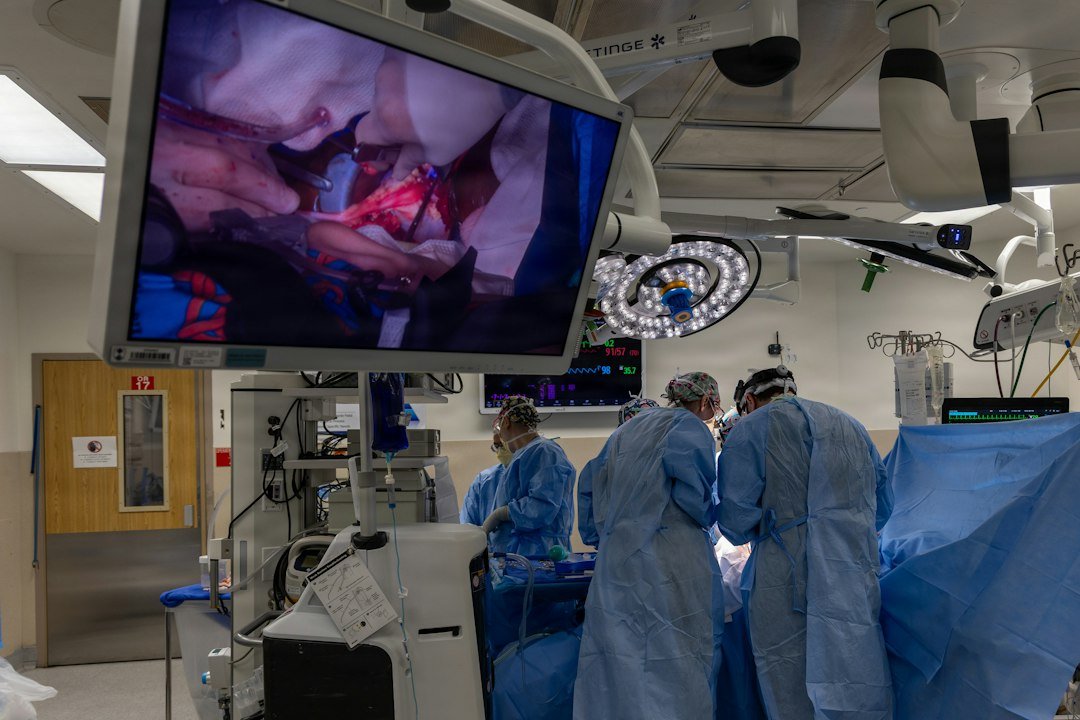
Surgical robots, often augmented with AI, are transforming the operating theatre. Systems like the Da Vinci surgical system have already demonstrated the benefits of robotic assistance in minimally invasive surgery, providing surgeons with enhanced dexterity, magnified 3D vision, and tremor reduction. AI takes this a step further.
AI algorithms can analyse real-time surgical images and data to provide surgeons with critical information during an operation. For example, AI can identify anatomical structures, critical nerves, or blood vessels that might be obscured or difficult to distinguish, reducing the risk of accidental damage. In orthopaedic surgery, AI can guide robots to perform bone cuts with sub-millimetre precision, far exceeding human capability, leading to better alignment and implant longevity.
Beyond assistance, AI is paving the way for increased automation in certain surgical tasks. While fully autonomous surgery is still some way off, AI-powered robots can already perform highly repetitive or delicate tasks, such as stitching or knot tying, with consistent accuracy. This automation can reduce operative time, minimise human error, and allow surgeons to focus on more complex decision-making during the procedure.
Intelligent Robotic Assistants for Patient Care
AI-powered robots are not confined to the operating room; they are also being developed for various aspects of patient care, particularly in rehabilitation and long-term care settings. These robots can provide assistance to both patients and healthcare professionals.
In rehabilitation, robotic exoskeletons guided by AI can help patients with spinal cord injuries or strokes relearn to walk. AI algorithms analyse the patient’s movement patterns and adjust the robotic assistance in real-time, providing just the right amount of support to facilitate recovery and motor learning. This personalised approach to rehabilitation can significantly accelerate recovery times and improve functional outcomes.
For elderly or disabled patients, AI robots can assist with daily living activities, such as fetching items, reminding patients to take medication, or providing companionship. These robots are equipped with natural language processing capabilities, allowing them to interact conversationally with patients, offering support and monitoring their well-being. This can alleviate the burden on human caregivers and improve the quality of life for patients.
Remote Surgery and Telemedicine
AI also plays a crucial role in enabling remote surgery and enhancing telemedicine capabilities, particularly in geographically challenging or underserved areas. The ability to perform surgery from a distance using robotic systems holds immense promise.
AI can help manage the communication latency and data transfer between the surgeon’s console and the robotic system in a remote location, ensuring smooth and precise control. Furthermore, AI can provide real-time feedback and guidance to the remote surgeon, drawing on a vast database of surgical expertise and best practices. While still in its nascent stages, the combination of AI and robotics could allow expert surgeons to operate on patients hundreds or thousands of miles away, dramatically expanding access to specialised care.
In telemedicine, AI-powered diagnostic tools can help general practitioners in remote clinics accurately interpret complex medical data or images, even without immediate access to specialists. This allows for earlier diagnoses and appropriate referrals, reducing geographical disparities in healthcare access.
Ethical Considerations and Future Outlook
While the transformative potential of AI in biomedical engineering is undeniable, its rapid integration also brings forth a range of ethical considerations that need careful navigation. Addressing these challenges is paramount to ensuring responsible and beneficial innovation.
Addressing Bias and Ensuring Fairness
One of the most pressing ethical concerns is the potential for AI algorithms to perpetuate or even amplify existing biases. AI models are only as good as the data they are trained on. If training data is predominantly sourced from certain demographic groups, the AI might perform less accurately or even provide biased recommendations for underrepresented populations.
For example, an AI diagnostic tool trained mostly on data from male patients might misdiagnose conditions in female patients, or an AI for skin cancer detection trained primarily on light skin tones might struggle with darker complexions. Biomedical engineers must work closely with data scientists and ethicists to ensure that training datasets are diverse, representative, and free from inherent biases. Developing methods for bias detection, mitigation, and explainability in AI models is a critical area of ongoing research. Ensuring fairness in AI means equitable access to its benefits and avoiding exacerbating existing health disparities.
Data Privacy and Security
The deployment of AI in biomedical engineering relies heavily on access to vast amounts of sensitive patient data, including genomic information, medical images, and health records. This raises significant concerns regarding data privacy and security. Protecting this highly personal information from breaches, misuse, and unauthorised access is of utmost importance.
Robust cybersecurity measures, stringent data governance policies, and adherence to regulations like GDPR are essential. Biomedical engineers developing AI systems must incorporate privacy-by-design principles from the outset, including data anonymisation, pseudonymisation, and federated learning techniques, where AI models are trained on decentralised datasets without directly sharing raw patient data. The challenge lies in balancing the need for data access to train powerful AI models with the imperative to protect individual privacy.
Accountability and Transparency
As AI systems become more autonomous in decision-making, particularly in critical areas like diagnosis and treatment recommendations, questions of accountability arise. Who is responsible if an AI makes an error that leads to patient harm – the developer, the clinician using the tool, or the hospital? Establishing clear frameworks for accountability is crucial.
Furthermore, the “black box” nature of many advanced AI models, where the reasoning behind their decisions is not easily interpretable, poses a challenge. For clinicians to trust and effectively use AI tools, they need to understand how the AI arrives at its conclusions. Biomedical engineers are actively working on developing explainable AI (XAI) techniques that can provide insights into the internal workings of these algorithms, offering transparency and building confidence among healthcare professionals.
The Future Landscape
Looking ahead, the synergy between AI and biomedical engineering is only set to deepen. We can anticipate even more sophisticated diagnostic tools capable of identifying diseases at their earliest, most treatable stages. Drug discovery will become increasingly predictive and personalised, with AI designing molecules precisely tailored to individual patient biologies.
Robotic systems will become more intelligent and autonomous, assisting not just in surgery but in routine patient care, monitoring, and rehabilitation with unprecedented precision and empathy. The development of digital twins – virtual replicas of patients – powered by AI, could revolutionise treatment planning by allowing clinicians to simulate the effects of different interventions before they are applied in reality.
However, the future also necessitates continuous interdisciplinary collaboration. Biomedical engineers, computer scientists, clinicians, ethicists, and policymakers must work together to harness AI’s full potential while proactively addressing its ethical and societal implications. The goal is to create an AI-enhanced healthcare system that is not only more efficient and effective but also equitable, transparent, and centred around the well-being of every patient.