






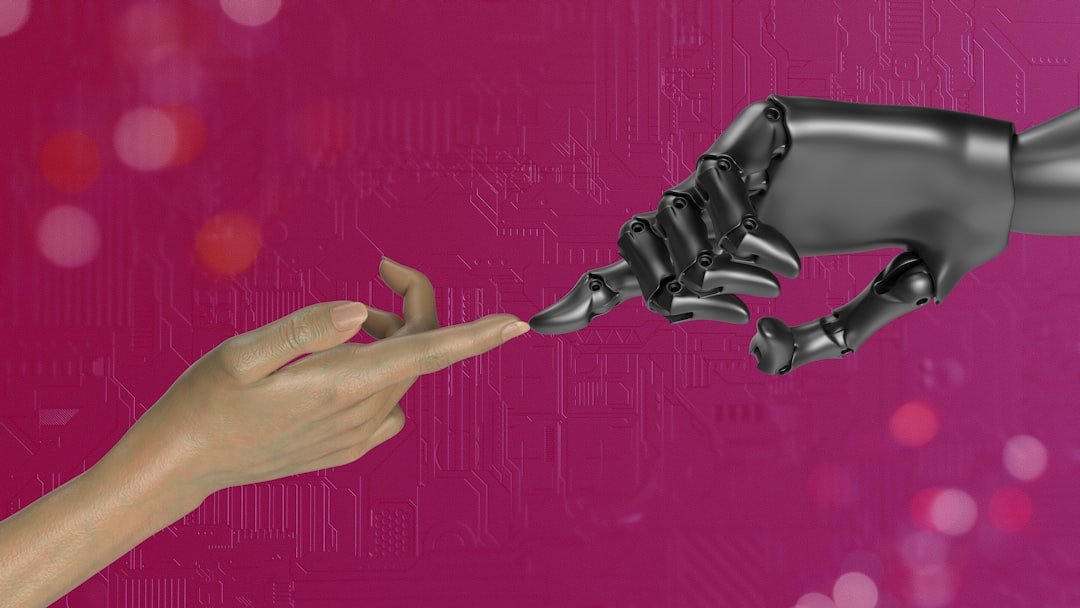
So, AI tutors versus human teachers – what’s the deal? Honestly, it’s not really an ‘either/or’ situation. Think of it more like figuring out the best tools for the job. AI tutors are getting pretty impressive and can be fantastic for certain things, but they’re not about to replace the unique magic a human teacher brings. The real sweet spot lies in finding how they can work together, playing to their strengths, to give students the best possible learning experience.
AI tutors are like tireless learning assistants, always on hand and ready to go. Their real superpower lies in their ability to adapt and deliver information precisely when and how a student needs it.
Instant Feedback and Practice
One of the most significant advantages of AI tutors is their capacity to provide immediate feedback. Imagine a student working through a tricky maths problem. Instead of waiting for the next class or a teacher to become free, an AI tutor can spot an error the moment it happens and offer a targeted explanation or hint. This instant correction is crucial for solidifying understanding and preventing the formation of bad habits or misconceptions. It’s like having a patient mentor who’s always there to say, “Hold on, let’s look at this step again.”
This immediate feedback loop is particularly powerful for subjects that involve a lot of practice, like language learning, coding, or even essay structuring. AI can identify patterns in mistakes, flag common errors, and provide an endless supply of practice questions tailored to the student’s current level. This allows learners to build confidence and mastery at their own pace, without the pressure of holding up a whole class.
Unparalleled Availability and Accessibility
Life isn’t always lived between 9 am and 3 pm. Students have questions at odd hours, during evenings, weekends, or even holidays. AI tutors don’t need sleep, coffee breaks, or holidays. They are available 24/7, offering support whenever a student feels motivated to learn or needs help. This constant availability can be a game-changer for students who struggle with time management, those with busy schedules outside of school, or simply anyone who hits a roadblock at 10 pm.
Furthermore, AI tutors can significantly improve accessibility. For students in remote areas, those with learning disabilities who might find it easier to interact with a digital interface, or those who feel shy asking questions in a classroom setting, AI can provide a less intimidating and more consistent learning environment. It levels the playing field by offering readily available support, regardless of geographical location or social anxieties.
Tailored Learning Paths
This is where AI truly shines in its “personalisation” capabilities. Human teachers do their best to differentiate instruction, but managing a classroom of 30+ students, each with their own unique learning style, pace, and prior knowledge, is an immense challenge. AI tutors, on the other hand, can be programmed to assess a student’s understanding in real-time.
Based on this assessment, the AI can adjust the difficulty of the material, provide supplementary explanations, offer different examples, or even suggest alternative learning resources. It’s like having a tutor who knows exactly where you’re struggling and what you need next, without you having to explicitly tell them. This can lead to more efficient learning, as students aren’t wasting time on concepts they’ve already mastered or getting bogged down by material that’s too far beyond their current grasp.
The Irreplaceable Value of Human Teachers
While AI is impressive, there are fundamental aspects of learning and development that only a human can provide. The human touch in education is about more than just transmitting information.
Emotional Intelligence and Empathy
This is perhaps the most crucial differentiator. Human teachers possess empathy, emotional intelligence, and the ability to read the room. They can sense when a student is frustrated, discouraged, or even bored. A teacher can offer a reassuring smile, a word of encouragement, or a change of pace. They can adapt their approach not just based on academic performance, but on a student’s emotional state.
This connection is vital for building confidence and fostering a love for learning. A teacher who understands a student’s personal struggles, celebrates their small victories, and provides genuine support can have a profound impact on their motivation and well-being. AI, for all its intelligence, cannot replicate this nuanced human connection. It can’t understand the sigh of defeat or the spark of genuine understanding that lights up a child’s face.
Fostering Critical Thinking and Creativity
While AI can provide information and guide students through structured problems, it often struggles to nurture higher-order thinking skills like critical analysis, creativity, and problem-solving in an open-ended way. Human teachers can pose challenging questions that don’t have a single “right” answer. They can facilitate debates, encourage brainstorming, and guide students to question assumptions and develop their own unique perspectives.
A teacher can introduce a complex real-world problem and guide students through the messy, iterative process of exploring solutions, considering different viewpoints, and evaluating trade-offs. This kind of dynamic, interactive learning, which often involves intuition, experience, and a willingness to explore the unknown, is something AI is still a long way from mastering. The ability to spark curiosity, encourage independent thought, and help students develop their own voice is a hallmark of great teaching.
Mentorship and Holistic Development
Beyond academics, teachers often serve as mentors. They guide students not just in subjects, but in navigating social dynamics, developing resilience, and understanding ethical considerations. They can impart wisdom gained from their own life experiences, offer advice on future pathways, and help students develop into well-rounded individuals.
A human teacher can identify potential in a student that the student themselves might not see. They can inspire passion, encourage perseverance through difficult times, and help shape character. This mentorship aspect of education is deeply personal and cannot be replicated by algorithms. It’s about building relationships that extend beyond the curriculum, fostering a sense of belonging, and helping students grow as people.
How AI and Human Teachers Can Collaborate
The most exciting prospect is not replacement, but integration. Imagine a scenario where AI and human teachers work hand-in-hand, each taking on tasks they do best.
AI for Foundational Skills, Humans for Deeper Understanding
AI tutors are excellent at drilling foundational concepts, providing practice exercises, and identifying knowledge gaps. This frees up valuable classroom time for human teachers. Instead of spending hours on rote memorisation or basic skill acquisition, teachers can use that time for more engaging activities.
This could involve in-depth discussions, project-based learning, collaborative problem-solving, and exploring the nuances of a subject. For example, an AI could help students master verb conjugations in a foreign language, allowing the teacher to then lead conversations, cultural discussions, and creative writing exercises that build upon that foundation. The AI handles the repetitive, while the human teacher focuses on making the learning meaningful and application-oriented.
Personalised Support and Teacher Insight
AI can provide teachers with incredibly detailed analytics on student performance. It can flag students who are consistently struggling with a particular concept, those who are excelling and could be challenged further, and even identify general trends in the class’s understanding. This data empowers teachers to intervene more effectively.
Instead of relying solely on observation and occasional assessments, teachers can use AI insights to tailor their direct instruction. They can prepare specific mini-lessons for groups of students who share a common difficulty or design enrichment activities for those who are ready for more. This makes the teacher’s limited one-on-one time incredibly impactful, as it’s guided by precise, actionable information.
Flipped Learning and Blended Approaches
The “flipped classroom” model is a prime example of effective collaboration. Students might use AI tutors for initial content delivery and practice at home. Then, in the classroom, they engage in activities that require higher-order thinking, application, and interaction, guided by the human teacher. This ensures that learning is not just passive consumption of information but active engagement and construction of knowledge.
Blended learning, which combines online and in-person instruction, also benefits from this synergy. AI can handle the online component, providing access to resources, personalised exercises, and immediate feedback. The human teacher then facilitates the in-person sessions, offering deeper exploration, collaborative tasks, and individualised support. This creates a flexible and dynamic learning environment that caters to diverse needs.
Practical Considerations for Implementation
Introducing AI tutors into the educational landscape isn’t just about buying software; it requires thoughtful planning and consideration.
Choosing the Right Tools
The market for AI educational tools is growing rapidly, and not all platforms are created equal. It’s essential to evaluate AI tutors based on their pedagogical soundness, the quality of their content, their ability to adapt, and their user interface. Does the AI provide clear explanations? Is its feedback constructive? Does it genuinely adapt to the student’s pace and understanding?
Schools and educators need to research and pilot different tools to find those that align with their curriculum, teaching philosophy, and student population. Simply opting for the most technologically advanced option without considering its educational efficacy would be a mistake. Focus on AI that demonstrably supports learning goals.
Data Privacy and Ethical Concerns
When students interact with AI, they generate data. It’s crucial to ensure that this data is handled responsibly and ethically. Clear policies on data collection, storage, and usage are paramount. Parents and students should be informed about what data is being collected and how it will be used.
Furthermore, concerns about algorithmic bias need to be addressed. If AI tutors are trained on biased data, they could perpetuate inequalities. Regular audits and continuous refinement of AI algorithms are necessary to ensure fairness and equity in their application. The ethical implications of AI in education are significant and require ongoing attention and transparent practices.
Teacher Training and Professional Development
The integration of AI tutors is not about replacing teachers, but about augmenting their capabilities. This requires providing teachers with adequate training and professional development. Educators need to understand how to effectively use AI tools, how to interpret the data they provide, and how to leverage them to enhance their teaching practices.
Teachers should feel empowered to experiment with these tools, not overwhelmed by them. Professional development should focus on practical application, demonstrating how AI can be seamlessly woven into existing pedagogical approaches and lesson plans. This is key to ensuring that AI tutors become valuable allies in the classroom, rather than just another piece of technology.
The Future of Learning: A Hybrid Model
Looking ahead, the most effective educational models will undoubtedly be hybrid ones. The static, one-size-fits-all approach to education is becoming increasingly outdated in a world that demands adaptability and personalised learning.
Lifelong Learning and Skill Development
The concept of learning as something that ends with formal schooling is no longer realistic. In today’s rapidly evolving world, individuals need to be lifelong learners, constantly acquiring new skills and adapting to new challenges. AI tutors can play a vital role in supporting this ongoing learning journey.
Imagine individuals using AI to upskill for career changes, learn new hobbies, or stay abreast of developments in their fields. AI can provide flexible, accessible, and personalised learning experiences that fit into busy adult lives. This democratises education and empowers individuals to take control of their own professional and personal development.
Empowering Students as Active Learners
Ultimately, the goal of any educational innovation should be to empower students. AI tutors, when used thoughtfully, can help students become more independent, self-directed learners. By providing instant support and personalised practice, AI can foster a sense of agency and confidence.
When students have the tools to explore concepts at their own pace and receive immediate feedback, they are more likely to take ownership of their learning. This shift from passive recipients of information to active participants in their own education is fundamental to success in the 21st century. The synergy between AI’s efficiency and human teachers’ guidance can create a learning ecosystem that truly nurtures this active engagement.