







It’s a thought that crosses many educators’ minds: can AI actually make students more engaged without turning them into button-pushers who’ve forgotten how to think for themselves? The short answer is yes, absolutely. AI, when used thoughtfully, can be a powerful tool for boosting student engagement, providing personalised learning experiences, and freeing up teachers to focus on deeper interactions, all while reinforcing core academic skills. The trick is understanding how to integrate it so it complements, rather than supplants, traditional teaching and learning. We’re talking about using AI to elevate the learning experience, not to replace the essential human elements of education.
Getting Beyond the Buzz: What We Mean by “Engagement”
When we talk about student engagement, we’re not just talking about keeping them busy or entertained. True engagement in an educational context means active participation, sustained interest, and a deep, meaningful connection with the subject matter. It’s about students being invested in their learning, asking questions, problem-solving, and developing a growth mindset. AI can play a significant role here by making learning more interactive, relevant, and accessible, which in turn fosters this deeper level of involvement.
The Pitfalls of Passive Learning
We’ve all been there: a classroom where students are passively listening or going through the motions. This often happens because learning feels generic, uninspiring, or disconnected from their individual needs and interests. AI has the potential to shake up this dynamic, offering pathways to learning that are specifically tailored to each student, making the experience anything but passive.
Active Engagement through Personalisation
Imagine a scenario where a student who is struggling with a particular concept receives immediate, targeted support, helping them overcome their hurdle before they become disengaged. Or a student who is excelling is presented with advanced, challenging material that keeps them stimulated and prevents boredom. This level of personalised instruction, which is incredibly difficult for a human teacher to provide to a large class, is where AI really shines in fostering active engagement.
AI as a Personalised Learning Assistant, Not a Replacement Teacher
Think of AI as a very capable teaching assistant that never gets tired, has an encyclopaedic memory, and can adapt its approach to every single student simultaneously. This powerful support allows teachers to reclaim valuable time, shifting their focus from repetitive tasks to more impactful, human-centric teaching.
Differentiating Instruction at Scale
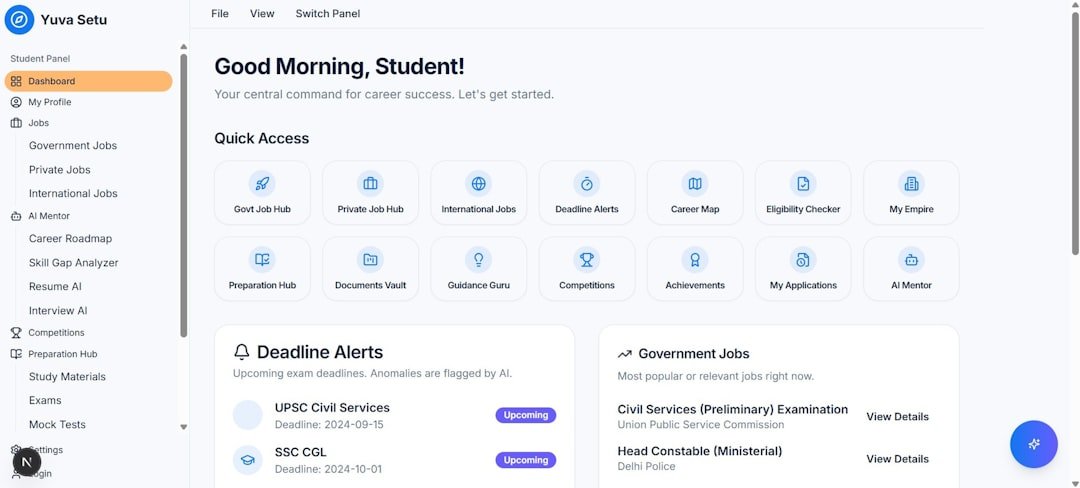
One of the biggest challenges for teachers is differentiating instruction to meet the diverse needs of an entire classroom. AI-powered platforms can analyse individual student performance, identify strengths and weaknesses, and then recommend tailored learning paths, resources, and activities. This means students receive content and exercises that are pitched at their optimal learning level, whether they need extra support or more advanced challenges. This isn’t about teaching them less, but teaching them smarter.
Immediate, Actionable Feedback
Feedback is crucial for learning, but delivering timely, specific, and actionable feedback to every student on every assignment is often an impossible task for teachers. AI tools can provide instant feedback on quizzes, writing assignments, coding exercises, and even presentations. This immediate reinforcement helps students understand their mistakes in real-time, allowing them to correct misconceptions before they become entrenched. This doesn’t replace a teacher’s nuanced qualitative feedback, but it augments it significantly, ensuring a consistent and rapid feedback loop.
How AI Can Bolster, Not Undermine, Core Skills
The fear that AI will dumb down students or erode fundamental skills is understandable. However, when integrated thoughtfully, AI can actually reinforce and enhance these core skills by providing more opportunities for practice, deeper analysis, and creative application.
Enhancing Literacy and Critical Thinking
AI writing tools, for example, can be used to analyse student essays for grammar, spelling, and even structural coherence. But critically, they can also provide suggestions for improving argumentative clarity, evidence support, and style. The student still needs to understand the feedback and apply it, which strengthens their critical thinking and editing skills. It’s not about making the AI write for them, but about using the AI to make their own writing better through guided refinement.
Similarly, AI can generate endless reading comprehension exercises tailored to a student’s reading level and interests, providing a consistent stream of practice that improves fluency and comprehension. It can also pose challenging questions that require deeper analysis of texts, pushing students beyond surface-level understanding.
Boosting Numeracy and Problem-Solving
In subjects like mathematics and science, AI tutors or adaptive practice platforms can identify specific areas where a student is struggling, then provide targeted explanations, examples, and practice problems. This isn’t about giving them the answers, but about guiding them through the problem-solving process step-by-step, helping them understand the underlying concepts rather than just memorising formulas. This personalised approach ensures that core mathematical and scientific reasoning skills are being built on solid foundations, rather than being overshadowed by AI doing the heavy lifting.
Facilitating Research and Information Synthesis
AI tools can quickly summarise complex articles or identify key themes within large datasets. While this might seem like it removes the need for traditional research skills, it actually elevates them. Students can use AI to quickly grasp the breadth of a topic, then focus their own critical analysis on evaluating sources, synthesising information from multiple viewpoints, and forming their own informed conclusions. They become more efficient researchers who can devote more cognitive energy to higher-order thinking, rather than just information retrieval.
Creative Applications of AI in the Classroom
Beyond skill reinforcement, AI opens up exciting avenues for creative expression and project-based learning, making the learning experience more dynamic and engaging.
Interactive Simulations and Virtual Labs
Imagine a history lesson where students can interact with AI-generated historical figures, asking questions and exploring scenarios. Or a science class where they can conduct virtual experiments in a lab that would be too costly or dangerous in real life, making mistakes and learning from them in a safe environment. These immersive experiences, powered by AI, deepen understanding and engagement by making abstract concepts tangible and interactive.
AI-Assisted Creative Projects
For subjects like art, music, or creative writing, AI can act as a collaborative partner. Students can experiment with AI art generators to visualise concepts, use AI music composers to explore different melodies, or even co-create short stories with AI writing assistants, then critically evaluate and refine the AI’s output. This fosters creativity, design thinking, and computational fluency, turning students into curators and directors of AI’s capabilities, rather than just recipients of information.
Addressing the Challenges: Ethical Integration and Teacher Training
Of course, using AI effectively in education isn’t without its challenges. It’s crucial to acknowledge these and work towards solutions to ensure AI enhances, rather than hinders, student learning.
The Importance of Teacher Professional Development
Teachers are the linchpin. For AI to be successful, educators need to be equipped with the knowledge and skills to integrate these tools effectively and ethically. This isn’t just about technical know-how, but also about understanding the pedagogical implications, how to scaffold AI use, and how to assess learning in an AI-rich environment. Professional development should focus on practical applications and best practices, empowering teachers to become confident facilitators of AI-enhanced learning.
Ethical Considerations and Digital Citizenship
The ethical implications of AI are significant. We need to teach students about data privacy, algorithmic bias, the importance of verifying AI-generated information, and distinguishing between human and AI-created content. This fosters critical digital citizenship skills, preparing them for a world where AI is ubiquitous. Discussions around ethical AI use should be as fundamental as lessons on plagiarism.
Mitigating the Risk of Over-Reliance
A key concern is students becoming overly reliant on AI to do their thinking for them. The solution lies in careful pedagogical design. Teachers must create assignments that require critical engagement with AI outputs, rather than simply accepting them at face value. For example, instead of asking AI to write an essay, students could be asked to use AI to brainstorm ideas, then critically evaluate and refine those ideas, ultimately writing the essay themselves. The focus should always be on leveraging AI as a tool to assist thinking, not replace it.
The Human Element Remains Irreplaceable
Even with the most advanced AI, the human connection in education remains paramount. AI can automate tasks, provide data, and offer personalised pathways, but it cannot replicate the empathy, intuition, and nuanced communication that a human teacher brings.
Fostering Social and Emotional Learning
AI isn’t equipped to build rapport, understand complex emotional cues, or facilitate peer collaboration in the same way a teacher can. These social and emotional learning aspects are fundamental to a holistic education and are best nurtured through human interaction. Teachers can use the time saved by AI to focus more on these vital human-centric elements, building stronger relationships with their students and fostering a supportive classroom community.
The Role of Mentorship and Inspiration
A teacher’s ability to inspire, motivate, and mentor students through challenging times is something AI simply cannot do. The subtle encouragement, the celebratory high-five, the understanding nod – these are all vital components of the learning journey that only a human can provide. AI can be a powerful engine for learning, but the teacher remains the indispensable navigator, guide, and ultimately, the heart of the classroom.
To reiterate, AI can indeed significantly improve student engagement without eroding core skills. This isn’t about turning classrooms over to machines, but about intelligently integrating AI to enhance personalised learning, provide robust feedback, and free up teachers to focus on the invaluable human aspects of education. When used strategically and ethically, AI becomes a powerful ally in creating more dynamic, effective, and deeply engaging learning experiences for all students.