








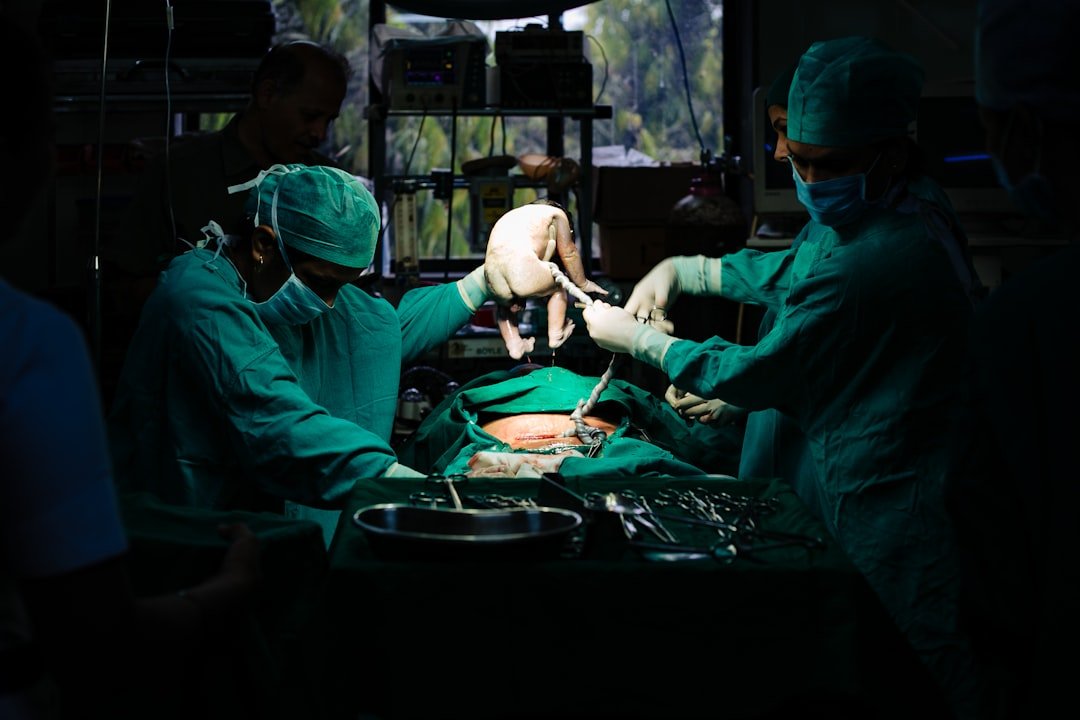
AI-Powered Surgical Systems: What to Expect in the Operating Room in 2026
Artificial intelligence (AI) is influencing various medical domains, and surgical procedures are no exception. The integration of AI into surgical systems is progressing, with both established platforms and novel approaches gaining traction. By 2026, the operating room (OR) will likely exhibit a more pronounced presence of AI, impacting workflow, decision-making, and procedural outcomes. This article outlines the anticipated advancements and challenges associated with AI-powered surgical systems in the near future.
The preparatory phase of surgery is critical. AI’s role here is expanding, offering more sophisticated methods for patient assessment and surgical strategy development. This advancement promises to refine surgical indications and optimize resource allocation.
Predictive Modeling for Risk Assessment
AI algorithms will increasingly analyze vast datasets of patient information, including electronic health records, imaging studies, and genetic profiles, to predict the likelihood of complications or adverse events. This allows surgeons to proactively mitigate risks. For example, machine learning models can identify patients at higher risk of post-operative infection, enabling targeted prophylactic strategies. This capability acts as an early warning system, akin to a weather forecast for a surgical journey.
Personalized Surgical Pathways
Beyond risk prediction, AI will assist in tailoring surgical approaches to individual patient anatomies and physiological characteristics. This involves processing high-resolution imaging data, such as CT scans and MRIs, to create 3D virtual models of organs and pathologies. These models enable surgeons to virtually practice complex procedures, identify potential anatomical variations, and personalize incision points or approaches, moving surgical planning beyond generic protocols to bespoke strategies. Imagine an architect designing a building not just for its function, but for the specific terrain and climate it will inhabit.
Optimized Resource Allocation
AI can also contribute to more efficient scheduling and resource management. By analyzing historical surgical data, patient flow patterns, and equipment availability, intelligent systems can suggest optimal OR utilization, minimizing downtime and maximizing throughput. This means surgeons and staff can focus more on patient care, rather than logistical hurdles.
Advanced Intraoperative Guidance and Automation
During the surgical procedure itself, AI’s influence will manifest through enhanced real-time guidance and increasing levels of automation. This aims to improve precision, reduce variability, and potentially shorten operative times.
Real-time Image Analysis and Navigation
AI algorithms will process live feeds from endoscopic cameras, intraoperative ultrasound, and other imaging modalities to provide surgeons with augmented reality overlays and real-time anatomical identification. This can highlight critical structures, delineate tumor margins, or track instrument trajectories with improved accuracy, acting as a visual co-pilot guiding the surgeon’s hands. Consider a GPS system that not only shows you the road but points out every pothole and turn in advance.
Robotic Assistance and Semi-Autonomous Tasks
Surgical robots are already in use, performing precise movements. By 2026, AI will elevate these systems beyond mere teleoperation. Expect to see robots performing increasingly semi-autonomous tasks, such as tissue retraction, suture placement (under surgeon supervision), or drilling in bone with pre-programmed precision. The surgeon remains in command, but the robot handles the execution of predefined, repetitive motions with unwavering steadiness, akin to an industrial robot on an assembly line, but with a human supervisor overseeing every step.
Anomaly Detection and Decision Support
Throughout the operation, AI systems will continuously monitor physiological parameters, instrument movements, and potentially even tissue characteristics. Anomalies, such as sudden drops in blood pressure, unexpected bleeding patterns, or deviations from planned trajectories, can be flagged in real-time, prompting the surgical team to investigate. This provides an additional layer of vigilance, akin to an air traffic controller overseeing multiple flight paths simultaneously.
Enhanced Postoperative Care and Rehabilitation
The role of AI extends beyond the operating room, influencing the recovery phase and long-term patient management. This promises to improve patient outcomes and optimize rehabilitation protocols.
Predictive Analytics for Complication Monitoring
AI algorithms will continue to monitor patient data post-surgery, predicting the likelihood of complications such as readmissions, infections, or implant failures. This allows for proactive intervention, enabling healthcare providers to identify at-risk patients and tailor follow-up care. This acts as an early warning system, allowing for prompt medical action.
Personalized Rehabilitation Programs
AI can analyze patient progress during rehabilitation, comparing it against vast datasets of similar patients, to tailor exercise regimens and physical therapy plans. Wearable sensors and smart devices will provide continuous data, allowing AI to dynamically adjust programs, ensuring optimal recovery and preventing setbacks. This means rehabilitation becomes a dynamic, personalized journey rather than a one-size-fits-all approach.
Long-term Outcome Prediction
Beyond immediate recovery, AI can contribute to predicting long-term outcomes after surgery. By integrating genetic predispositions, lifestyle factors, and surgical details, AI models can forecast the longevity of implants, the recurrence of diseases, or the overall quality of life years post-procedure. This provides patients with a more informed perspective on their future health trajectory.
Data Integration and Learning Systems
The foundation of AI’s advancement in surgery lies in its ability to process and learn from vast amounts of data. By 2026, data integration will be more seamless, fostering continuous improvement of AI models.
Federated Learning and Collaborative Datasets
Individual hospitals generate significant volumes of surgical data, but their fragmented nature limits the scope for AI training. Federated learning will become more prevalent, allowing AI models to be trained on decentralized datasets without directly sharing sensitive patient information. This collaborative approach enhances the robustness and generalizability of AI algorithms, turning isolated islands of data into a connected archipelago of knowledge.
Continuous Improvement Loops
AI systems will be designed with feedback mechanisms, learning from completed surgeries. Data regarding complications, successful outcomes, and surgeon preferences will be fed back into the algorithms, leading to iterative improvements in predictive models, navigational guidance, and robotic control. This creates a self-optimizing system where each successive surgery refines the AI’s capabilities.
Ethical Data Governance
The increasing reliance on patient data necessitates robust ethical frameworks and governance protocols. Data anonymization, secure storage, and transparent usage policies will be paramount to building trust and ensuring patient privacy. This forms the bedrock upon which the entire edifice of AI in surgery is built.
Challenges and Considerations for Adoption
| Metric | 2023 | 2026 (Projected) | Notes |
|---|---|---|---|
| Number of AI-Powered Surgical Systems in Use | 500 | 2,500 | 5x growth due to increased adoption and technological advances |
| Average Surgery Duration Reduction | 0% | 20% | AI assistance expected to streamline procedures and reduce time |
| Accuracy Improvement in Surgical Procedures | 85% | 95% | Enhanced precision through AI-guided robotics |
| Surgeon Training Time with AI Systems | 6 months | 3 months | Improved interfaces and simulation reduce learning curve |
| Postoperative Complication Rate | 10% | 5% | Better decision support and precision lower complications |
| Cost per Surgery (excluding equipment) | 3,000 | 2,500 | Efficiency gains reduce operational costs |
| Integration with Hospital Systems | Partial | Full | Seamless data sharing and workflow integration expected |
While the potential benefits of AI-powered surgical systems are substantial, their widespread adoption by 2026 faces several practical and ethical hurdles. These challenges require careful consideration and collaborative solutions.
Regulatory Approval and Validation
The rigorous approval processes for medical devices, particularly those involving advanced AI, can be lengthy and complex. Demonstrating the safety, efficacy, and clinical benefit of AI-powered surgical systems to regulatory bodies like the FDA or EMA will be a significant bottleneck. This process ensures that AI systems are not only innovative but also clinically sound and safe for patient use.
Surgeon Training and Adaptation
Integrating AI into surgical workflows requires significant changes in surgeon training. Surgeons will need to understand the capabilities and limitations of AI systems, learn how to interact with them effectively, and develop new skill sets for interpreting AI-generated insights. This shift requires a paradigm adjustment in medical education and continuous professional development.
Cost and Accessibility
The initial investment in AI-powered surgical systems, including hardware, software, and infrastructure, can be substantial. Ensuring equitable access to these technologies, particularly in resource-constrained environments, will be a critical consideration. The benefits of AI in surgery should not be limited to well-funded institutions but should ideally be available to a broader patient population.
Legal and Ethical Frameworks
Questions of responsibility and liability in the event of an adverse outcome involving an AI-powered system will need to be addressed. Establishing clear legal frameworks and ethical guidelines for the development, deployment, and oversight of AI in surgery is imperative. This involves defining the roles of the surgeon, the AI system, and the manufacturer in shared responsibility scenarios.
Conclusion
By 2026, AI-powered surgical systems will transform the operating room from a solely human-centered environment to a collaborative ecosystem. We can expect more intelligent preoperative planning, enhanced intraoperative guidance, and improved postoperative care. This evolution will not replace the surgeon but will augment their capabilities, providing them with more precise tools, deeper insights, and real-time assistance. However, the journey there involves navigating regulatory complexities, training new generations of surgeons, addressing cost barriers, and establishing robust ethical and legal frameworks. The future of surgery is undeniably intertwined with AI, and the coming years will witness the further integration of these intelligent systems into the fabric of clinical practice, ultimately shaping a new era of surgical precision and patient care.