








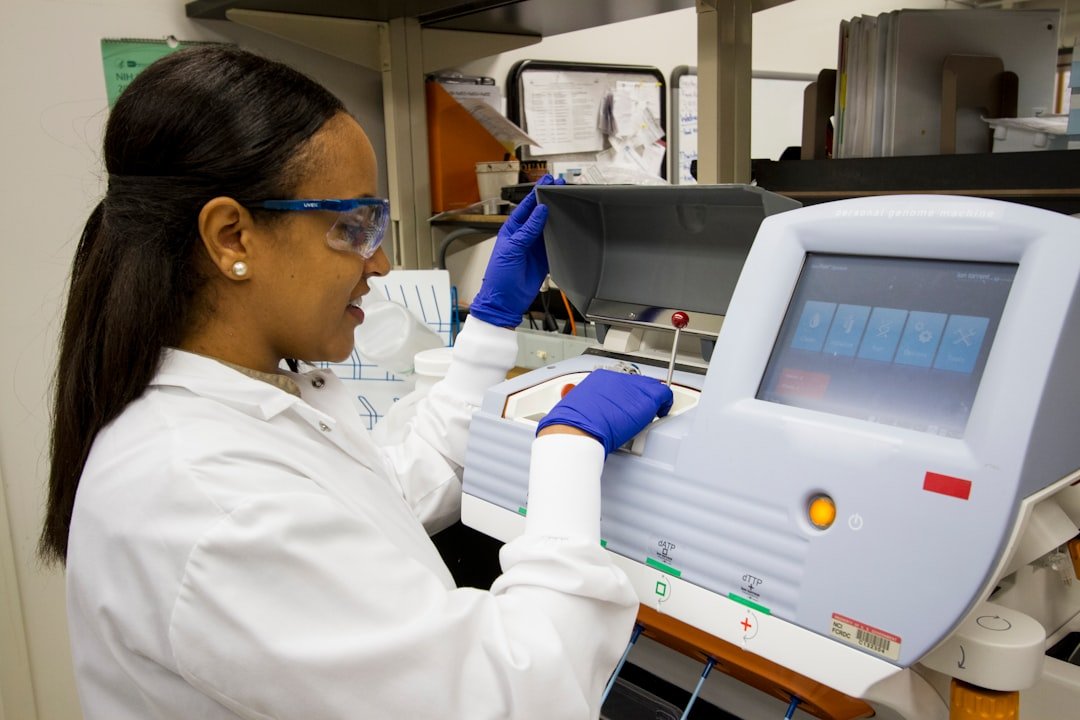
As I delve into the fascinating intersection of artificial intelligence (AI) and genomics, I find myself captivated by the profound implications this synergy holds for the future of medicine and biology. Genomics, the study of an organism’s complete set of DNA, including all of its genes, has revolutionized our understanding of life at a molecular level. The advent of AI technologies has further accelerated this revolution, enabling researchers to analyze vast amounts of genomic data with unprecedented speed and accuracy.
This convergence is not merely a technological advancement; it represents a paradigm shift in how we approach health, disease, and the very essence of what it means to be human. The integration of AI into genomics is transforming the landscape of biological research and clinical practice. With the ability to process and interpret complex datasets, AI algorithms can uncover patterns and insights that would be nearly impossible for humans to discern alone.
As I explore this topic, I am struck by the potential for AI to enhance our understanding of genetic variations, disease mechanisms, and therapeutic responses. This journey into the world of AI and genomics is not just about technology; it is about unlocking the secrets of life itself and harnessing that knowledge for the betterment of humanity.
Key Takeaways
- AI has revolutionized genomics research by enabling the analysis of large-scale genomic data and identifying patterns that can lead to new discoveries.
- Personalized medicine, made possible by AI and genomics, allows for tailored treatment plans based on an individual’s genetic makeup, leading to more effective and targeted therapies.
- Ethical considerations and challenges in AI and genomics include privacy concerns, data security, and the potential for discrimination based on genetic information.
- AI and genomics have significantly improved disease diagnosis and treatment by enabling early detection, accurate risk assessment, and the development of personalized treatment strategies.
- Advancements in precision medicine, driven by AI and genomics, have the potential to revolutionize healthcare by providing more effective and personalized treatments for patients.
The Role of AI in Genomic Research
In my exploration of AI’s role in genomic research, I am continually amazed by the breadth of its applications. One of the most significant contributions of AI is its ability to analyze genomic sequences at an extraordinary scale. Traditional methods of genomic analysis often require extensive time and resources, but AI algorithms can sift through terabytes of data in a fraction of the time.
This capability allows researchers to identify genetic variants associated with diseases more efficiently, paving the way for breakthroughs in our understanding of complex conditions. Moreover, machine learning techniques have become invaluable tools in predicting gene function and interactions. By training algorithms on existing genomic data, I can observe how these systems learn to make predictions about uncharacterized genes.
This predictive power not only accelerates research but also enhances our ability to design targeted therapies. As I reflect on these advancements, I recognize that AI is not merely a tool; it is a collaborator that amplifies human ingenuity in the quest for knowledge.
Personalized Medicine and Genomics
The concept of personalized medicine has gained significant traction in recent years, and I find it exhilarating to consider how genomics and AI are at the forefront of this movement. Personalized medicine aims to tailor medical treatment to the individual characteristics of each patient, particularly their genetic makeup. With the insights provided by genomic sequencing, healthcare providers can make informed decisions about prevention, diagnosis, and treatment strategies that are uniquely suited to each patient.
AI plays a crucial role in this process by analyzing genomic data alongside other patient information, such as lifestyle factors and environmental influences. This holistic approach enables me to envision a future where treatments are not only more effective but also carry fewer side effects. For instance, by understanding how specific genetic variations influence drug metabolism, clinicians can prescribe medications that are more likely to be effective for individual patients.
The promise of personalized medicine is not just a theoretical concept; it is becoming a reality thanks to the powerful combination of AI and genomics.
Challenges and Ethical Considerations
As I navigate the promising landscape of AI and genomics, I am also acutely aware of the challenges and ethical considerations that accompany these advancements. One significant concern is the issue of data privacy. The vast amounts of genomic data being generated raise questions about who has access to this information and how it is used.
As I ponder these issues, I recognize that maintaining patient confidentiality while harnessing the power of genomic data is a delicate balance that must be carefully managed. Additionally, there are ethical implications surrounding the potential for genetic discrimination. As genomic information becomes more accessible, there is a risk that individuals may face discrimination based on their genetic predispositions.
This concern highlights the need for robust regulatory frameworks that protect individuals from misuse of their genetic information. As I reflect on these challenges, I understand that while AI and genomics hold immense potential, it is imperative that we approach these technologies with caution and a strong ethical compass.
AI and Genomics in Disease Diagnosis and Treatment
The application of AI in disease diagnosis and treatment is one of the most exciting aspects of my exploration into genomics. By leveraging machine learning algorithms, researchers can develop models that predict disease risk based on an individual’s genomic profile. For instance, I have seen how AI can analyze patterns in genetic data to identify individuals at high risk for conditions such as cancer or cardiovascular disease.
This predictive capability allows for earlier interventions and more proactive healthcare strategies. Moreover, AI is revolutionizing treatment approaches by enabling precision therapies tailored to an individual’s unique genetic makeup. In oncology, for example, AI algorithms can analyze tumor genomes to identify specific mutations that drive cancer growth.
This information can guide oncologists in selecting targeted therapies that are more likely to be effective for each patient. As I consider these advancements, I am filled with hope for a future where diseases are not only diagnosed earlier but also treated more effectively through personalized approaches.
Advancements in Precision Medicine
The field of precision medicine has witnessed remarkable advancements in recent years, largely fueled by the integration of AI and genomics. As I delve deeper into this topic, I am struck by how these innovations are reshaping our understanding of health and disease. One notable advancement is the development of comprehensive genomic profiling techniques that allow for a detailed analysis of an individual’s genetic landscape.
These techniques enable clinicians to identify actionable mutations that can inform treatment decisions. Furthermore, AI-driven tools are enhancing our ability to interpret complex genomic data. For instance, natural language processing algorithms can analyze scientific literature and clinical trial data to provide insights into potential treatment options based on an individual’s genetic profile.
This synthesis of information empowers healthcare providers to make informed decisions that align with the latest research findings. As I reflect on these advancements, I am optimistic about the future of precision medicine and its potential to transform patient care.
The Future of AI and Genomics
Looking ahead, I am excited about the future possibilities that lie at the intersection of AI and genomics. The rapid pace of technological advancements suggests that we are only scratching the surface of what is achievable in this field. As AI algorithms continue to evolve, I anticipate even greater capabilities in analyzing genomic data and uncovering hidden patterns that could lead to groundbreaking discoveries.
Moreover, as genomic sequencing becomes more affordable and accessible, I envision a world where personalized medicine is not just a luxury for a select few but a standard practice available to all patients. This democratization of healthcare could lead to improved health outcomes on a global scale. However, as we move forward, it will be essential to address the ethical considerations surrounding data privacy and genetic discrimination to ensure that these advancements benefit society as a whole.
Impact and Implications
In conclusion, my exploration of AI and genomics has revealed a landscape rich with potential and promise. The integration of these two fields is transforming our understanding of health and disease while paving the way for personalized medicine that tailors treatments to individual patients. However, as we embrace these advancements, we must remain vigilant about the ethical challenges they present.
The impact of AI on genomics extends far beyond scientific research; it has profound implications for healthcare delivery and patient outcomes. As I reflect on this journey, I am filled with hope for a future where our understanding of genetics empowers us to prevent diseases before they arise and treat them more effectively when they do occur. The collaboration between AI and genomics represents not just a technological evolution but a fundamental shift in how we approach health—one that holds the promise of improving lives around the world.